
Stardew Valley Pale Ale: The Cozy Cash Cow
Every great farm empire starts somewhere humble. For a lot of us, that somewhere is a row of hops trellises and a couple of kegs bubbling away in the corner of the barn. Because here’s a little secret the Pelican Town veterans already know: one modest golden beer can quietly bankroll your entire operation. So let’s treat this like what it really is – a business plan. We’re going to set up a craft brewery from scratch, and by the end you’ll know exactly how to turn cheap flowers into a river of gold. Roll up your sleeves, farmer. The brewery’s about to open. Before we start building, let’s understand the product we’re selling. Stardew Valley Pale Ale is an Artisan Good, a yellow-tinted beer brewed from a single crop.
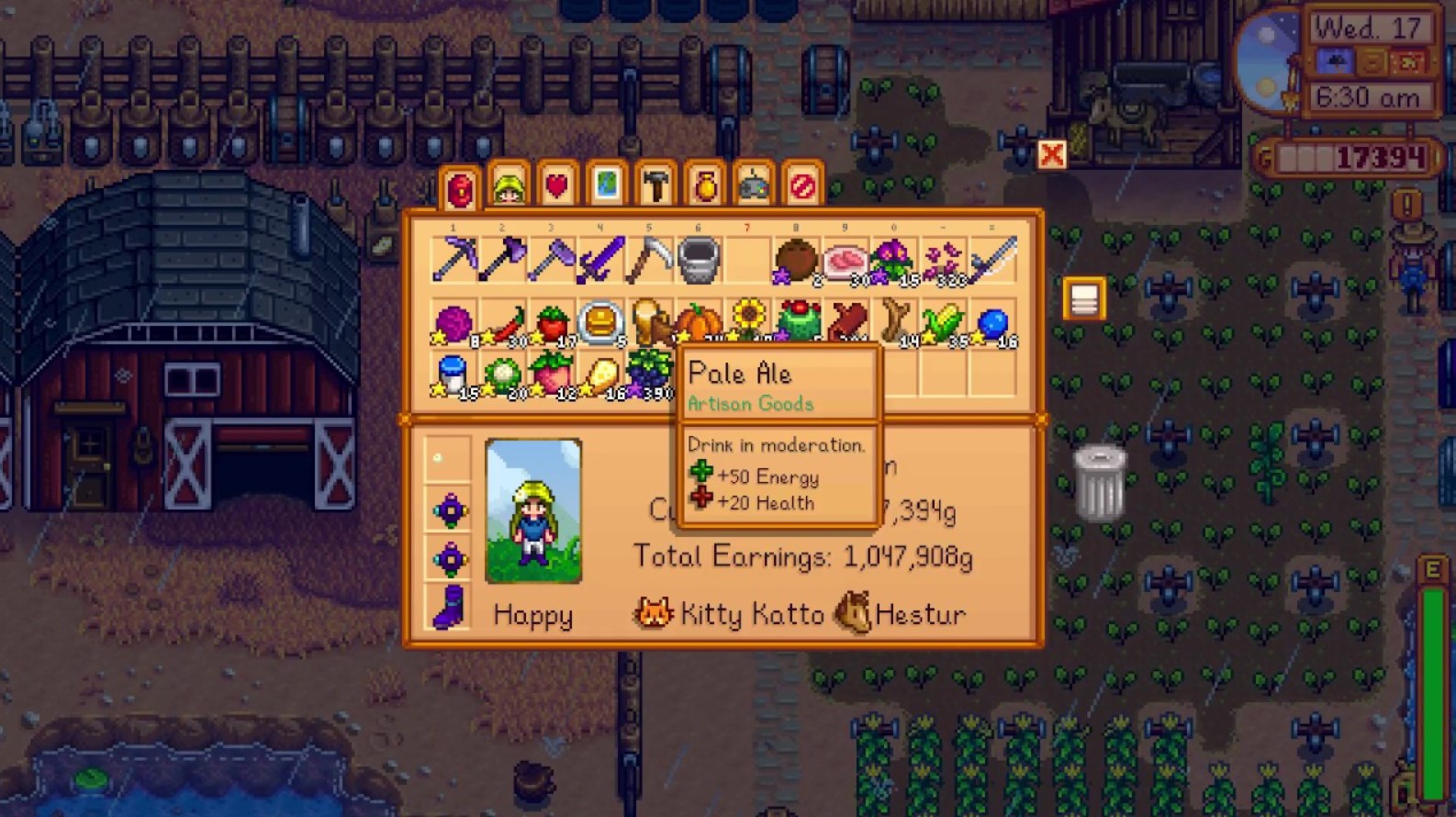
And it’s not just any Artisan Good – it’s one of the most reliable money-makers in the whole game. In terms of daily profit from processing a crop, it sits second only to Starfruit, which is elite company for something you can start making in your first summer.
Drink it yourself and you’ll get the “Tipsy” effect, which knocks your Speed down by 1 point. Not exactly a power-up, so most farmers sell or gift it rather than chug it. Its real magic is on the balance sheet, and that’s what this whole plan is built around. Let’s line up the supply chain, starting with the raw material.
Sourcing Your Ingredient: The Humble Hop
Every brewery needs a crop, and for Pale Ale that crop is Hops – and only Hops. Forget wheat or barley; this recipe couldn’t be simpler. Hops are a Summer crop that grow on trellises, and here’s what makes them so special for a brewing business: after they mature, roughly eleven days from planting, they keep producing a fresh batch every single day. Plant once, harvest daily, all season long. That’s a supply manager’s dream.
You’ll grow them from Hops Starters, which are easy to get your hands on. Here’s where to grab them:
- Pierre’s General Store, your reliable go-to at 60g each.
- Joja Mart, if you’ve thrown your lot in with the corporate side.
- The Traveling Cart, which sometimes stocks them at varying prices.
- The Night Market, another seasonal option worth checking.
Now, Hops normally only grow outdoors in Summer. But if you want a year-round brewery – and trust me, you will – the Greenhouse is your best friend, letting you grow Hops in any season for a nonstop supply. You can also pop harvested Hops into a Seed Maker to spin up extra Starters, expanding your fields without paying Pierre a single coin more. Vertical integration, baby.
Setting Up the Brewery: Kegs 101
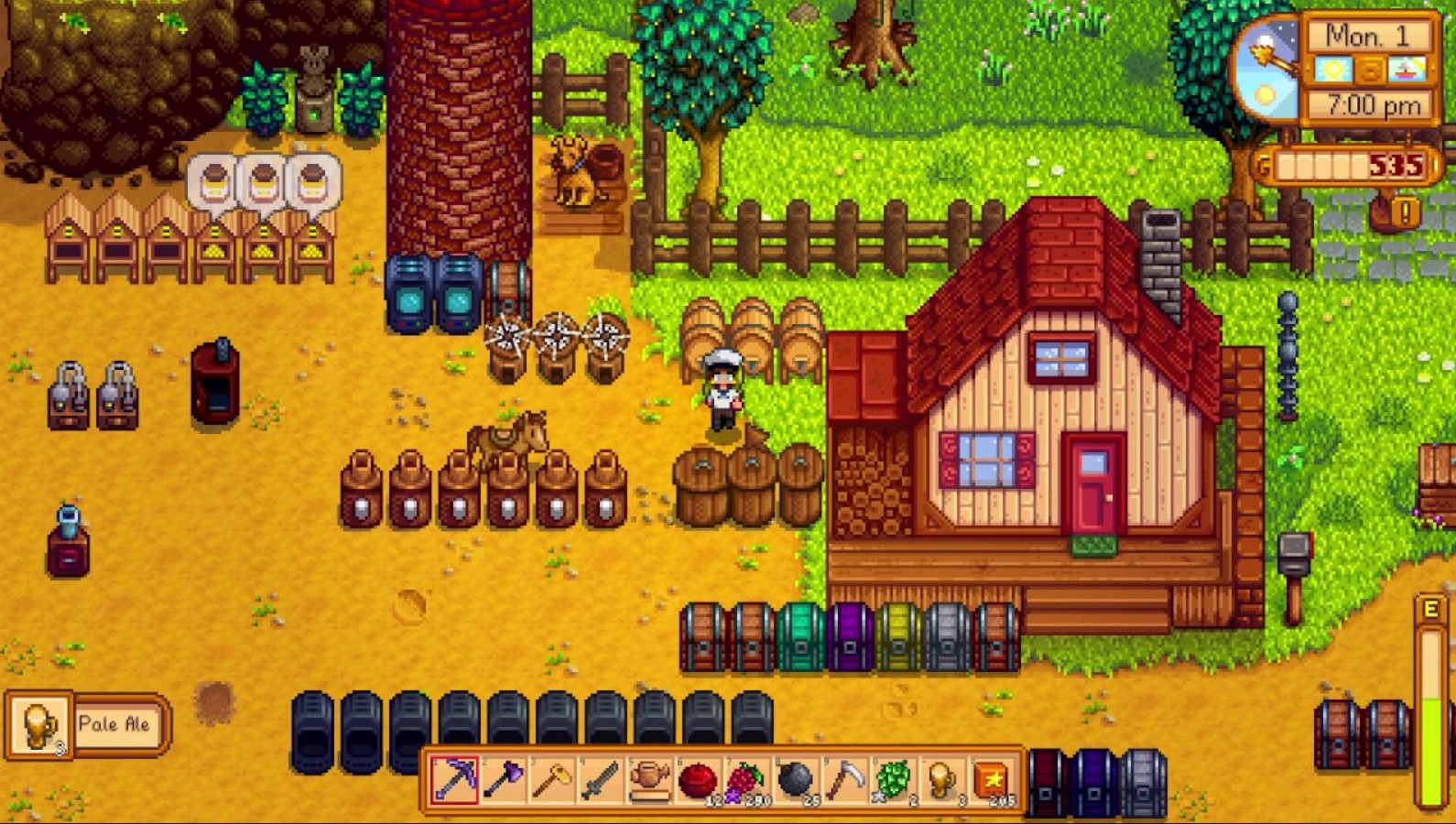
With a crop lined up, we need the equipment. The Keg is the machine that turns raw Hops into that valuable brew, and it becomes available once you hit Farming level 8. Given that Hops produce so much crop XP, you’ll likely reach that milestone by mid-to-late summer of your first year with a decent-sized field going.
Crafting a Keg calls for a Copper Bar, an Iron Bar, some Oak Resin, and 30 Wood. If crafting isn’t your thing yet, you can also earn a Keg by completing the Artisan Bundle or Brewer’s Bundle in the Community Center, which is a great early leg-up. Once you’ve got one, the process is dead easy: hold your Hops, walk up to the Keg, and pop them in. After 1.5 in-game days – 2250 minutes, if you’re counting – you’ll have a fresh Pale Ale waiting. In a hurry? Sprinkling Fairy Dust on a Keg finishes it instantly, though that stuff is precious, so save it for when it truly matters.
That short turnaround is the secret sauce here. Most brews take four days or more; Pale Ale takes a day and a half. Faster cycles mean more batches, and more batches mean more gold.
From Hops to Gold: The Stardew Valley Pale Ale Profit Breakdown
Alright, let’s talk numbers, because this is where the business really shines. Raw Hops sell for a measly 25g each. Brew them into Pale Ale and that value rockets to 300g. That’s a twelvefold jump from simply running the crop through a Keg. Frankly, it’s a little absurd how good the margin is.
And it climbs from there depending on your quality and skills. Here’s the full value ladder:
| Quality / Bonus | Sell Price |
|---|---|
| Regular Pale Ale | 300g |
| With Artisan profession | 420g |
| Iridium quality (aged) | 600g |
| Iridium plus Artisan | 840g |
The single biggest lever here is the Artisan profession, a Farming skill perk that boosts Artisan Good value by 40 percent. If you’re planning any kind of brewing business, that perk is non-negotiable – it turns every bottle from 300g into 420g, and the gains only compound as you scale up your Keg count.
Picture fifty Kegs each pumping out a 420g bottle every day and a half. That’s a serious, low-effort income stream funding whatever farm dreams you’ve got.
Aging for the Premium Shelf: Casks
Want to move upmarket? Then it’s time to age your product. Like all alcoholic drinks in the game, Pale Ale improves in a Cask, climbing from regular to silver, gold, and finally iridium quality, with the price rising at each step. An iridium bottle fetches that juicy 600g, or 840g with Artisan.
Getting Casks takes some investment, mind you. You’ll need to upgrade your farmhouse all the way to the third tier, which adds a Cellar. Robin handles that upgrade for a hefty 100,000g, but it comes bundled with 33 Casks ready to go. It’s a big early expense, but for a serious brewing operation it pays for itself. One thing to note: aging only raises the value by improving quality, and the aged bottle is simply renamed “Aged Pale Ale.” So don’t expect a separate premium product – it’s the same brew, just fancier and pricier.
Knowing Your Customers: Gifting and Quests
A smart business knows its customers, and Pale Ale is a crowd-pleaser around town. Nearly every adult villager likes receiving it as a gift, which makes it a handy relationship-builder when you’re short on someone’s favorite item. There’s one true superfan, though: Pam absolutely loves the stuff, so a bottle her way is worth a big chunk of friendship. Just keep it away from the kids – Jas, Leo, and Vincent all hate it, for reasons that hopefully don’t need explaining.
Beyond gifting, Pale Ale has a few other jobs to do:
- Complete the “Pam Is Thirsty” story quest by delivering her a bottle, netting you around 350g and a friendship heart.
- Craft the Black Leather Jacket by combining Pale Ale with cloth at a sewing machine, for the fashion-forward farmer.
- Sell it in bulk as your primary early-to-mid-game income engine.
- Hand it out as an emergency gift when you’ve forgotten someone’s birthday present.
That versatility means even the bottles you don’t sell rarely go to waste. Every batch has a purpose, whether it’s gold, friendship, or a snazzy new coat.
Why Stardew Valley Pale Ale Beats the Competition
You might be wondering why we’re building the whole business around this one brew instead of, say, wine. Fair question. The answer comes down to speed and reliability, especially early on.
Here’s how Pale Ale stacks up against other popular Keg options:
| Keg Product | Rough Value | Processing Time |
|---|---|---|
| Pale Ale (Hops) | 300g | 1.5 days |
| Beer (Wheat) | 200g | ~1.75 days |
| Wine (fruit) | 3x fruit value | ~6-7 days |
| Starfruit Wine | 2,250g | ~6-7 days |
See the pattern? Wine and Starfruit Wine sell for far more per bottle, but they take nearly a week to ferment. Pale Ale’s day-and-a-half cycle means it churns out gold constantly, and paired with Hops’ daily harvest, you get a beautifully steady drip of income.
That’s why it’s widely considered the best early-game Keg crop – it starts earning fast while you’re still building toward the pricier Ancient Fruit and Starfruit operations. It’s the dependable workhorse that funds your fancier ventures later.
Scaling Your Operation: Tips for a Brewing Empire
Ready to go from cottage brewery to industrial powerhouse? A few pointers to squeeze every coin out of your setup:
- Fill a Shed or barn with dozens of Kegs so weather and season never interrupt production.
- Grow Hops in the Greenhouse for year-round brewing once Summer ends.
- Run harvested Hops through a Seed Maker to keep expanding your fields for free.
- Grab the Artisan profession at Farming level 10 to boost every bottle by 40 percent.
- Plan your Keg layout for easy loading, since you’ll be filling them daily by hand.
The dream endgame is a room packed with Kegs you top up each morning and collect from every couple of days. It sounds like a chore, but compared to watering hundreds of crops, it’s practically passive income. Set it up right and your brewery quietly earns while you go fishing, mining, or wooing your favorite villager.
FAQ
What is Pale Ale made from in Stardew Valley?
Pale Ale is brewed purely from Hops in a Keg. No wheat or barley is involved. Hops are the only ingredient, which makes it wonderfully simple.
How much does Pale Ale sell for?
It sells for 300g normally, 420g with the Artisan profession, and up to 600g at iridium quality, or 840g with both aging and Artisan combined.
How long does Pale Ale take to make?
Just 1.5 in-game days, or 2250 minutes, in a Keg. That fast turnaround is a big reason it’s such an efficient money-maker.
Where do I get Hops?
Grow them from Hops Starters, sold at Pierre’s for 60g, plus Joja Mart, the Traveling Cart, and the Night Market. They grow outdoors in Summer.
When can I make Pale Ale?
You need a Keg, which becomes available at Farming level 8, and some Hops. Most players reach that point in late Summer of Year 1.
Who likes Pale Ale as a gift?
Nearly every adult villager likes it, and Pam loves it. Avoid gifting it to the children, Jas, Leo, and Vincent, who all dislike it.
Is Pale Ale better than Wine?
Per bottle, Wine sells for more, but Pale Ale brews far faster and pairs with daily-producing Hops, making it the superior choice for steady early income.
Last Call
So there’s your brewery business plan, start to finish. Pale Ale might look like a humble little beer, but it’s one of the smartest, most beginner-friendly money-makers in the entire game. Cheap ingredient, fast brewing, fat margins, and a dozen handy uses beyond the sale. Set up a wall of Kegs, keep those Hops flowing, and grab the Artisan profession, and you’ll fund your farm dreams one golden bottle at a time.
Whether you’re saving for that Cellar upgrade or just want a reliable income while you focus on the fun stuff, this brew has your back. Now go on – plant some Hops and get brewing. Your future gold-filled self will thank you.
P.S. If this brewery breakdown poured you a clearer path to a fatter wallet, do the T-Minus team a kindness – pass this post around wherever your fellow farmers gather, and bookmark it so it’s ready the next time you’re squinting at your Keg layout. Every share genuinely keeps our small crew brewing away, and it costs you nothing but a click. And if creative or commercial collaboration is on tap for you, our door’s always open – write to the T-Minus team directly, and let’s craft something worth raising a glass to.