
Why Does the Pink Chainsaw in Video Games Hit So Hard?
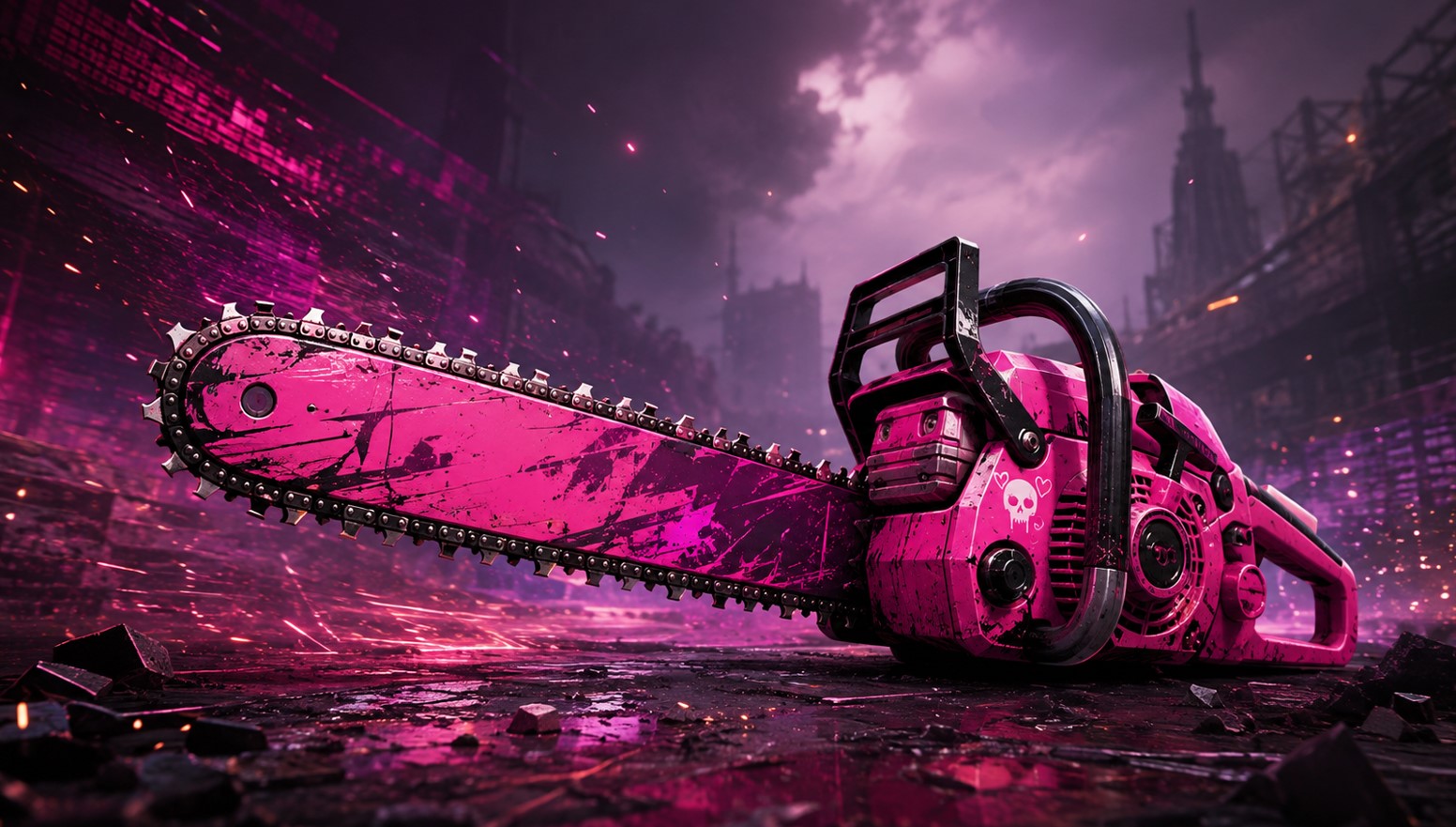
Take the loudest, ugliest tool in the shed. The one that exists to cut through things that don’t want to be cut. Now paint it the colour of bubblegum and a birthday card – you will get a pink chainsaw in video games. Something strange happens. It doesn’t become less threatening – it becomes more unsettling, and simultaneously funnier. That’s not an accident of taste. It’s a specific trick, and games have been pulling it deliberately for over a decade. Start with what a chainsaw already means in this medium, because the colour only works against a very established background.
Chainsaws in games are shorthand for a particular kind of violence – close, loud, personal, and messy. They’re the weapon that requires you to be right there. Look at the canon, and the pattern is obvious: Gears of War built an entire identity on the Lancer’s chainsaw bayonet, a mid-range rifle with a working saw for a bayonet that executes enemies by dismemberment. Journalists have repeatedly called it one of the most iconic weapons in games, and it’s basically standard issue for the whole faction.
Resident Evil 4 went the other direction and pointed the thing at you. The Chainsaw Man – a burly villager with a burlap sack over his head, detectable by the sound of an engine revving somewhere nearby – delivers one of the most famous death scenes in the medium when he catches Leon. The remake kept his design largely intact and made his eyes more visible through the sack holes, which somehow made it worse.
Dead by Daylight runs two chainsaw killers. The Hillbilly, part of the original launch trio in June 2016, uses his to close distance at speed and instantly down survivors. The Cannibal is Leatherface himself, stalking maps with the saw that made him famous in the first place.
So the vocabulary is set. Chainsaw equals grim, rural, industrial, unglamorous horror. It’s the least stylish weapon in gaming.
Which is exactly why painting one pink does so much work. You’re not decorating a weapon. You’re refusing an entire genre’s dress code. Every association listed above gets short-circuited by one colour choice, and the gap between what the object is and how it looks becomes the joke, the tone, and the thesis all at once.
The Canonical Pink Chainsaw in Video Games
Lollipop Chainsaw, from Grasshopper Manufacture in 2012, is the whole argument in a single image.
Juliet Starling is a high school cheerleader who kills zombies for a living, and her weapon is a pink chainsaw. That’s it. That’s the pitch. The game was directed by Goichi Suda – Suda51 – with James Gunn writing, and Tara Strong voicing the lead, which is a combination of credits that tells you exactly what tonal register we’re in before you press start.
The setup is deliberately absurd. The outbreak starts on Juliet’s 18th birthday, the day she’s supposed to meet Nick’s parents for dinner. Nick gets bitten, Juliet performs a ritual to save him, and it works – sort of. All that survives is his head, which spends the rest of the game attached to her waist, complaining. Reviews describe the whole thing as unapologetically wacky in a way that reads as very specifically early-2010s.
Here’s the thing that makes the design smart rather than just crude. The pink chainsaw is a character statement, not a gimmick. One review made the point well: Juliet never suddenly becomes an expert swordswoman or picks up military hardware. She’s a senior in high school, and she uses what she has – pom-poms, kicks, and the saw. There’s a commitment to her identity that the weapon design enforces. Her light attacks are cheerleading. Her heavy attack is the chainsaw. The kit is the character.
Commercially, it did fine, and critically it split hard. Mixed reviews at launch, 1.24 million copies sold as of June 2024, and a devoted defence squad that never went away. That’s a textbook cult classic profile.
The Remaster and the Chainsaw Makeover
Lollipop Chainsaw RePOP arrived on September 12, 2024, from Dragami Games, brought forward by two weeks from its original date. Its history is worth a paragraph because it says something about how much the community cared.
It was announced in July 2022 as a remake. Then, after fan feedback, the developers deliberately scaled it back to a remaster. That’s an unusual direction of travel – studios don’t often downgrade scope because players asked them to. But the fanbase was protective of the original’s specific texture, and Dragami listened.
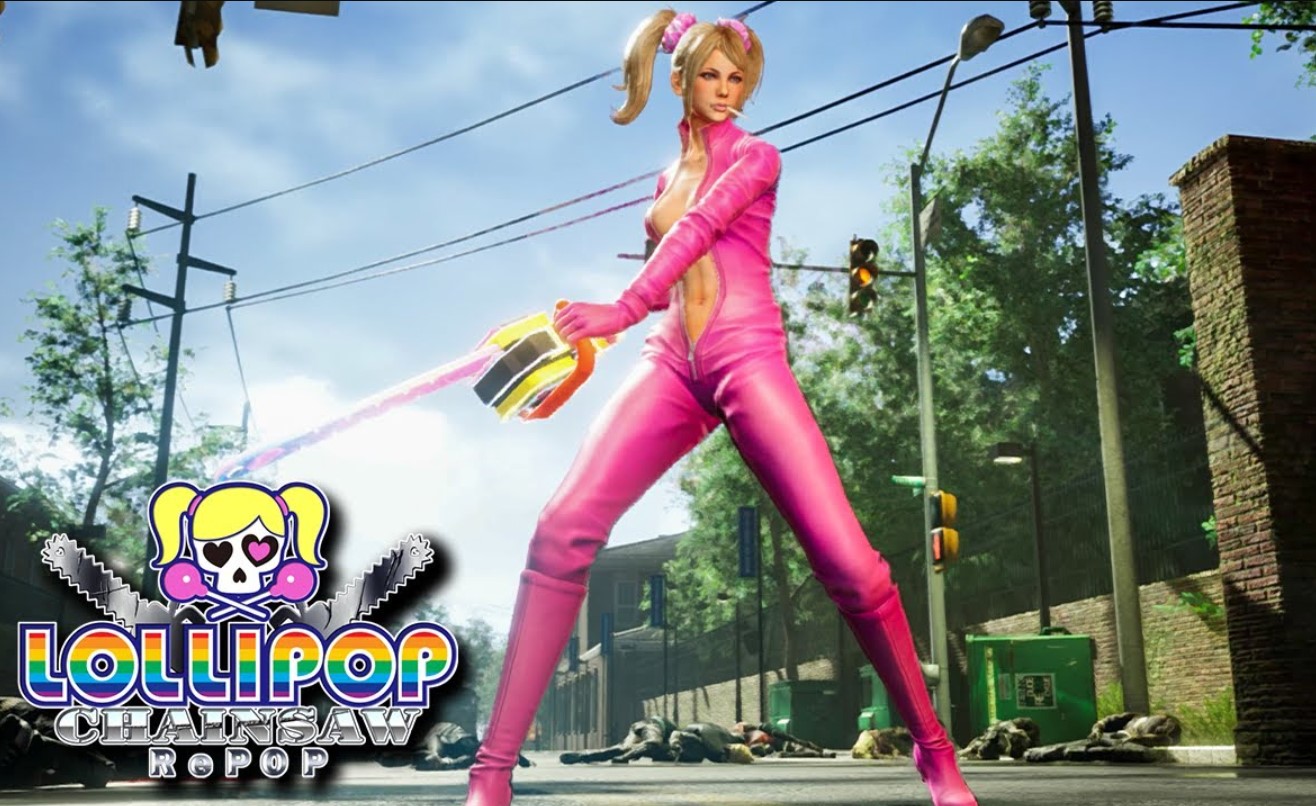
What changed mechanically was aimed squarely at the weapon. The team stated they were doing away with sluggishness in chainsaw battles through speed adjustments and improved input timing. RePOP added a Chain Hit Hunting system that builds combo streaks and speeds Juliet up as they climb, plus a revamped Chainsaw Blaster with auto-fire.
And crucially for our purposes: you can give the chainsaw a makeover. The remaster added chainsaw customization alongside its expanded wardrobe, which formalises what players had been doing informally for years – treating the weapon as an accessory rather than a tool.
There’s also a new RePOP mode that swaps the blood-soaked damage effects for pop-art sparkles. You can keep the original presentation if you want, but the option exists to render the violence as confetti. That’s the pink chainsaw philosophy applied to the entire visual layer.
Not everything landed. The biggest loss was licensing. The original’s soundtrack included tracks that fans permanently associate with specific mechanics – one review noted how well certain songs paired with sparkle mode and Chainsaw Dash, and that it’s impossible for longtime fans to hear “Cherry Bomb” without thinking of this game. Those licenses weren’t renewed, and the replacement compositions drew criticism as generic by comparison. One writer pointed to Alan Wake, which was briefly delisted over expired soundtrack licensing before the songs were renewed for its remaster, as the lesson that should have been learned.
Reviews of RePOP broadly agreed: if you liked the original, you’ll like this; the controls are still janky, the boss fights are still gimmicky, and the pop-culture references have aged another twelve years.
| Feature | Original (2012) | RePOP (2024) |
|---|---|---|
| Chainsaw combat speed | Noticeably sluggish | Adjusted for pace |
| Combo system | Standard | Chain Hit Hunting streaks |
| Chainsaw Blaster | Manual | Revamped with auto-fire |
| Chainsaw customization | No | Yes |
| Damage visuals | Blood | Blood or pop-art sparkles |
| Licensed soundtrack | Yes | Replaced with originals |
Making Your Own Pink Chainsaw in Video Games
Here’s the part that proves the appeal isn’t confined to one franchise. Given the tools, players pinkify things on their own.
Doom Eternal ships with a weapon skin system – three main texture themes plus weapon-specific ones – and a modding scene that goes considerably further. There’s a Nexus mod called PINK EVERYTHING that does exactly what the name promises: makes almost everything pink, across weapon effects, enemy and AI effects, cinematics, and atmospheric effects, with separate packs for unlockables, campaign-specific effects, and both DLCs. Over 9,000 files.
Consider what that means in a game whose entire aesthetic is heavy metal album covers and industrial hellscapes. Somebody looked at the most aggressively macho shooter on the market and thought: what if it were pink? And then thousands of people downloaded it.
That instinct shows up wherever customization allows it:
- Weapon skin systems in shooters almost always produce a pink option, and it almost always gets used disproportionately by people who are very good at the game.
- Cosmetic chainsaw variants are a natural fit for horror games with a cosmetic economy, where the tonal clash is the entire selling point.
- Character-weapon coordination – matching the saw to the outfit – is how the accessory logic in RePOP works, and it’s the same impulse driving skin collecting generally.
The underlying psychology is straightforward once you name it. A pink weapon in a serious game is a small act of defiance against the game’s own tone. It says you’re not intimidated by the thing the developers spent millions making intimidating. There’s a reason it reads as confident rather than silly.
The Colour Is Doing Real Work!
Let me push the argument a bit further, because “it’s funny because it clashes” undersells what’s happening.
Pink in this context carries a specific cultural payload – femininity, youth, cheapness, harmlessness, the toy aisle. That payload is exactly what makes the collision generative rather than merely random. A blue chainsaw is just a chainsaw that’s blue. A pink one asks a question.
And Lollipop Chainsaw asks it deliberately. Juliet is a cheerleader, which is the most culturally loaded “harmless girl” archetype available, and the game arms her with the most aggressively unfeminine weapon in the medium and then colours it to match her uniform. The tension between the two is the whole aesthetic. Her family are monster hunters; her boyfriend is a talking head on her hip; her light attack is literally cheerleading.
You can read that generously or ungenerously, and the community has done both for over a decade. The generous reading: it’s a genuine subversion, an unapologetically girly protagonist who is also enormously competent at extreme violence, and the game refuses to make her tone it down to be taken seriously. The ungenerous reading: it’s a 2012 game with a camera that has opinions, and dressing exploitation in subversion doesn’t automatically make it subversive.
Both readings have supporters, and honestly I don’t think you have to resolve it. What’s not in dispute is that the weapon design is excellent, and it’s the part that survived intact into a remaster the fans specifically asked to be less ambitious.
There’s a broader tangent here worth a moment. Games have got much better at understanding that tone is a design tool rather than a coat of paint. A pink chainsaw isn’t a colour choice made at the end of the pipeline – it determines the animation style, the sound design, the enemy reactions, the music, the entire register the game operates in. Get it right and you have Lollipop Chainsaw. Get it wrong and you have a horror game that accidentally became a comedy.
FAQ
What game has the most famous pink chainsaw?
Lollipop Chainsaw, from Grasshopper Manufacture in 2012. Juliet Starling’s pink saw is the definitive example, and the 2024 RePOP remaster brought her to PC for the first time.
Who made Lollipop Chainsaw?
Grasshopper Manufacture, directed by Goichi Suda (Suda51) with James Gunn writing and Tara Strong voicing Juliet. Dragami Games handled the 2024 remaster.
Why was the remake changed to a remaster?
Dragami announced a full remake in July 2022, then scaled it back to a remaster after fan feedback. Players were protective of the original’s specific feel.
Can you customize the chainsaw in RePOP?
Yes. The remaster added chainsaw customization alongside an expanded wardrobe, so the weapon works as an accessory you can restyle.
What’s different about the combat in RePOP?
Speed adjustments to remove sluggishness, improved input timing, the new Chain Hit Hunting combo system, and a revamped Chainsaw Blaster with auto-fire.
Did RePOP keep the original soundtrack?
No. The licensed tracks weren’t renewed and were replaced with new original compositions, which reviewers widely considered a downgrade.
What are the other iconic chainsaws in games?
The Lancer from Gears of War, the sack-headed Chainsaw Man from Resident Evil 4, and both the Hillbilly and the Cannibal in Dead by Daylight.
The Last Word
The pink chainsaw in video games works for a reason that sounds too simple to be true: it puts two things in the same frame that were never supposed to meet, and refuses to apologise for either. Juliet Starling has been the standard-bearer since 2012 precisely because her game commits to the joke as a whole design philosophy rather than a punchline – the animations, the pom-poms, the head on her hip, the sparkle mode. Everywhere else, players do the pinkifying themselves the second a game hands them the tools, which suggests the appeal was never about one cheerleader. It’s about the small pleasure of walking into hell holding something that clashes.
P.S. If this made you look at a familiar weapon slightly differently, sending it onward costs you nothing and genuinely keeps our small team writing pieces like this one. Bookmark it too, because the chainsaw customization corner of gaming keeps growing and this is the sort of thing you’ll want to hand someone mid-argument. And if creative or commercial collaboration is what brought you here, the T-Minus team is one direct message away.