


Fat Characters in GTA 6: Why Game Crowds Were All One Size Until Now
Open any open-world game from the last fifteen years and look at the crowd. Really look at it. The pedestrians are different colours, different ages, different outfits – and almost exactly the same size. That is not an artistic decision, and it is not laziness. It is a technical constraint that has shaped how video game crowds look since 3D animation became standard, and Rockstar North’s head of development spelled it out in an interview this August while explaining why GTA 6’s crowd finally looks different.
The short version: every body in a game has historically had to share the same animations, and animations do not stretch gracefully. Solve that, and your crowd can contain every shape a real street contains. Fail to solve it, and everyone is the same height with the same build in different jackets.
So this is an explainer about one engineering problem, how Rockstar removed it, and what it actually changes – plus an honest section on the claims circulating about this topic that Rockstar has not made.
The Constraint, Explained Properly
Here is the problem in plain terms, as Rob Nelson described it. An animation is a recorded sequence of joint positions. When a character sits in a car, the animation places their hands on the wheel, their feet on the pedals, and their back against the seat. That sequence was authored for a body of a specific size.
Give the same animation to a character six inches taller, and their hands go through the windscreen. Give it to a character of a different build and their arms clip through their own torso. Nelson’s specific example was the gap between a 5’6″ character and a 6’2″ one, and the places it breaks are the places games constantly put you: fights, sitting in cars, and environmental interactions.
The historical workaround was simple, and it is the reason crowds look the way they do: keep every body close enough to the reference build that one animation set works on all of them.
| Where the Constraint Bites | What Goes Wrong |
|---|---|
| Melee and combat | Strikes miss or connect with empty air at the wrong range |
| Sitting in and entering vehicles | Hands and feet land in the wrong place; limbs clip through geometry |
| Doors, ladders, cover and climbing | Contact points are authored for one reach and one height |
| Crowd idles and conversations | Characters appear to look past each other rather than at each other |
| Carrying, holstering, gestures | Props attach to joints positioned for a different frame |
Multiply that by the hundreds of animations a modern open-world game needs and the cost of supporting genuinely varied bodies becomes enormous. Either you author separate animation sets per body type, which multiplies the work by the number of types, or you narrow the range of bodies.
Almost everyone narrowed the range of bodies.
How GTA 6 Got Fat Characters, Short Characters and Tall Ones Into the Same Crowd
The fix Rockstar built is a system that retargets animations on the fly. Rather than authoring a sitting animation for each build, the game takes one animation and adjusts it in real time to the skeleton actually playing it – shifting contact points, reach, and limb positions so a tall character and a short one both put their hands where the steering wheel actually is.
Nelson’s summary of the result was direct: “NPCs have more height differentiation and body shape differentiation than ever before.”
Two things made this the right moment for it:
- Current-generation hardware, which Nelson credited with the density of the world – retargeting costs processing time per character, and a crowded street is a lot of characters.
- The decision to build the world around crowds, with Nelson describing it as the studio’s largest, deepest, and most densely populated world to date.
What that produces is not a game with a few notable large characters in it. It is a crowd whose body range approximates an actual city’s, because the thing that was forcing uniformity is gone.
What Rockstar Has Actually Said Varies
Worth itemising, because the specifics are more interesting than the headline.
Across the IGN interview and a separate Dazed report featuring senior Rockstar developers, the confirmed variation in Leonida’s population covers:
- Height and body shape, the headline change and the one the retargeting work enabled.
- Age, across the population rather than a young-adult default.
- Skin detail including freckles, moles and tanning, which is a different system from body shape and a meaningful one at crowd distance.
- Tattoos, piercings and plastic surgery, which read as choices a person made rather than a texture swap.
- Fashion, tied to everything above.
And then the detail that makes it more than a technical flex: appearance reflects where people live. Residents of Little Cuba look and dress differently from people around Mount Kalaga National Park. Body type, age, clothing and styling are being treated as regional information rather than randomised variables.
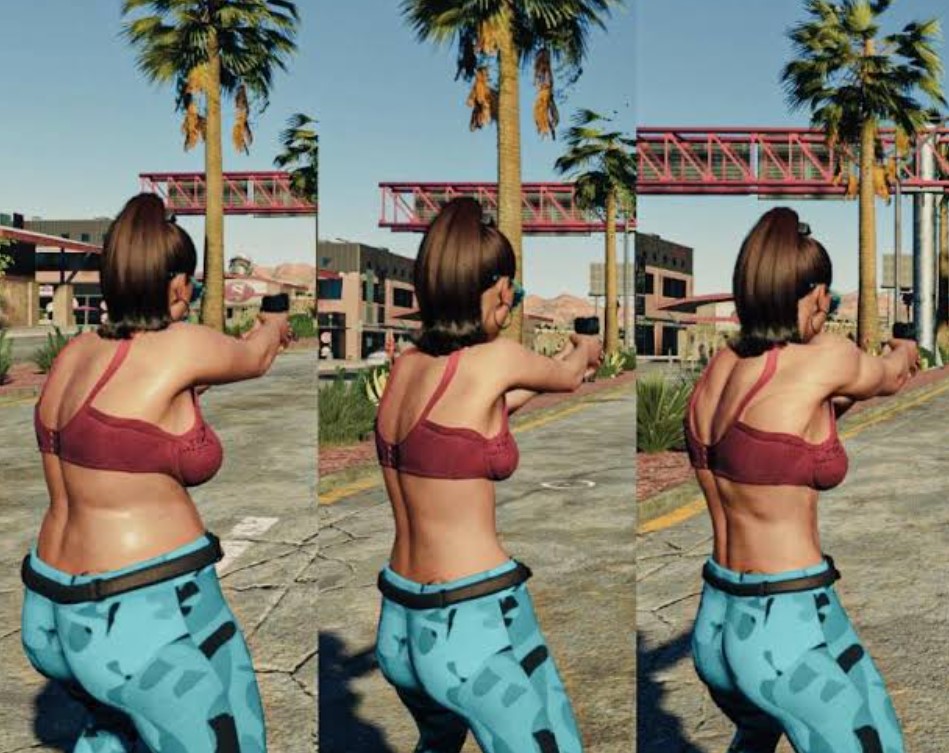
That is the part that justifies the engineering. A crowd with varied bodies but no logic behind the distribution is just noise. A crowd where a neighbourhood’s population tells you something about the neighbourhood is world-building.
Rockstar has also set up a Los Angeles team specifically to write NPC dialogue, and characters notice if you eavesdrop on them. The crowd work is clearly a broader project than models alone.
The Player Body System Is a Different Thing Entirely
This is where most coverage conflates two separate systems, so let’s separate them.
NPC body variety is about the crowd. Jason and Lucia’s bodies are a player-facing simulation, and it is the return of a feature last seen properly in San Andreas, expanded from the version in Red Dead Redemption 2.
What it covers:
- Food affects weight. Overeating adds it, as it did in 2004.
- Exercise visibly builds and tones muscle, with gyms available for strength training.
- Sleep deprivation changes your face. Long stretches away from a bed – hiding from police, multi-day benders – show in the protagonists’ features.
- Haircuts are directional. You can only cut hair shorter or shave it at a safehouse, while salons offer new styles.
- Outfits, fitness, food and sleep together determine how the pair look at any given moment.
The Dazed report included a suggestion worth sitting with: the developers indicated this realism and feedback might make players think twice before staging the arcade-style rampages earlier GTA games encouraged. A protagonist who visibly deteriorates after three days awake is a quiet argument against treating the world as a toy.
Whether that lands as intended is a question for November 19. But it is a coherent design position rather than a gimmick, and it is consistent with the direction Red Dead Redemption 2 was already heading.
Fat Characters in GTA 6 Claims That Rockstar Has Not Made
Short section, because this topic attracts framing that outruns the source material.
The strip club angle is not Rockstar’s. Nelson’s comments about a huge variety of heights and shapes were about the whole game – his own examples were characters fighting and sitting in cars. An outlet subsequently reported those comments under a strip-club framing, but Rockstar has not linked the animation system to dancers or adult venues, and it has not detailed strip-club gameplay at all. Strip clubs returning is a separate, separately confirmed thing.
Muscle deformation physics is unverified. Coverage discussing it has been explicit that the claim is conditional. Real-time soft-body deformation on muscles would be a genuine technical milestone, which is precisely why it needs confirming rather than repeating.
Some retailer-listing features are unconfirmed. Dazed verified functional social media feeds and viral storylines – including the rise of the rap duo Real Dimez – but did not confirm additional features that appeared in store listings, such as tracking influencers or finding secret side quests through the feed.
| Confirmed | Not Confirmed |
|---|---|
| Height and body shape variation across NPCs | Muscle deformation physics |
| On-the-fly animation retargeting | Any strip-club-specific application |
| Skin types including freckles, moles, tanning | Influencer tracking via social media |
| Tattoos, piercings, plastic surgery, fashion | Secret side quests found through feeds |
| Appearance varying by neighbourhood | Exact population or density figures |
| Weight, muscle and sleep affecting protagonists | How strongly the systems affect gameplay |
Why This Matters Beyond One Game
The reason to care about a technical fix rather than the headline is that the fix travels.
Animation retargeting is not a Rockstar-only idea – variants of it exist across the industry and in middleware. What Rockstar has done is deploy it at open-world crowd scale on current hardware, with the processing budget that it requires, and demonstrate that the result holds up in the situations where it usually falls apart.
If it works at launch, the “everyone is the same size because of animations” constraint stops being a defensible excuse for the next game that ships a uniform crowd. That is how technical norms shift – one expensive demonstration at a time, followed by everyone else deciding the cost is now mandatory.
There is a reasonable scepticism to hold alongside that. Retargeting systems are at their worst in the exact moments Nelson named as the hard cases, and nobody outside Rockstar has watched a 6’2″ NPC and a 5’2″ NPC fight each other for an extended period. The proof is in a crowd scene nobody has played yet.
Worth adding one note on tone, because this subject attracts a certain amount of nonsense. Varied body types in a crowd are not a political statement; they are what a street looks like. A game whose entire satirical project depends on recognising America would be undermined, not improved, by populating it with one body. The interesting story here is a decade-old technical limitation being removed, and treating it as anything else misses what was actually difficult about it.
The Detail That Gives It Away
One last thing worth noticing, because it is the clearest evidence this was a deliberate project rather than a side effect of better hardware.
Skin detail and body shape are separate systems solving separate problems. Freckles, moles, and tanning are texture and shading work that reads at close range, in conversations and cutscenes. Height and build are skeleton and animation work that reads from across a street. A studio chasing a single impressive screenshot would invest in the first and skip the second, because the second costs processing time on every character in view and shows up mainly as an absence of wrongness.
Rockstar did both. That tells you the crowd was treated as a system to be fixed rather than a backdrop to be dressed, which is the same instinct behind building a Los Angeles team purely to write what pedestrians say.
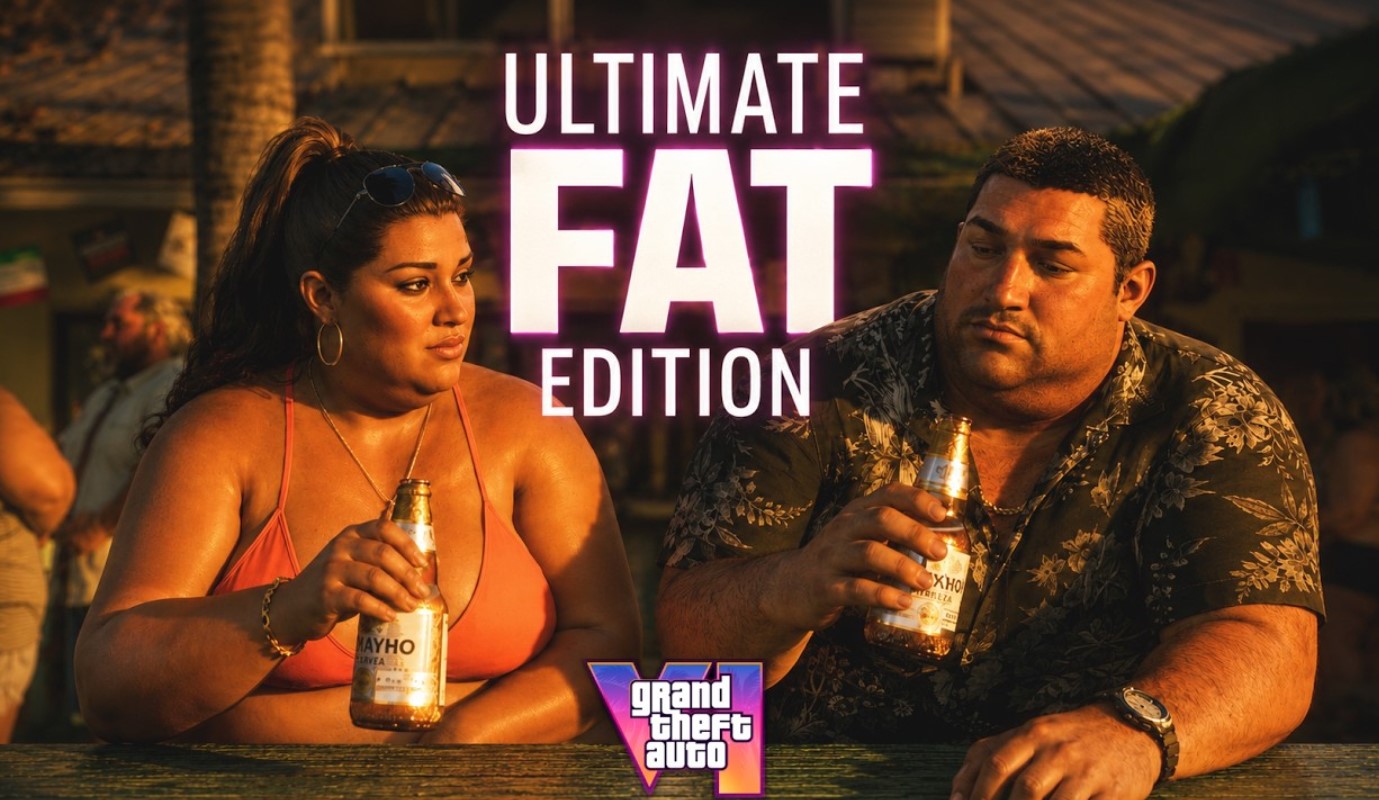
FAQ
Why do NPCs in most games look the same size?
Because body types have historically shared one animation set, and animations authored for one build break on another – hands miss steering wheels, strikes land short, limbs clip through geometry.
What did Rockstar change?
It built a system that retargets animations on the fly, adjusting them in real time to the character’s actual skeleton, which removes the pressure to keep every body close to one reference build.
Who confirmed this?
Rob Nelson, Rockstar North’s head of development and co-studio head, in an IGN interview published August 27, 2026, said NPCs have more height and body shape differentiation than ever before.
What else varies in the crowd?
Age, skin detail including freckles, moles and tanning, tattoos, piercings, plastic surgery and fashion – with appearance also reflecting which neighbourhood a character lives in.
Can Jason and Lucia gain weight?
Yes. Food affects their weight, and exercise visibly builds muscle, a system returning from San Andreas and expanded from Red Dead Redemption 2. Lack of sleep also changes their facial features.
Is this connected to the strip clubs?
No. Nelson’s comments were about the whole game, with examples involving fighting and sitting in cars. The strip-club framing came from later coverage, not from Rockstar.
Is muscle deformation physics confirmed?
No. Reporting on it has treated the claim as conditional and unverified.
A Crowd That Looks Like a Place
What makes this worth more than a headline is that the achievement is invisible when it works.
Nobody playing GTA 6 in November is going to stop and admire the animation retargeting. They will walk down a street in Little Cuba, register without thinking about it that the people look like they live there, and carry on. That is the entire goal, and it took rebuilding a foundational system to reach it.
The constraint was real, and it was boring: one animation set, many bodies, pick a compromise. For twenty years almost everyone picked the same compromise, and crowds in games have looked subtly wrong ever since without most players being able to say why.
Rockstar spent the budget to pick differently. Whether it holds up across hundreds of hours of fights, car entries and conversations between people of wildly different heights is the open question, and November 19 answers it.
Until then, the next time you see a game crowd where everyone is the same size, you will know exactly why.
Learned something about why game crowds look like that? Share it, bookmark it, and go count the body types in your favourite open world – and if creative or commercial collaboration brought you here, the T-Minus team is one message away.