

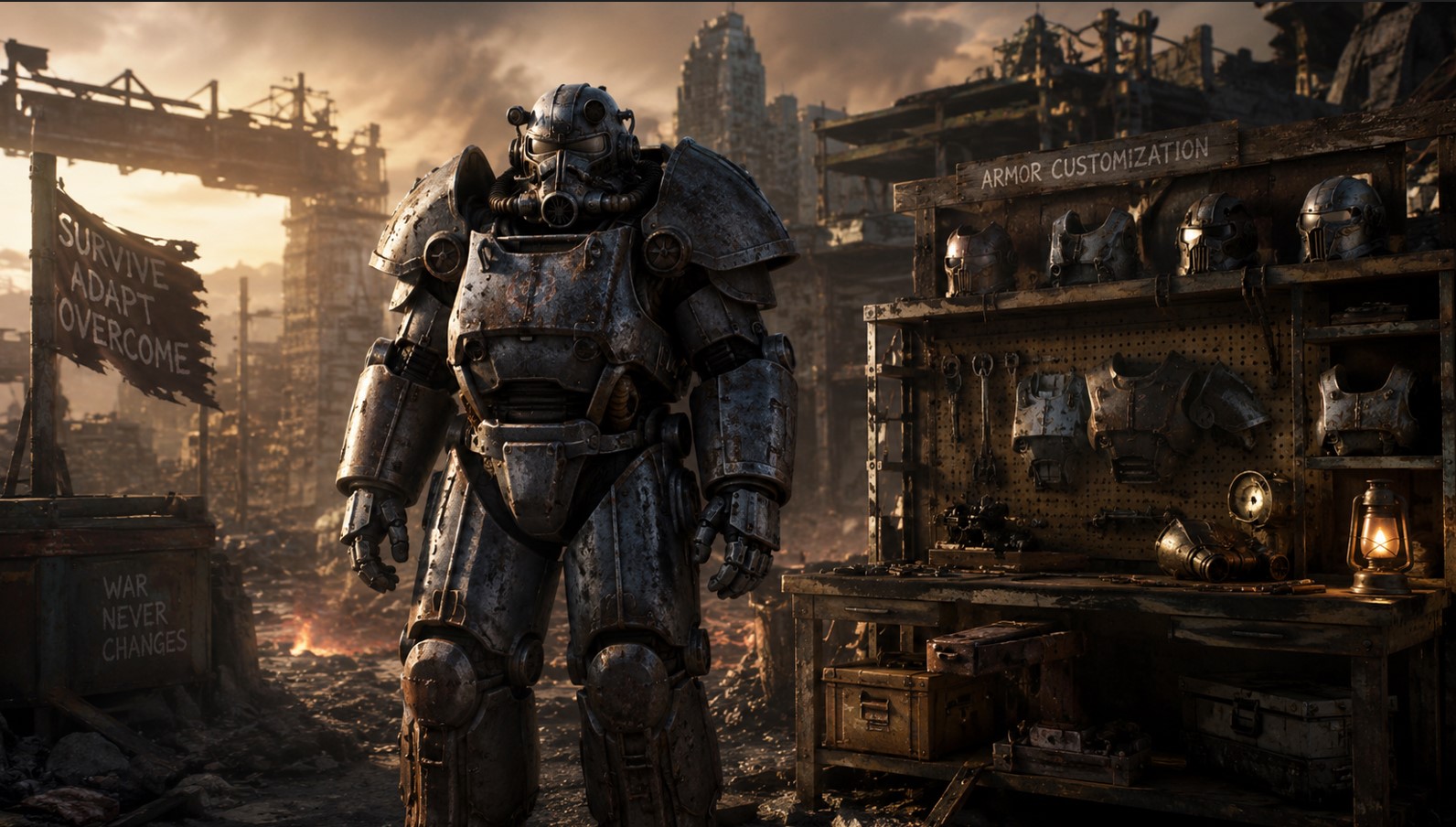
Why Is Fallout 4 Armor the Real Star of the Commonwealth?
So you stumble out of Vault 111, squinting at the sun, and the first thing the wasteland throws at you is a pack of raiders swinging pipe pistols. That cozy blue vault suit you’re wearing? It’s basically pajamas. And that’s the exact moment most players figure something out fast – what you put on your back matters just as much as what you put in your hands.
Here’s the thing. Fallout 4 armor isn’t a side dish. It’s the whole meal. The Commonwealth is mean, and it does not care about your feelings. Ferals come at you in packs, super mutants lob mini-nukes like party favors, and a single legendary ghoul can ruin a perfectly good afternoon. The right gear is the difference between strolling through a firefight and reloading your last save for the fifth time.
What makes the system click is how layered it all is. You’re not just grabbing one jacket and calling it a day. You’re building a kit, piece by piece, like assembling a sandwich nobody asked for but everybody needs. And honestly? Once it clicks, it’s one of the most satisfying loops in the whole game.
How the Layered System Actually Works?
Older Fallout games kept armor simple – one outfit, one number, done. Fallout 4 said nah, let’s get fiddly with it. And it works better than it has any right to.
Picture your character like a mannequin with slots. Underneath everything sits your base outfit – a vault suit, army fatigues, a flannel shirt, whatever. That layer mostly covers your skin and gives small bonuses. Then you bolt actual armor plates on top of that, across different body parts. Each plate guards its own zone.
Here’s where the gear physically lands on your body:
- Helmet or headgear – covers the dome, the squishiest target in any shooter.
- Chest piece – the big one, since most shots land center mass.
- Left and right arms – two separate slots, so you can mismatch them.
- Left and right legs – same deal, independent pieces.
That means a full kit is one outfit plus six armor pieces. Six. And every single one can be a different material, a different weight, even a different legendary roll. You could be running heavy combat armor on your torso, light leather on one arm, and a beat-up raider plate on a leg because that’s all you’ve scavenged so far. The game lets you be a fashion disaster if it keeps you alive.
Every piece tosses three numbers your way: damage resistance (physical hits, bullets, claws), energy resistance (lasers, plasma, the spicy stuff), and radiation resistance (the slow killer nobody respects until they’re glowing). Stack those numbers across all six slots and your character goes from tissue paper to tank.
There’s a small catch worth flagging early. Some full-body outfits – think the Silver Shroud costume or certain fancy coats – can’t take armor over them. They’re all-or-nothing. So when you find a gorgeous outfit that locks out your plates, you’ve gotta weigh style against survival. Cruel choice, that one.
Power Armor vs Regular Gear – Pick Your Fight
Now we get to the big fork in the road. Fallout 4 armor splits into two totally different worlds, and which one you lean on shapes your entire playstyle.
Regular armor is the layered stuff we just covered. It’s light, it’s free to repair, and it never asks for anything. You wear it, you fight, you loot. Simple.
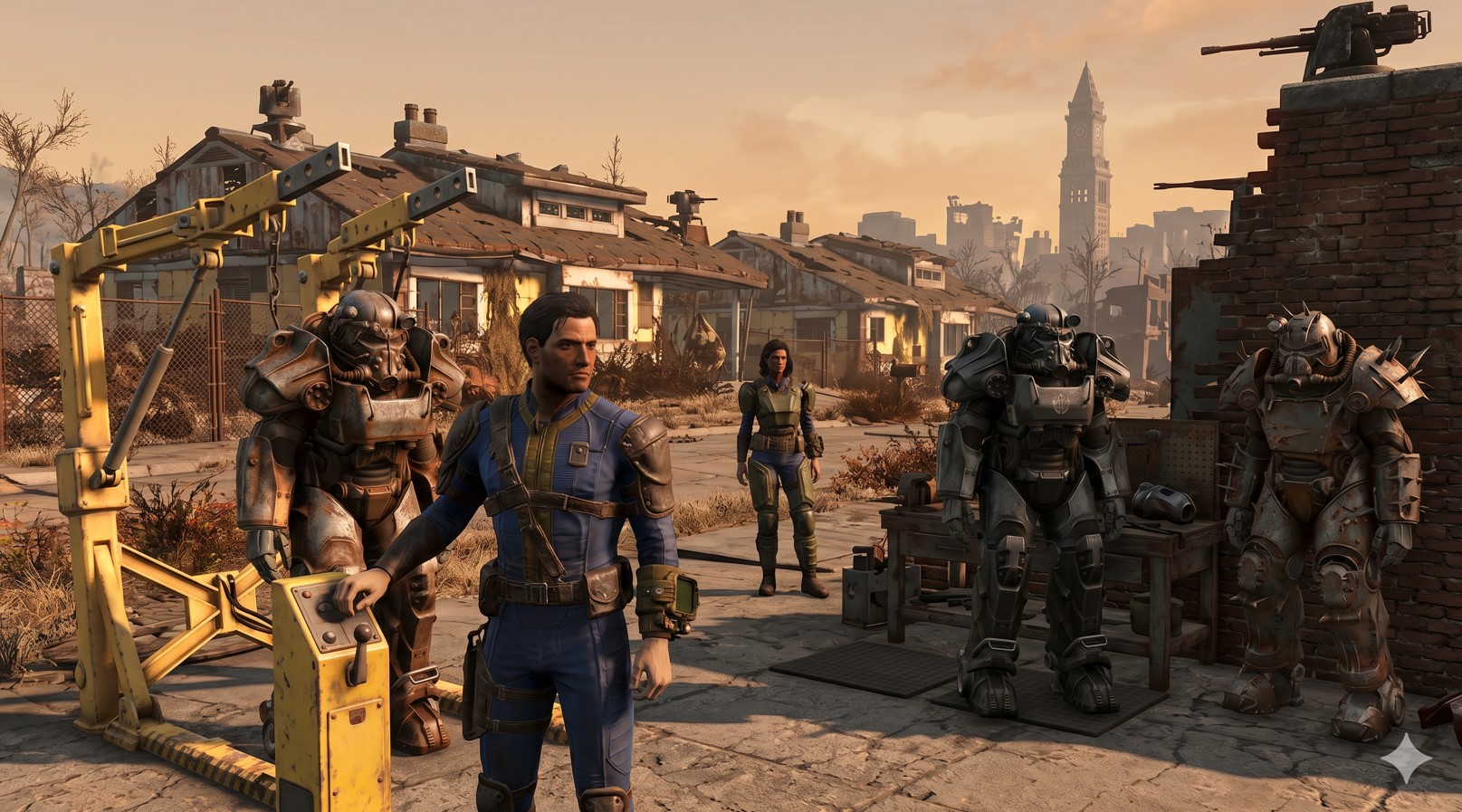
Power armor is a different animal entirely. It’s not clothing – it’s a walking exoskeleton you literally climb into, like a mech. You step onto a frame, the chest pops open, and you become a two-ton wrecking machine. The downside? It runs on fusion cores, and those drain like a phone battery on 1%. Sprint, fight, fast travel – the meter ticks down, and when it hits zero you’re stuck shuffling around in a dead suit.
One thing trips up newcomers all the time: when you’re in power armor, your regular armor bonuses switch off completely. The frame ignores them. So those carefully modded leather pieces you slaved over? They mean nothing once you’re inside the metal. The suit is its own self-contained system.
| Factor | Regular Armor | Power Armor |
|---|---|---|
| Weight on you | Light, keeps you nimble | Heavy, but no carry penalty inside |
| Fuel needed | None | Fusion cores, always draining |
| Raw protection | Solid late-game | Far higher, even early |
| Repair cost | Cheap and easy | Pricey, needs materials |
| Best for | Long exploration, stealth | Boss fights, big set-pieces |
The smart move? Run both. Keep a sturdy regular kit for daily wandering and sneaky business, then dock a power armor suit at your settlement for when things get genuinely scary. Treat power armor like a tool, not a costume. Pull it out for the deathclaw, park it for the grocery run.
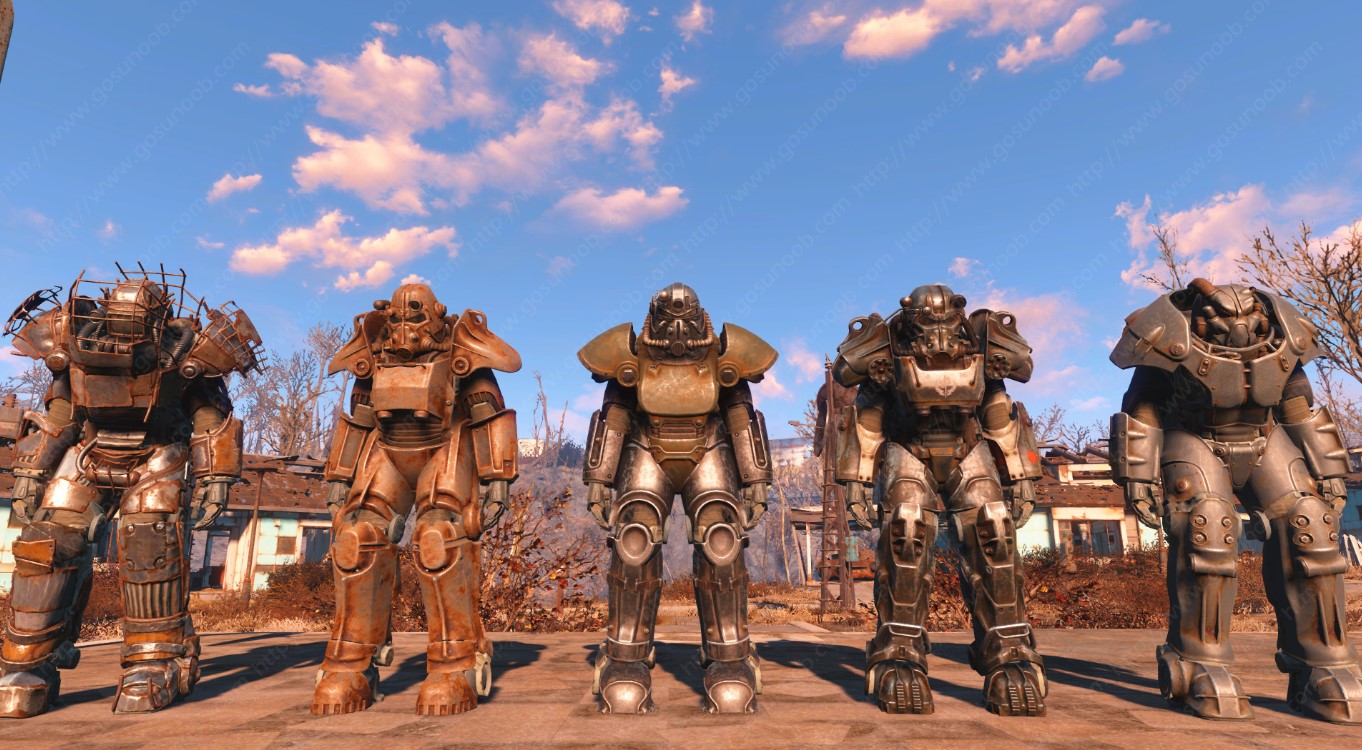
The Best Fallout 4 Armor Sets Worth the Grind
Alright, let’s talk picks. Because not every scrap you peel off a corpse is created equal, and chasing the good stuff gives you a real reason to wander.
For pure non-power protection, the Marine Armor from the Far Harbor add-on is the crown jewel. It guards against everything – bullets, energy, even radiation – and once you upgrade it at a workbench, it tanks hits like a champ. It’s heavy, sure, and you need the DLC. But fans rate it as one of the strongest regular sets in the entire game for a reason.
Closer to home, Combat Armor is the reliable workhorse. It comes in three flavors – standard, sturdy, and heavy – and it leans toward stopping physical damage. Plenty of players rock combat armor from the midgame straight through the credits and never feel underdressed. It’s everywhere, it’s modular, it just works.
If you’re more of a stealthy, energy-weapon type, Synth Armor swings the other way – it shrugs off lasers and plasma better than it stops bullets. The Institute’s synth requisition officer sells clean sets if you side with them, which beats peeling grimy plates off dead synths.
A few standout sets reward the explorers:
- Marine Armor – top-tier all-rounder, needs the Far Harbor expansion.
- Heavy Combat Armor – balanced, common, and beginner-friendly.
- Destroyer’s Armor – boosts mobility and run-and-gun builds, great for Commando types.
- Synth Heavy Armor – energy-resistant, favorite for laser-heavy fights.
The fun part is mixing them. Nobody says your six pieces have to match. Pile on whatever combo gives you the resistances your build craves, and let the wasteland deal with your questionable fashion sense.
Power Armor Got a Serious Glow-Up
Power armor deserves its own spotlight, because Bethesda basically reinvented it for this game. It went from “slightly better outfit” to “holy cow I’m a juggernaut.” Let’s break down the lineup.
The progression runs through several models, each tougher than the last. You start scrounging older frames and work your way up to the gear that turns deathclaws into speed bumps.
| Model | Where You’ll Run Into It | What Makes It Special |
|---|---|---|
| T-45 | Earliest, found around the early map | Entry-level, gets the job done |
| T-51 | Mid-tier, scattered locations | Classic look, solid all-around |
| T-60 | Brotherhood of Steel reward | Most modifiable, the cover-star suit |
| X-01 | Level 30+, late-game spots | Strongest base-game protection |
| X-02 / Hellfire | Enclave quests, post-2024 update | Sleek, stat-heavy, Enclave-flavored |
The T-60 is the one you’ve seen on the box art, all chunky and proud, and word is it’s even Todd Howard’s personal favorite. It’s the most modifiable suit going, with roughly 980 physical and 645 energy resistance on a full kit. You typically earn it through the Brotherhood of Steel storyline, which fits – those zealots love their power armor.
But the real prize in the base game is the X-01. This thing is a monster. A full upgraded set pushes around 1000 physical and 800 energy resistance, plus it knocks down radiation. It starts spawning once you hit level 30, and you can hunt pieces at Atom Cats Garage, the Nuka-World power plant, Fort Hagen, and a few other corners. Wearing a complete X-01 set genuinely makes you feel unkillable. Bullets just bounce.
And here’s a fresher wrinkle. The free next-gen update that landed on April 25, 2024 – riding the wave of the Fallout TV show – folded a bunch of Creation Club content straight into the game at no cost. That bundle brought back the Enclave through a questline called Echoes of the Past, and tied to it you can grab two slick new suits: the Hellfire Power Armor and the X-02 Power Armor. The X-02 even edges out the X-01 on stats while looking like something built to scare anything with a heartbeat. If you’ve come back to the Commonwealth recently, that gear is sitting there waiting for you.
Don’t sleep on paint jobs, either. Power armor frames take cosmetic finishes that aren’t just for show – a lot of them hand you small stat boosts, like a bump to a SPECIAL attribute or a touch of extra resistance. The Atom Cats give you a fun garage-rat look, the Brotherhood paint screams faction pride, and the various add-ons toss in their own themed coats. So your suit can flex personality and pull a little mechanical weight at the same time. Why not both?
Quick tip on fusion cores, since they’re the lifeblood here: grab the Nuclear Physicist perk to stretch each core further, and stash spares everywhere. Running dry mid-fight is a special kind of panic you only experience once before you start hoarding. And keep an eye out for them in police stations and military spots – those red glowing chargers on the wall are basically free fuel if you’ve got the lockpicking chops.
Fallout 4 Armor Mods That Pull Their Weight
Finding gear is half the story. Modding it is where Fallout 4 armor really opens up, and where the workbench becomes your best friend.
The gateway is the Armorer perk, parked under the Strength tree. Rank it up and you gain access to better and better modifications. Higher ranks need higher character levels, so this is a slow burn you invest in over a full playthrough. Pair it with some points in Science for the high-tech stuff, and your bench can crank out gear that wrecks.
So what can you actually bolt onto a piece? A few categories matter most:
- Material mods – bump a piece from standard to sturdy to heavy, raising raw resistance.
- Misc mods – add deep pockets for extra carry weight, which any hoarder will worship.
- Resistance mods – tilt a piece toward stopping bullets, energy, or both.
- Lining and shielding – squeeze out extra radiation or energy protection.
The carry-weight pockets honestly deserve a shout-out of their own. The Commonwealth is a junkyard, and you will pick up every desk fan and coffee cup you see, telling yourself it’s “for crafting.” Slapping pocket mods on your armor means fewer trips home dragging a fridge’s worth of loot. It’s a quality-of-life thing that sneaks up on how much you appreciate it.
One gentle contradiction worth resolving here. Earlier I said power armor ignores your regular gear – and it does. But power armor pieces have their own separate mod system at the power armor station. So you’re not modding twice for nothing.
You mod your regular kit for walking-around life, and you mod your power frame for the heavy days. Two benches, two builds, both worth the trouble.
Legendary Effects and the Roll Everyone Wants
Here’s where the loot goblin in you wakes up. Some armor drops with a little star next to its name – that’s legendary gear, and it carries a special effect baked in. These effects range from “neat” to “completely busted,” and chasing the perfect one is its own minigame.
A few rolls that players genuinely lose sleep over: Chameleon, which turns you near-invisible while you’re crouched and still – stealth archers, this is your dream. Sentinel’s, which slashes incoming damage while you stand your ground. Cunning, which bumps your perception and agility. There are dozens, and they land on random pieces, so you’re basically pulling a slot machine every time a legendary enemy dies.
The thing about legendary effects is they can make a mediocre piece outshine a “better” one. A heavy chest plate sounds great on paper, but a lighter piece with the right legendary perk might serve your build way better. Numbers aren’t everything. Sometimes the weird roll wins.
Word of warning, though – don’t fall down the legendary farming rabbit hole too hard. It’s easy to spend hours save-scumming a single chest for a roll that may never come. The wasteland’s still out there. Go play it.
Ballistic Weave – The Sleeper Trick Nobody Talks About
Okay, gather round, because this is the tip that makes veterans nod knowingly. Ballistic weave is the most slept-on system in the whole game, and once you’ve got it, your whole approach to clothing changes.
Normally, those flimsy outfits – army fatigues, a newsboy cap, a clean suit – offer basically zero protection. Ballistic weave flips that. It’s a mod that lets you add real armor values to clothing items, turning your hat and undershirt into legit defensive layers that stack with your plates on top. Suddenly your fashionable outfit is also a flak jacket.
How do you get it? You earn it through the Railroad faction. Progress their questline far enough – the radiant “jackpot” missions – and the option to craft ballistic weave at an armor bench gets handed to you. It’s not flashy, there’s no big cutscene, just a quiet new option that quietly upgrades your whole game.
The classic move is weaving a hat plus a versatile outfit, then layering armor over it. That hidden chunk of resistance under your visible gear adds up to a shocking amount of survivability.
It’s the kind of thing you don’t notice until you take it off and suddenly feel naked. Trust me on this one – chase the Railroad, get the weave.
Quick Tips Before You Gear Up
Let me leave you with a handful of things I wish someone had told me earlier. Small stuff, big payoff.
- Don’t sleep on radiation resistance. Ballistic and energy get all the love, but rads sneak up and tank your max health. A little rad protection goes a long way in glowing zones.
- Repair power armor before big fights, not during. A cracked piece offers way less protection, and patching it mid-battle isn’t a thing. Top it off at base.
- Carry a spare fusion core or three. Always. Running dry in a deathclaw’s living room teaches this lesson the hard way.
- Match resistances to your enemy. Fighting synths and the Institute? Lean energy. Brawling raiders? Stack physical. The wasteland rewards reading the room.
- Keep one good non-power kit at all times. Even mech mains need a light outfit for stealth, vendors, and those moments fusion cores run thin.
None of this is rocket science. It’s just the kind of habit that turns a rough run into a smooth one.
FAQ
What’s the strongest power armor in the base game?
The X-01 takes it, with roughly 1000 physical and 800 energy resistance on a fully upgraded set. It starts showing up once you hit level 30.
What’s the best regular armor?
Marine Armor from the Far Harbor expansion is the popular pick – strong across bullets, energy, and radiation, especially after you upgrade it at a bench.
Does regular armor work inside power armor?
Nope. The frame switches off all your regular armor bonuses. Power armor is its own system with its own separate mods.
How do I get ballistic weave?
Progress the Railroad faction’s questline far enough, and the mod unlocks at your armor workbench. It adds armor values to clothing items.
What perk do I need to mod armor?
The Armorer perk under Strength. Higher ranks open up better mods but need higher character levels, so it’s a slow investment.
Did the 2024 update add new armor?
Yeah. The free next-gen update on April 25, 2024 folded in Creation Club content, including the Hellfire and X-02 power armor through Enclave-themed quests.
How many armor pieces can I wear at once?
One base outfit plus six plates – a helmet, chest, two arms, and two legs. Mix and match materials freely.
Wrapping Up Your Wasteland Wardrobe
At the heart of it, Fallout 4 armor is a build system disguised as loot. You’re not just dressing a character – you’re deciding how you survive, how you fight, and how you move through one of gaming’s nastiest open worlds. Light and sneaky? Heavy and loud? A walking tank that laughs at deathclaws? The gear lets you be all of it.
The real magic is that none of it locks you in. Found a better chest piece? Swap it. Earned ballistic weave? Rebuild your whole approach. Hit level 30 and stumbled onto an X-01 frame? Congrats, you’re a god now. The Commonwealth keeps handing you new toys, and the fun never really stops being about what’s next on your back.
So go scavenge. Mod something. Chase a legendary roll you don’t even need. That itch to keep upgrading is the game working exactly as intended – and your wardrobe’s never truly finished out there.
P.S. You can champion our team’s mission by amplifying this post online across your social media channels and adding this content to your bookmarks for easy future reference. Your digital engagement not only expands our reach but also fuels our daily inspiration to keep innovating. If you are seeking creative or commercial collaboration, please write to the T-Minus team directly to bring your ideas to life.