
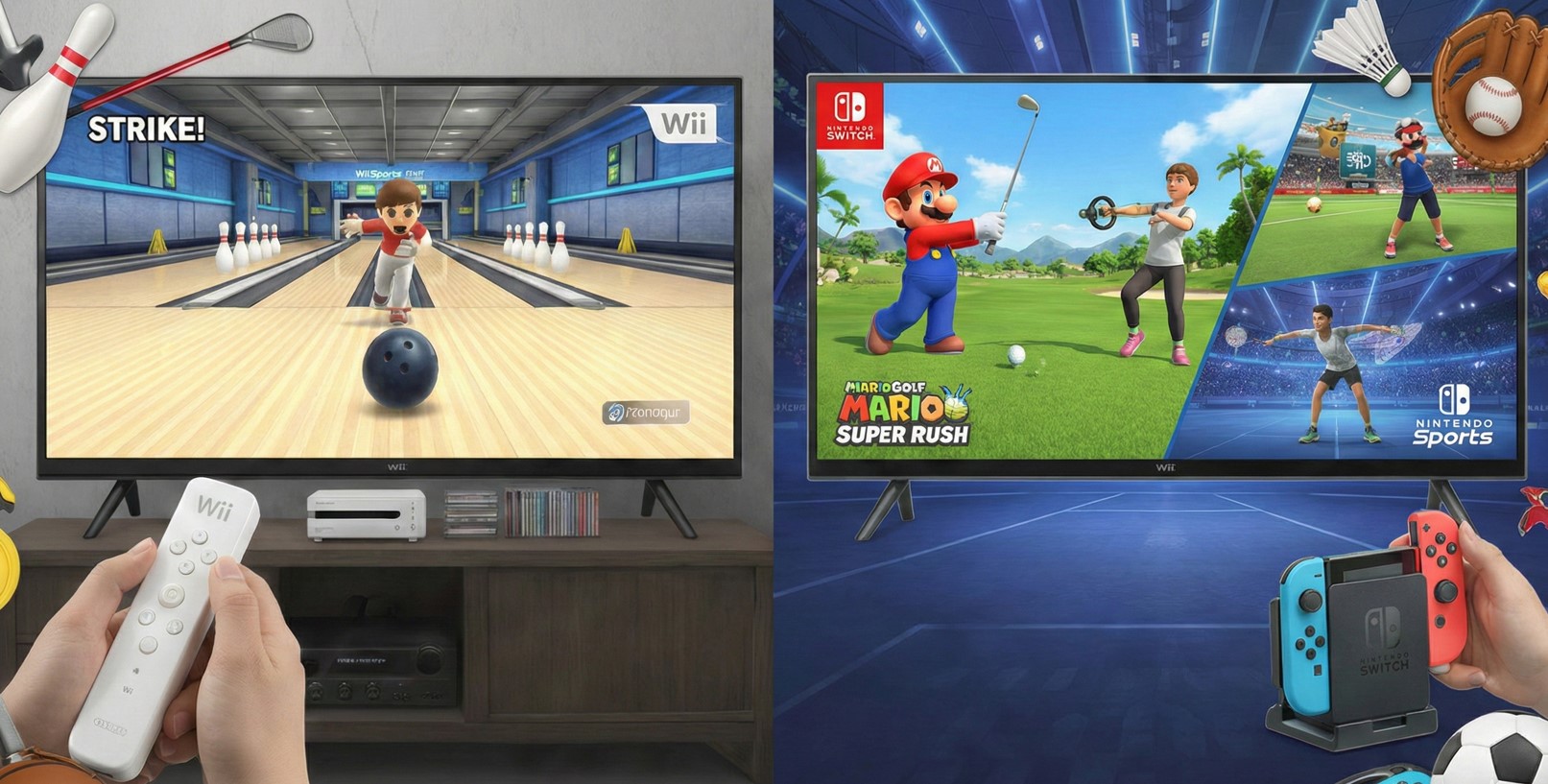
Wii Sports Bowling Brought Motion Controls to Your Living Room
Look, I’m not gonna pretend Wii Sports Bowling was some technical masterpiece. The graphics were basic. The physics were wonky. But none of that mattered because for the first time, your grandma could pick up a controller and actually bowl without needing a 30-minute tutorial on which buttons do what. The beauty was in the simplicity. You held the Wii Remote like a bowling ball, swung your arm, and let go of the B button. That’s it. No combo moves to memorize, no skill trees to grind through. Just you, a virtual lane, and ten pins waiting to get knocked down.
And here’s the thing – it worked. Not perfectly, mind you. Sometimes the sensor bar would lose track of your motion, sending your ball careening into the gutter for no good reason. But when it connected? When you nailed that curve just right and watched all ten pins explode? Chef’s kiss.
Why Motion Controls Actually Mattered?
Motion gaming wasn’t exactly new when the Wii dropped. We’d seen attempts before with the PlayStation EyeToy and various arcade gimmicks. But Nintendo did something different. They didn’t try to recreate real bowling perfectly. They captured the feeling of it.
You know what I mean? That satisfying weight shift, the follow-through, the little wrist flick at the end. Wii Sports Bowling got those moments right enough that your brain filled in the rest. It’s like how old pixel art games let your imagination do the heavy lifting – sometimes less detail means more immersion.
The game included training modes that actually helped you get better. Power Throws taught you to add spin. Picking Up Spares forced you to think strategically about angles. And the 100-Pin Game? Pure chaos, but the good kind.
How Did Nintendo’s Sports Franchise Evolve Over Time?
So Wii Sports was a massive hit – we’re talking 82 million copies bundled with the console. But where do you go from there?
Nintendo tried a few different approaches. Wii Sports Resort came next in 2009, adding twelve sports and better motion tracking with the MotionPlus accessory. The bowling was still there, but now it shared shelf space with wakeboarding, frisbee golf, and sword fighting.
Then things got weird. Wii Sports Club hit the Wii U in 2013, adding online multiplayer and HD graphics. Good ideas on paper, but the Wii U itself tanked so hard that most people never even knew this version existed.
Fast forward to 2022, and we got Nintendo Switch Sports. This one’s interesting because it tries to split the difference between casual accessibility and actual competitive depth. The bowling’s back, obviously, along with volleyball, badminton, soccer, chambara, and tennis.
The Big Differences Between Each Version
| Game | Year | Platform | Sports Count | Motion Tech | Online Play |
|---|---|---|---|---|---|
| Wii Sports | 2006 | Wii | 5 | Standard Remote | No |
| Wii Sports Resort | 2009 | Wii | 12 | MotionPlus | No |
| Wii Sports Club | 2013 | Wii U | 5 | Better tracking | Yes |
| Nintendo Switch Sports | 2022 | Switch | 6 (+ DLC) | Joy-Con | Yes |
The evolution’s pretty clear when you look at it laid out like that. Nintendo kept the core idea – simple, accessible motion sports – but tried different ways to expand it. Sometimes it worked (Resort’s variety), sometimes it didn’t (Club’s obscurity).
What’s wild is that bowling stayed in every single version. Tennis got cut. Baseball disappeared. But bowling? That’s the constant. Makes you wonder if Nintendo knows something we don’t about what makes a sport click in video game form.
Wii Sports Bowling Mechanics: Simple on Surface, Tricky Underneath
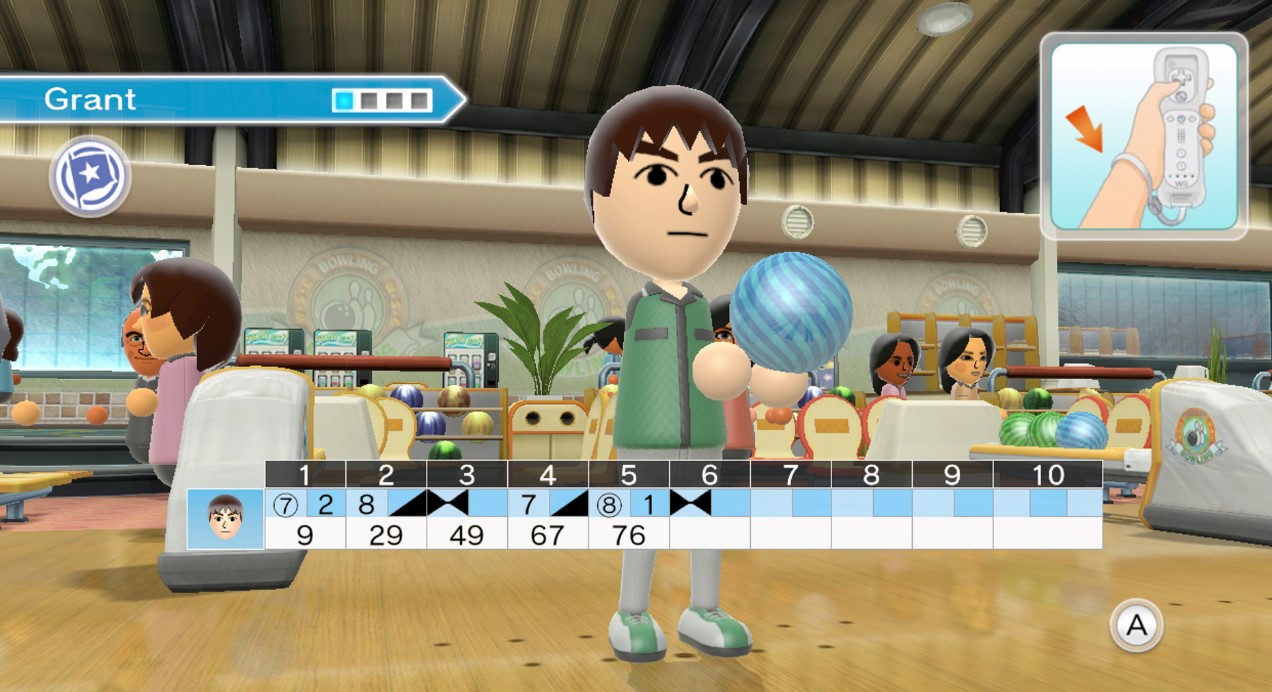
Let’s talk technique for a second. Wii Sports Bowling might look basic, but there’s actual strategy hiding in there.
Spin control is everything:
- Twist your wrist clockwise for a right hook
- Counter-clockwise for a left curve
- Keep it straight for power shots down the middle
Timing matters more than you’d think:
- Release too early, and you’re hitting the ceiling
- Too late, and you’re bouncing it off the lane
- The sweet spot is right as your arm reaches the bottom of the swing
Positioning changes the game:
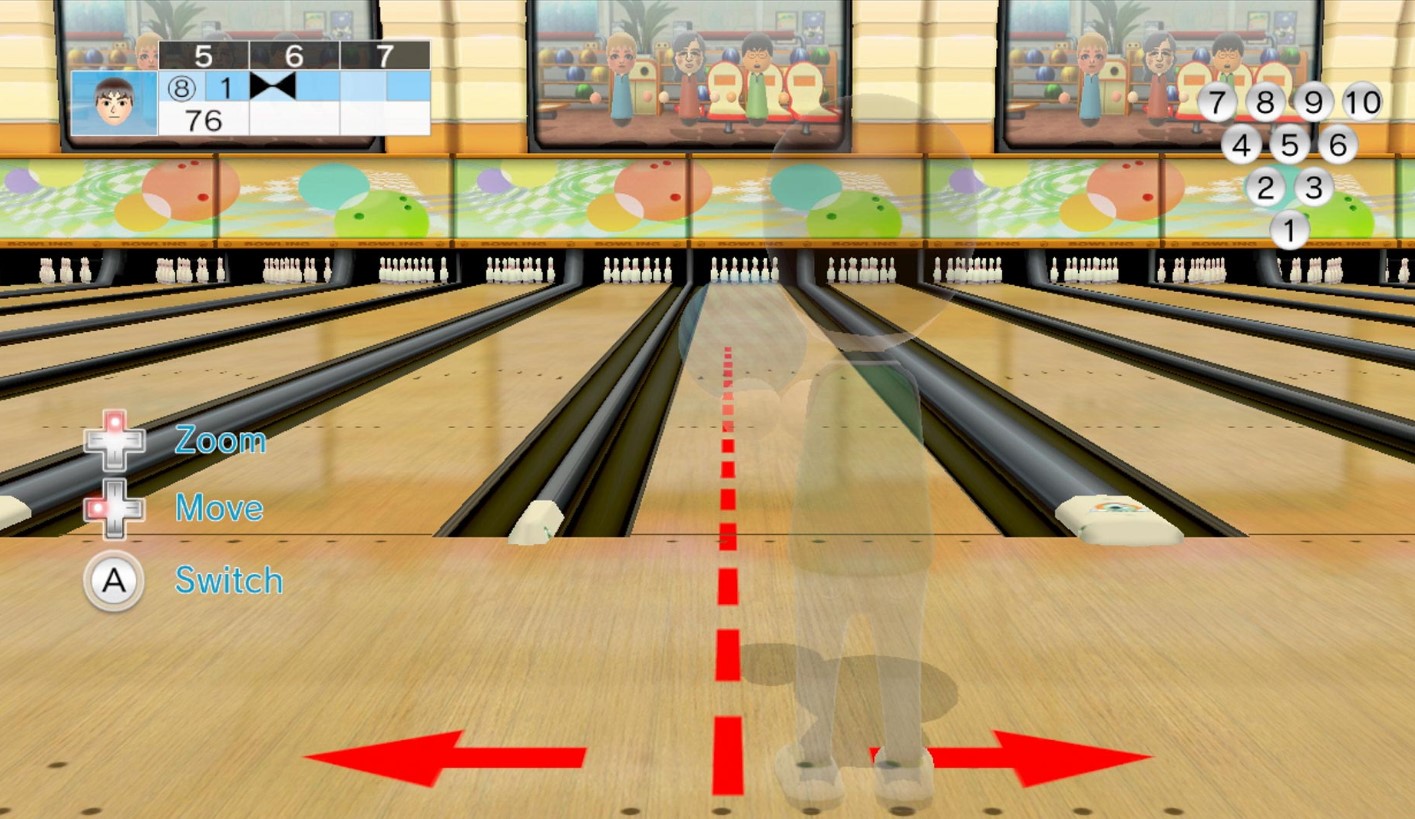
- Use the D-pad to move left or right on the lane
- Different angles help with tricky spare pickups
- The pros always line up their shots, even in this simplified version
I spent way too many hours perfecting my hook shot back in college. Roommates thought I was nuts, practicing the same motion over and over. But when can I consistently throw strikes by curving around the 1-3 pocket? Totally worth the weird looks.
The training modes actually taught real bowling concepts. The split conversions, the 7-10 split nightmare, understanding pin action – all legitimate bowling knowledge wrapped up in a game that looked like a Fisher-Price toy.
Why Other Nintendo Sports Titles Never Hit Quite the Same?
Tennis was solid. Boxing got people sweating. Golf had its fans. Baseball was… fine, I guess? But none of them captured lightning in a bottle the way bowling did.
I think it comes down to accessibility versus skill ceiling. Bowling in real life is approachable but has depth. You can go to a bowling alley once a year and have fun. Or you can join a league and obsess over oil patterns and ball weight distribution. The Wii version scaled that same range.
Tennis on Wii Sports? Kinda shallow once you figure out the timing. Baseball felt more like a quick-time event than actual baseball. Golf was probably the closest competitor, but it required more patience than most casual players wanted to invest.
The sports that worked best shared these traits:
- Clear cause and effect between motion and result
- Room for improvement without being frustrating
- Quick rounds that fit party game vibes
Resort added some genuinely fun stuff. Table tennis had surprising depth. Swordplay turned into impromptu lightsaber battles at every party. Frisbee was weirdly relaxing. But bowling? Still the crown jewel.
The Competition Never Really Caught Up
Microsoft tried with Kinect Sports. Sony gave us Sports Champions with the Move controllers. Both had bowling. Both were fine. Neither became a cultural phenomenon.
Part of it was timing – the Wii hit right when motion controls felt fresh and exciting. By the time competitors arrived, the novelty had worn off a bit. But honestly? Neither Microsoft nor Sony seemed to understand that the jankiness was part of the charm.
They tried to make their bowling too realistic, too precise. They missed the point. Wii Sports Bowling succeeded because it felt good, not because it was accurate. There’s a difference, and it matters more than most developers realize.
Switch Sports Brings Bowling Back, But Different
So here we are in 2026, and Nintendo Switch Sports is still getting updates. The bowling’s evolved – better graphics, online tournaments, and actual leg strap accessories for soccer if you’re feeling ambitious.
The motion tracking with Joy-Cons is genuinely better than the old Wii Remote setup. More responsive, fewer weird glitches where your ball goes sideways for no reason. But you know what? Some people miss the chaos.
There’s something about the original Wii Sports that felt more… communal? Maybe it’s nostalgia talking, but those early sessions felt like everyone was equally confused and delighted. Switch Sports is smoother, more polished, but sometimes that rough charm gets smoothed away, too.
| Feature | Wii Sports | Switch Sports |
|---|---|---|
| Graphics | Basic, charming | Clean, modern |
| Accuracy | Wonky but fun | Precise, reliable |
| Online Play | None | Full featured |
| Party Vibe | Legendary | Pretty good |
| Nostalgia Factor | Maximum | Building up |
The online modes are actually pretty cool, though. You can join clubs, compete in ranked matches, earn cosmetic rewards. It’s what 2006 bowling would’ve been if the online infrastructure existed back then.
What Modern Bowling Gets Right and Wrong?
Switch Sports bowling nailed the feedback. Every throw feels satisfying. The pins react realistically. The sound design is crisp. From a pure game design perspective, it’s superior to the original in every measurable way.
But here’s the catch – and there’s always a catch, right? – it doesn’t have that same magic. The graphics are so clean they’re almost sterile. The Miis look less goofy, more generic. The whole thing feels like it’s trying to be a proper sports sim instead of a party game that happens to involve sports.
Not saying it’s bad. Actually, it’s quite good if you approach it on its own terms. Just different. The original had this scrappy, experimental energy. Switch Sports feels like a known quantity, polished and refined, but missing that spark of “holy crap, are we really bowling on a video game console?”
The Cultural Impact Nobody Saw Coming
Let’s be real for a second. Wii Sports Bowling ended up in retirement homes. Physical therapy centers used it for rehabilitation. Families who’d never touched a game console suddenly had Wii Sports tournaments at Thanksgiving.
That’s not normal. Games don’t usually escape the gamer bubble like that. But something about the simplicity and physicality broke through barriers that the industry had spent decades building.
I remember my 75-year-old aunt getting competitive about her bowling average. She couldn’t tell you what a PlayStation was, didn’t know Mario from Sonic, but she knew her hook shot was better than my uncle’s power throw. That’s the legacy right there.
Real-world impacts nobody expected:
- Senior centers are adding Wii Sports to activity programs.
- Schools are incorporating it into PE classes.
- Actual bowlers practicing form and strategy.
- Families connecting across generational gaps.
The game became a weird cultural touchstone. References in TV shows, YouTube compilations of people breaking TVs with flying Wii Remotes, and an entire generation that associates bowling with waggling a white plastic controller.
Where Motion Gaming Goes From Here?
Motion controls are everywhere now. VR headsets track every finger twitch. PlayStation has gyro controls in every controller. Even phone games use accelerometers for steering and aiming.
But we lost something along the way. That sense of wonder, of doing something genuinely new. Wii Sports Bowling was clunky and imprecise, but it was also pure and joyful in a way that’s hard to recapture once you’ve seen it all before.
Maybe that’s fine. Maybe every medium goes through this – the experimental phase, the refinement phase, the nostalgia phase. We’re definitely in the nostalgia phase now, looking back at 2006 through rose-tinted glasses while playing technically superior versions that don’t quite hit the same.
The question is whether anyone can recapture that lightning. VR bowling exists, and it’s pretty incredible from a simulation standpoint. But is it fun in the same way? Does it bring people together the same way? Jury’s still out.
FAQ
Can you still play Wii Sports Bowling today?
Absolutely. The Wii still works fine if you’ve got one lying around, and used copies are dirt cheap. You can also grab Nintendo Switch Sports for the modern version.
What’s the highest score possible in Wii Sports Bowling?
In the standard game, 300 is a perfect score, just like real bowling. The 100-Pin Game maxes out at 3000 if you somehow knock down every single pin.
Why did my Wii Remote keep flying out of my hand?
Two reasons: you were swinging too hard (it’s a game, not actual bowling), and you forgot to use the wrist strap. Nintendo shipped millions of replacement straps after people yeeted their controllers through TVs.
Is Switch Sports bowling better than the original?
Technically? Yes. Emotionally? Depends on who you ask. It’s more accurate and looks nicer, but the original has that special sauce that’s hard to quantify.
Can you play Wii Sports Bowling online?
Not the original Wii version, no. But Nintendo Switch Sports has full online functionality with ranked matches and clubs.
What happened to the other sports in the series?
Baseball got cut after the original. Tennis and golf stuck around but got less focus. Nintendo keeps experimenting with new sports each version while keeping bowling as the anchor.
Did Wii Sports Bowling actually help people learn real bowling?
Yeah, somewhat surprisingly. The basic concepts of spin, angle, and timing translate pretty well. Won’t make you a pro, but it’s better than nothing for understanding fundamentals.
Looking Back, Rolling Forward
Here’s the thing about Wii Sports Bowling – it was never supposed to be this important. It was a pack-in tech demo, showing off motion controls to justify Nintendo’s weird new console that looked like a DVD player had a baby with an iPod. But it became something bigger. A shared experience across age groups and skill levels. Proof that games could be for everyone without dumbing anything down. A reminder that fun matters more than fidelity.
These days, gaming’s all about ray tracing, 4K textures, and frame rates. Which is cool, don’t get me wrong. But sometimes I miss the simplicity of swinging a Wii Remote and watching pins scatter. No patches to download, no battle passes to grind, no microtransactions for different colored balls.
Help lift T-Minus higher by spreading this post far and wide on social platforms right now and saving it to your bookmarks – every share helps us break through the noise! As a small, ambitious team, we rely on fans like you to keep the trajectory upward. Got ideas for creative collaboration, custom work, or business opportunities? Drop the T-Minus team a direct message – we’d love to connect.