
What Made PC-98 Games So Special in Gaming History?
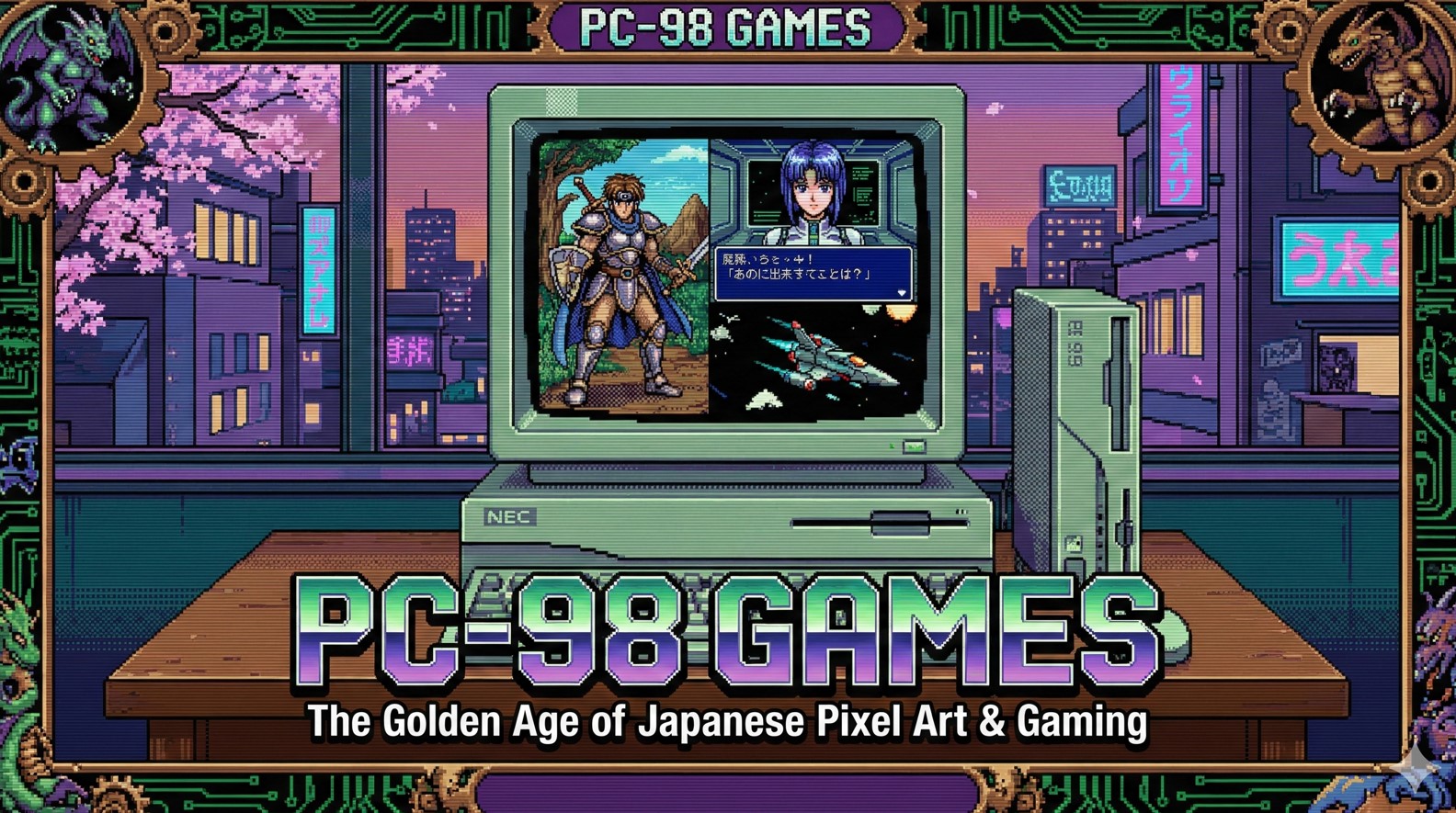
You know what’s wild? While most Western gamers were busy with their Commodore 64s and early IBM compatibles, Japan had something completely different cooking. The NEC PC-9800 series wasn’t just another computer – it was the dominant force in Japanese computing for nearly two decades. Honestly, PC-98 games that came out of this ecosystem were nothing short of remarkable. The PC-98, as enthusiasts affectionately call it, launched in 1982 and maintained its stranglehold on the Japanese market until the mid-90s. But here’s the thing: this wasn’t about raw power or cutting-edge technology. The platform succeeded because NEC understood what Japanese consumers actually wanted. Higher-resolution displays, improved text rendering for complex kanji characters, and a standardized architecture that made developers’ lives easier.
The Golden Age of Visual Novels Started Here
If you’ve ever played a visual novel, you owe a debt to the PC-98. This platform basically invented the genre as we know it today. Companies like Elf, Alice Soft, and Leaf cut their teeth on NEC’s hardware, creating interactive stories that blended compelling narratives with anime-style artwork.
Take Dōkyūsei (1992), for instance. This high school romance simulator established templates that developers still follow today. The freedom to wander around, meet different characters, and shape your own story – that wasn’t common back then. Most games still held your hand through linear experiences.
But there’s a catch. Many early PC-98 visual novels contained adult content, which means they rarely made it overseas. This created a weird cultural divide where Japanese gamers had access to sophisticated narrative experiences while Western audiences were still treating games primarily as action-focused entertainment.
How Technical Limitations Sparked Creativity?
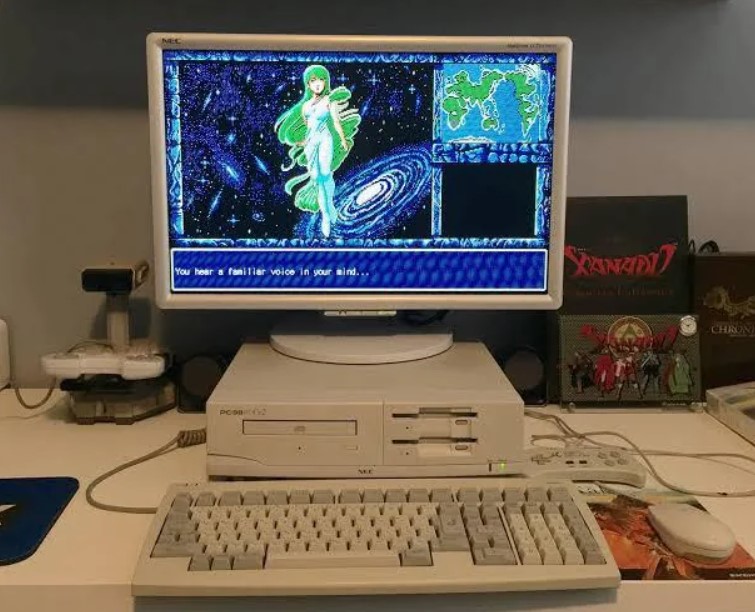
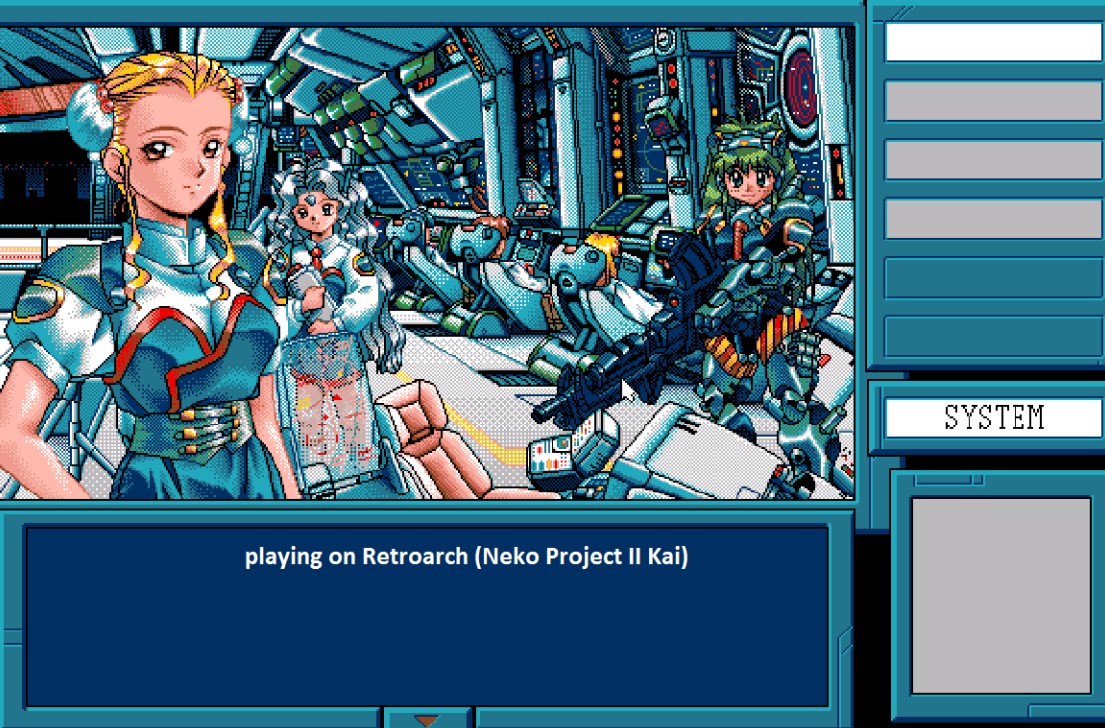
The PC-98’s graphics capabilities seem laughable now. We’re talking 640×400 resolution with 16 colors in most cases, though later models bumped that up. Yet developers squeezed incredible artwork from these constraints. Pixel artists became absolute masters of dithering, color selection, and composition.
Look at games like Policenauts or YU-NO. The artwork in these titles rivals professional anime production, all rendered in a 16-color palette. That takes great skill. Modern games throw millions of polygons around like confetti, but these developers had to make every single pixel count.
The sound chip situation was equally interesting. The PC-98 used FM synthesis through Yamaha’s YM2608 chip, creating these distinctive, slightly metallic soundtracks that define the era. Games like Touhou Project (which started on PC-98 before migrating to Windows) used this hardware to create memorable musical experiences that fans still remix today.
PC-98 Games – RPGs That Defined a Generation
While visual novels grabbed headlines, RPGs were the PC-98’s bread and butter. Japanese developers crafted intricate dungeon crawlers, strategic combat systems, and sprawling narratives that Western audiences wouldn’t see for years.
Key PC-98 RPG Characteristics
| Feature | Description | Notable Examples |
| First-person dungeons | Grid-based exploration with random encounters | Wizardry series, Might and Magic |
| Tactical combat | Turn-based battles with positioning elements | Langrisser, Fire Emblem (prototype) |
| Adult themes | Mature storytelling not common in Western games | Rance series, Dragon Knight |
| Intricate systems | Deep character customization and skill trees | Brandish, The Legend of Heroes |
The Brandish series deserves special mention. These action-RPGs featured rotating dungeons and real-time combat that felt ahead of their time. When Falcom eventually ported these to SNES and other platforms, they had to significantly dumb down the complexity because the PC-98 versions were just too intricate for console audiences.
And honestly? The Rance series, despite its controversial content, featured surprisingly deep tactical gameplay. Strip away the adult elements, and you’ve got legitimately challenging strategy-RPG mechanics that influenced countless later games.
The Touhou Project Phenomenon
We can’t talk about PC-98 games without addressing Touhou Project. ZUN’s bullet-hell shooter series started on this platform with five games between 1997 and 1998. These weren’t the polished Windows entries most fans know – they were rougher, weirder, and had this distinct lo-fi charm.
The PC-98 Touhou games (Highly Responsive to Prayers, Story of Eastern Wonderland, Phantasmagoria of Dim.Dream, Lotus Land Story, and Mystic Square) established the series’ core mechanics. Grazing bullets, pattern memorization, the focus on female characters with elaborate backstories – it all started here.
But there’s something bittersweet about these early entries. They’re harder to play now because emulation isn’t perfect, and the games themselves are less forgiving than later installments. Still, hardcore fans treat them like archaeological treasures.
Arcade Ports and the Home Gaming Revolution
The PC-98 became a haven for arcade ports, especially shooters. Companies like Compile, Taito, and Capcom regularly brought their coin-op hits to NEC’s platform, sometimes with exclusive features or improvements.
Popular Arcade Port Categories:
- Shoot-em-ups: Raiden, Battle Garegga, DoDonPachi
- Fighting games: Street Fighter II’, Fatal Fury Special
- Puzzle games: Puyo Puyo, Columns, Puzzle Bobble
What’s fascinating is how developers adapted these games. Arcade hardware often surpassed what the PC-98 could handle, so programmers got creative. They’d optimize sprite routines, reduce color depths, or redesign levels to maintain playability. Sometimes these versions played better than the originals because developers took time to refine the experience for home play.
Puyo Puyo, for instance, found massive success on PC-98 before becoming a household name elsewhere. The computer version let players practice endlessly without pumping quarters into a machine, which helped create Japan’s competitive puzzle game scene.
Why Western Gamers Missed Out?
Here’s where things get frustrating. The PC-98 never officially launched outside Japan. NEC made half-hearted attempts to market the platform internationally, but these efforts went nowhere. The result? An entire generation of Western gamers completely missed this golden era of Japanese PC gaming.
Language barriers didn’t help. Most PC-98 games shipped with zero English support, and the complex kanji-based interface made them impenetrable for non-Japanese speakers. Fan translation efforts didn’t really take off until the 2000s, long after the platform died.
But you know what? That exclusivity created mystique. When emulators like Neko Project II finally made these games accessible, Western enthusiasts discovered this entire hidden library. Suddenly, we had access to proto-visual novels, unique RPGs, and arcade ports that never made it to DOS or early Windows.
The experience felt like uncovering lost history. Because in a way, it was.
The Technical Architecture That Made It Possible
Getting a bit nerdy here, but the PC-98’s architecture deserves recognition. NEC built the system around an Intel 8086 processor (later models used 80286, 386, and 486 chips), but everything else was proprietary. Custom graphics chips, unique sound hardware, and a completely different BIOS meant these machines couldn’t run standard IBM PC software.
PC-98 Hardware Evolution
| Model Generation | CPU | Graphics | RAM | Years Active |
| First (PC-9801) | 8086 | 640×400, 8 colors | 128KB-640KB | 1982-1985 |
| Second (VM/VX) | 80286 | 640×400, 16 colors | 640KB-1.6MB | 1985-1989 |
| Third (RA/RX) | 80386/486 | 640×400, 256 colors | 1.6MB-7.6MB | 1989-1995 |
| Final (98MATE) | Pentium | 640×480, 16.7M colors | 8MB+ | 1995-2000 |
This proprietary approach had pros and cons. Developers could optimize specifically for known hardware configurations, which explains why PC-98 games often ran smoother than DOS equivalents. But it also meant higher costs and eventual obsolescence when Windows 95 standardized everything.
Emulation and Preservation Challenges Today
Fast forward to 2025, and playing PC-98 games requires patience. Emulation exists, but it’s imperfect. Neko Project II remains the go-to emulator, though newer forks like Neko Project II kai offer better compatibility.
The real problem? Disk image availability. Many PC-98 games exist only on decaying floppy disks, and copyright issues prevent widespread distribution. Preservation efforts exist through sites like archive.org and dedicated fan communities, but countless titles remain lost or inaccessible.
Some companies have started re-releasing classic PC-98 titles on modern platforms. Falcom ported several Ys and Legend of Heroes games, though they often use the Windows versions rather than the original PC-98 releases. It’s better than nothing, but purists argue that something gets lost in translation.
And honestly? They’re not wrong. The PC-98 versions had this distinct aesthetic – the FM synth music, the limited color palettes, the careful pixel work – that disappears in modern remakes.
The Lasting Influence on Modern Gaming
Look closely at modern Japanese games, and you’ll spot PC-98 DNA everywhere. Visual novel conventions, tactical RPG mechanics, bullet-hell shooter patterns – the platform’s influence runs deep.
Companies that started on PC-98 became industry giants. Falcom, Type-Moon, Key, and many others honed their craft on NEC’s hardware before transitioning to Windows and consoles. The experience they gained creating complex games within tight technical constraints made them better developers.
Modern Game Elements Traced to PC-98:
- Multiple routes and endings in visual novels
- First-person dungeon crawling in JRPGs
- Pattern-based bullet-hell shooters
- Adult gaming as legitimate entertainment
- Doujin (independent) game development culture
The doujin scene particularly owes the PC-98 a debt. The platform’s accessibility – you didn’t need expensive dev kits or publisher approval – let independent creators make and distribute games freely. Comiket, Japan’s massive doujin convention, regularly featured PC-98 games throughout the 90s.
That culture of independent creation directly led to modern doujin hits like Touhou, Melty Blood, and Higurashi When They Cry. These games started as hobbyist projects before finding commercial success.
Collecting PC-98 Hardware and Software Today
So maybe you’re thinking about experiencing these games on original hardware. Good luck with that. PC-98 systems command serious prices now, especially later models in good condition. Japanese auction sites like Yahoo Auctions occasionally list them, but expect to pay $200-500 for working units, more for rare variants.
Software is equally tricky. Boxed PC-98 games have become collector’s items, with popular titles fetching premium prices. A complete-in-box copy of YU-NO or early Touhou games? You’re looking at several hundred dollars minimum.
Import fees, shipping costs, and the gamble of buying 30-year-old hardware make this an expensive hobby. Most enthusiasts stick with emulation, which is honestly the practical choice unless you’re deeply committed to authentic experiences.
But man, there’s something magical about booting up an actual PC-98 games and hearing that FM synth startup sound.
FAQ
What does PC-98 stand for?
PC-98 refers to the NEC PC-9800 series of personal computers that dominated the Japanese market from 1982 to the late 1990s. The “98” doesn’t mean the year – it’s just NEC’s model numbering.
Can I play PC-98 games on modern computers?
Yes, through emulation. Neko Project II and its variants let you run PC-98 software on Windows, Mac, and Linux. You’ll need disk images of the games, which are sometimes hard to find legally.
Are PC-98 games available in English?
Very few had official English releases. Fan translation groups have translated some popular titles like YU-NO and certain Touhou games, but most of the library remains Japanese-only.
Why didn’t the PC-98 sell outside Japan?
NEC focused exclusively on the Japanese market, where it already dominated. The system’s design centered on Japanese language support, making it less appealing internationally. IBM PC compatibles were also cheaper and more established globally.
What are the most valuable PC-98 games today?
Early Touhou games, Policenauts, YU-NO, and Snatcher command high prices. Rare visual novels from defunct companies can also be expensive. Condition and completeness significantly affect value.
Did any famous game series start on PC-98?
Several major franchises began on PC-98, including early entries in Touhou Project, The Legend of Heroes, Ys, Brandish, and numerous visual novel series that later moved to other platforms.
Is the PC-98 related to the IBM PC?
Architecturally similar but incompatible. Both used Intel x86 processors, but the PC-98 had completely different graphics, sound, and BIOS implementations. You couldn’t run IBM PC software on a PC-98 without special compatibility cards.
The Legacy Lives On
The PC-98 died commercially around 2000, but its spirit persists. Retro gaming communities keep the platform alive through emulation, preservation, and ongoing appreciation for what made these games special.
We’re talking about a system that shaped an entire nation’s gaming culture while remaining virtually unknown elsewhere. That’s kind of incredible when you think about it. The PC-98 proved that gaming could be more than just action and reflexes – it could tell complex stories, create intricate systems, and push creative boundaries within technical limitations.
Modern gamers discovering these titles often express amazement at their sophistication. These weren’t primitive early computer games – they were carefully crafted experiences that respected players’ intelligence and time. Developers couldn’t rely on flashy graphics or voice acting to carry weak gameplay. Everything had to be tight, polished, and engaging.
And you know what? That’s a lesson modern gaming could stand to relearn. PC-98 games remind us that constraints can breed creativity, that gameplay trumps graphics, and that taking risks on unconventional ideas sometimes creates entire new genres.
So whether you’re a hardcore retro enthusiast or just curious about gaming history, the PC-98 library deserves your attention. Yeah, emulation takes effort and language barriers exist, but the rewards – discovering these lost gems of Japanese gaming – make it worthwhile. These games represent a unique moment in gaming history that we’ll never see again, and that alone makes them worth preserving and celebrating.
Help YaninaGames reach more players by spreading this post far and wide on social networks and saving it to your bookmarks right now. Feel free to contact the team directly whenever you’d like to discuss exciting creative ideas or potential business partnerships!