

Silent Hill Townfall Walkthrough Tips: There’s a Formula Running Behind You
Nobody tells you this while you’re playing, and it changes everything. Silent Hill: Townfall doesn’t decide your ending through dialogue choices or a dramatic fork near the finish. It runs a hidden arithmetic on your behaviour across the entire campaign, and when you reach the end it reads the total and hands you whatever that number earned.
The formula, as the community has now pinned down:
Score = Discoveries − (Simon kills × 2) − (Cannula refills × 4) − (Zoe mistakes × 3)
That’s it. Four variables. No morality meter on screen, no notification when you lose points, no way to check your running total.
Which means you can play twenty careful hours and still land on the bad ending because you kept reviving at the wrong moments. Plenty of people did exactly that in the two weeks since launch, and the forums are full of them.
So instead of walking you corridor by corridor, let’s take the formula apart. Each variable, what moves it, and how to steer it toward the ending you actually want.
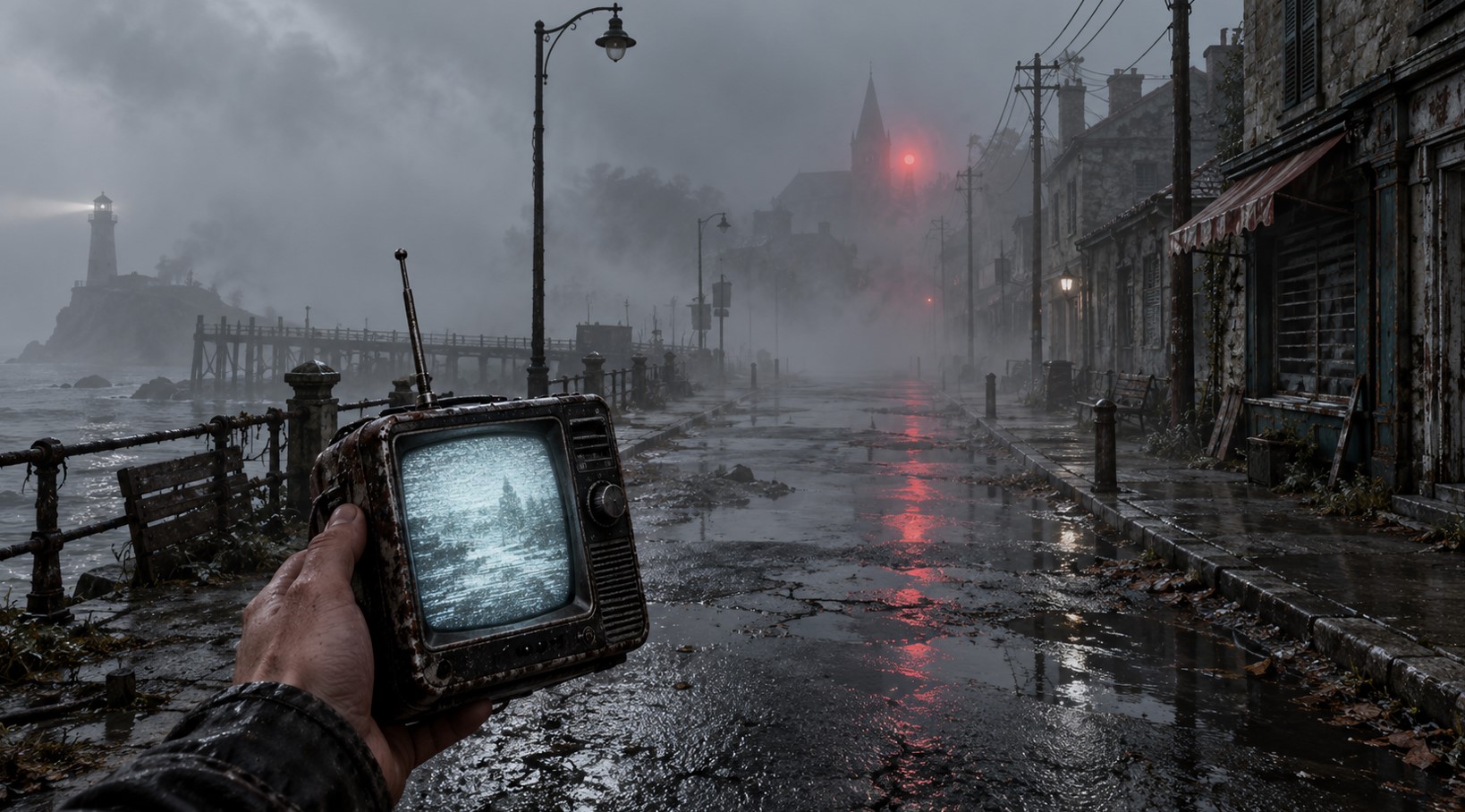
Quick orientation first. Townfall came out September 24, 2026 on PS5 and PC, developed by Screen Burn Interactive – formerly No Code, the Stories Untold and Observation team – and published by Konami with Annapurna. It sits at 81 on Metacritic with 89% of critics recommending it. You play Simon Ordell in the Scottish coastal town of St. Amelia in 1996, in first person, with a pocket CRT television instead of a radio.
The Thresholds You’re Aiming At
| Ending | Score Needed | Reputation |
|---|---|---|
| Justice | 20 or more | The good one, Gold trophy |
| Forever | 0 to 19 | The normal one, and the hardest to land |
| Abandoned | Below 0 | The bad one, easy to get by accident |
| Dog | New Game Plus only | Joke ending, three coins in dog banks |
| Sci-fi | New Game Plus only | Joke ending, skips the final boss entirely |
Look at that Forever row. A nineteen-point window is narrow, and it’s narrow in a game where a single careless revive swings you four points. That’s why Forever is considered the awkward one to aim for – you’re not playing well or badly, you’re playing precisely.
Three endings sit on the first playthrough. Two more need New Game Plus. We’ll come to those.
Variable One: Discoveries, and Why There’s No Second Chance
Every clue and document you find is worth +1 point, and there are 85 of them in the game.
Here’s the detail that matters more than the number: there is no chapter select and no free roam after you finish the story. Once credits roll, that playthrough is sealed. You cannot go back and sweep a chapter you rushed through.
So your first run has to be the thorough one. That’s not a preference, it’s the structure.
- Read everything you pick up, because collection is what registers, and skimming past an item in a drawer costs you a point you can’t recover.
- Sweep rooms before triggering progression, since Townfall is linear enough that moving forward often locks the door behind you.
- 85 is your ceiling, so even a strong collection run with 60 discoveries still clears the Justice threshold comfortably if your penalties stay low.
- Manual saves exist alongside autosave, and reloading is how most people correct a mistake mid-chapter.
- Keep a rough count if you care about hitting Justice cleanly, because the game won’t show you one.
Community guides put a full collection playthrough at roughly eight hours. The full trophy list runs 37 items with 17 missable, and a Platinum lands somewhere in the 15 to 25 hour range once you account for the ending setups.
Variable Two: Simon’s Kills Cost Double
Every enemy Simon kills subtracts 2 points. This is the variable that trips up players arriving from more combat-forward horror games, because Townfall’s design actively tempts you into fighting. You find weapons. You find a pistol. There’s a flare gun. It would be reasonable to assume those exist to be fired.
They mostly exist to be resisted.
The combat is deliberately fragile – melee weapons are deteriorating planks and pipes that break, ammunition is severely limited, and firing a gun pulls nearby monsters toward the noise. Reviewers were blunt that evasion, not confrontation, is the intended loop. You spend most of this game pressed against walls.
Which lines up neatly with the scoring. The game penalises kills because it wants you hiding.
The tools that let you avoid fighting:
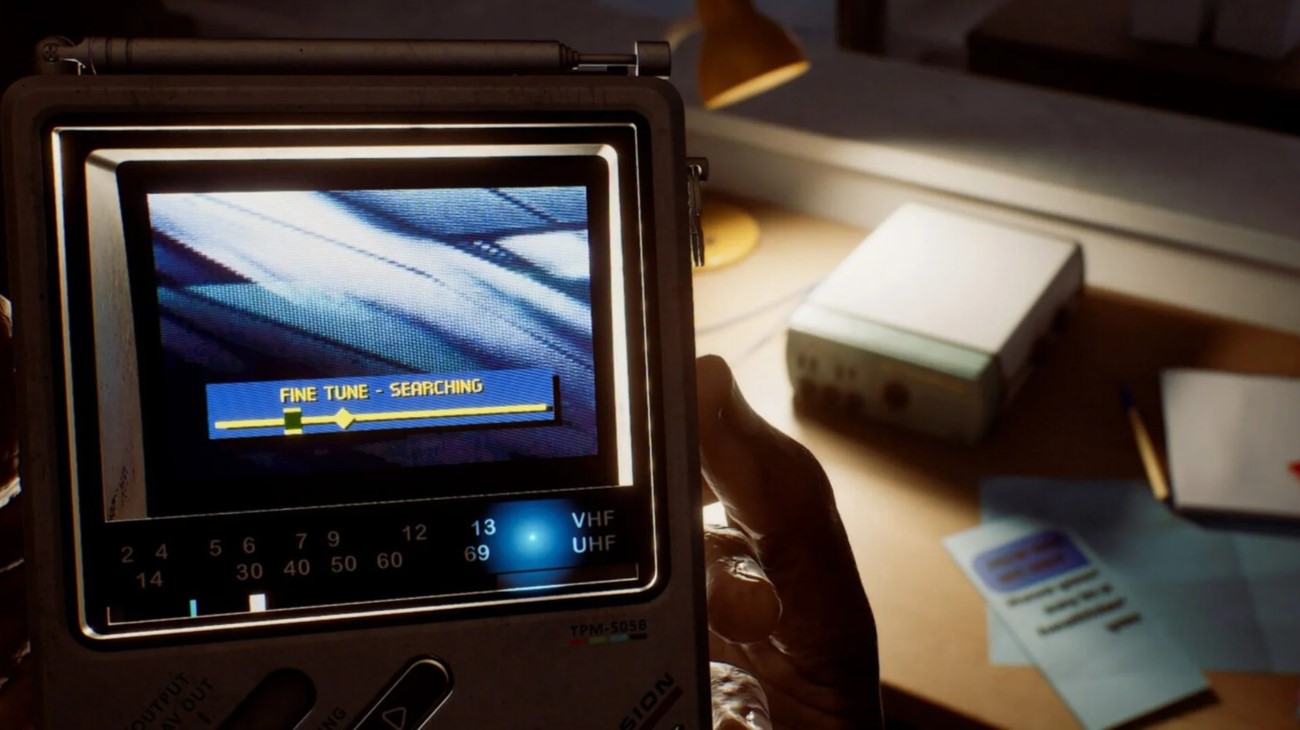
- The CRTV is your detection system – a pocket CRT that picks up monsters through electromagnetic interference, replacing the series’ traditional radio.
- You tune it per creature. Each monster needs its own tuning, which means a room with two threats takes real work to read rather than one glance.
- The peek mechanic lets you check around corners with minimal exposure, and it’s the single most undervalued input in the game.
- Closets and hiding spots are genuine solutions rather than panic buttons.
- Patience beats routes. An insta-kill enemy exists in the back half, and waiting out its patrol is the only answer.
One useful clarification from the community: kills performed by Richard or Zoe may appear in your statistics screen, but they don’t subtract from Simon’s hidden score. Only Simon’s hands count against you.
Variable Three: The Cannula Is a Four-Point Trap
This is the one that quietly ruins runs.
The cannula functions as Simon’s revival mechanism. Refill it and you come back. Each refill costs 4 points – double the penalty of a kill, and the heaviest single item in the formula.
Think about what that means in practice. Five deaths across a playthrough is twenty points gone, which is the entire Justice threshold erased before you’ve killed anything. You can be a perfect pacifist and still end up on Abandoned purely through dying.
The non-obvious corollary: ordinary healing items are free. Bandages, whatever else you’re carrying for health, none of it touches the formula. Only the revival mechanic is priced.
So the discipline is specific. Heal aggressively, die rarely.
If you’re going down a lot in a particular stretch, the correct response is to reload a manual save rather than refill and carry on. That’s not cheesing the system; it’s the only way to protect a score the game won’t let you see.
There’s also a legitimate reverse application. Players specifically hunting the Forever ending sometimes refill the cannula on purpose to pull a too-high score down into the 0-19 band. It’s an ugly way to play and it works.
Worth flagging a difficulty note here too: Story Mode is eligible for every trophy. Difficulty doesn’t gate anything. If a late section is grinding you down – and reviewers singled out a multi-hour stretch that removes combat and resurrection while hampering detection – dropping the difficulty costs you nothing but pride.
Variable Four: Zoe’s Mistakes
The fourth term covers Zoe Ellis’s playable section, usually listed as the Patient chapter, where damaging mistakes subtract 3 points each.
It’s the smallest term in the formula and the easiest to protect, because it’s confined to one sequence rather than spread across the campaign. Slow down, read the puzzle properly, and take the extra thirty seconds. Three points is a third of the way to blowing the Justice margin.
Silent Hill Townfall Walkthrough Tips for Routing Your Playthroughs
Given all of that, here’s the sequence the community has settled on, and it’s genuinely efficient.
Run one: collect everything, kill nothing you don’t have to. Target Justice. Sweep every room, read every document, lean on stealth, reload rather than revive. Around eight hours.
Some guides suggest the opposite for run one – deliberately killing everything to grab Abandoned while collecting – on the grounds that the bad ending is trivially easy to secure. Both approaches work. Justice-first is the better experience; Abandoned-first is marginally faster for trophy hunters because it removes any pressure to play carefully while you’re learning the map.
Run two: New Game Plus, speedrun and the joke endings. There’s a trophy for finishing in under four hours, and NG+ is where the Dog and Sci-fi endings live. Roughly three hours.
Then: reload saves for the remaining endings. Because the score is cumulative and checked at the end, you can set up a save near the finish and adjust from there rather than replaying whole campaigns. Budget a couple of hours.
Two more trophy conditions worth planning around rather than discovering: the under-four-hour run, and a no-manual-saves run. Stack them with your NG+ pass if you can tolerate the tension.
The Two Joke Endings
Both need New Game Plus, and both are proper easter eggs rather than narrative variants.
Dog triggers by collecting three coins across the playthrough and placing them in dog banks you’ll find along the way. It fires after the final boss in place of whatever ending your score earned. Silver trophy.
Sci-fi is the more involved one: solve a particular puzzle door, pick up a Strange Access Card, read three specific books, then apply the card at a keypad. It skips the final boss entirely, landing immediately after a specific cutscene. Silver trophy.
That boss skip is worth remembering if you’re chasing the speedrun trophy, since it removes a chunk of runtime.
What Doesn’t Count, Despite What You’ve Heard
Myth-busting, because misinformation on this spread fast after launch.
- Dialogue choices don’t affect your ending. The game has no explicit decision points steering the finale.
- Playtime is irrelevant. Taking twenty hours or eight makes no difference to the score.
- Normal healing items are free. Only cannula refills carry the penalty.
- Kills by Richard or Zoe don’t count against Simon, even when they show in your stats.
- Difficulty doesn’t change trophy eligibility, so Story Mode is a legitimate option throughout.
That first bullet is the big one. Silent Hill players are conditioned by decades of games where a small interaction in act one decides act three. Townfall genuinely doesn’t work that way. It counts.
More Silent Hill Townfall Walkthrough Tips Worth Knowing Early
A few practical things that aren’t in the formula but will shape your run.
Puzzle codes are fixed, not randomised. Community guides list consistent values – door codes, locker combinations, safe codes all hold across playthroughs. Which is useful for a second run and useless for a first, because the game generally won’t let you skip puzzle steps even when you know the answer. You still have to find the clue that makes the solution available.
Finding the clue is the puzzle. That’s the structural truth of Townfall’s design. The arithmetic of a safe code is trivial; locating the scrap of paper that mentions it is the actual content. Which, conveniently, is also how you accumulate discoveries.
The back half is harder than the front. Reviewers consistently flagged a grinding mid-to-late stretch with harsher encounters following an excellent opening. If the game stops being frightening and starts being tedious around that point, that’s a widely shared experience rather than you doing something wrong.

FAQ
How many endings does Silent Hill: Townfall have?
Five. Justice, Forever and Abandoned on a first playthrough, plus Dog and Sci-fi in New Game Plus.
How is the ending decided?
By a hidden score: discoveries minus twice your Simon kills, minus four per cannula refill, minus three per Zoe mistake.
How many collectibles are there?
85 clues and documents, each worth one point.
Can I go back for missed collectibles after finishing?
No. There’s no chapter select and no free roam after the story, so your collection run has to be done in one pass.
How long is it?
Around eight hours for a thorough first playthrough, and roughly 15 to 25 hours for the full trophy list.
Does difficulty affect trophies?
No. Story Mode is eligible for everything.
Which ending is hardest to get?
Forever, because it needs a score between 0 and 19 – a narrow window in a system where one revive swings four points.
Play Carefully, but Play Deliberately
The thing I like about Townfall’s hidden formula is that it’s quietly thematic. The game is about a man with no memory of how he arrived, being measured by actions he can’t see the consequences of. The scoring works the same way.
The thing I don’t like is that it punishes a reasonable first-time instinct. You find a pistol in a horror game and you assume the pistol is the answer. Here the pistol is a four-point mistake waiting to happen, because firing it pulls monsters to you and killing them costs you double.
So: collect obsessively, fight almost never, heal freely, revive as a last resort, and slow all the way down during Zoe’s section. Do those four things and Justice looks after itself.
And if you end up on Abandoned anyway, at least now you know which number betrayed you.
If this spared you a twenty-hour run that ended on the wrong screen, pass it along on X, Reddit or wherever your horror group compares endings – small writing teams move by word of mouth and nothing else. Bookmark it too, since the community is still refining the exact discovery counts per chapter and we revise this page rather than filing a fresh one. And if creative or commercial collaboration brought you here, write to the T-Minus team directly – our score only goes up.