


Galactic Racer Tips for the Twenty Hours You’re About to Lose
Here’s the thing about this game that nobody warns you about properly. You’re supposed to lose. Not in a vague, git-gud way. Structurally. Star Wars: Galactic Racer runs its campaign as a roguelite – Fuse Games calls them Tours – and your first few attempts through the Galactic League are tuition payments. You enter, you crash, you bank the credits, you come back with better parts. That’s the loop working as designed, not you being bad at it.
Reviewers who got early builds hit the same wall. One described the difficulty as feeling downright unfair at times before it clicked. Another flagged that a single mistake cascades fast when you’re doing silly speeds through a narrow cave.
So instead of a generic list, I’ve organized these Galactic Racer tips chronologically – by roughly when you’ll make each mistake. Minute one through hour twenty. Skip ahead if you’re already bleeding credits on repairs.
Quick housekeeping before we start. The game launches October 6, 2026 on PS5, Xbox Series X|S and PC, at $59.99 standard or $79.99 for the Deluxe. Everything below comes from review coverage ahead of launch, so treat exact numbers as pre-patch and expect some tuning.
Minute One: Picking the Wrong Class
The garage offers four repulsorcraft types and they are genuinely different machines, not stat variations with new models bolted on.
| Class | How It Corners | Best Suited To |
|---|---|---|
| Landspeeder | Drift-based, heavier chassis | Beginners, narrow technical tracks |
| Speeder Bike | Lean in, boost on exit | Straightaways and kinetic bursts |
| Skim Speeder | Tight turning radius, banking physics | Winding routes with constant direction changes |
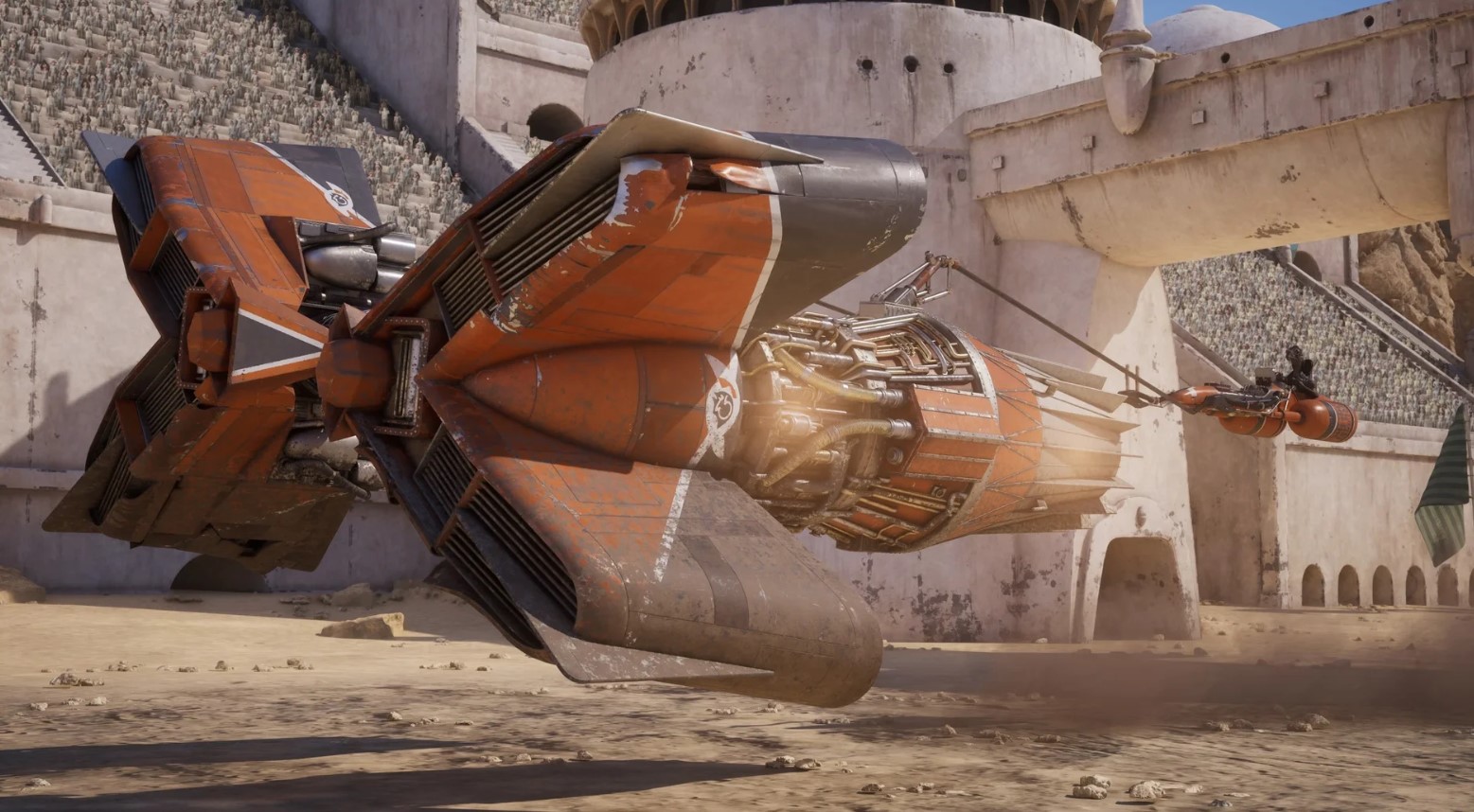
| Podracer | Fastest and largest, high overheat risk | Open circuits, and only once you’ve learned the rest |
New players should start on a landspeeder. The drift model is the most forgiving thing in the game, the chassis takes punishment, and narrow corridors won’t instantly end your run.
The podracer is the trap. It’s the thing you bought the game for, it’s the fastest class, and it is absolutely not where you begin. Reviewers consistently noted that podracers demand mastery of the slower craft first – and the campaign apparently treats podracing as something that arrives later rather than something you lead with. Let it come to you.
Run One: Burning Ramjet Like It’s Free
This is the single biggest mechanical lesson in the game, so let’s be precise about it. You have two boost systems, and they behave nothing alike.
Afterburner is your modest, renewable speed boost. It recharges, it’s low risk, and it should be firing constantly. Think of it as your baseline cruising speed rather than a special move.
Ramjet is the powerful one. It’s also the one that builds heat, and if you hold it too long, your craft overheats and explodes. Not “slows down.” Explodes.
So the rhythm you’re learning in your first few hours isn’t really about racing lines. It’s heat discipline:
- Tap Ramjet in bursts, not held pulls – exit a corner, punch it, release before the gauge climbs.
- Watch the heat indicator more than the speedometer, because one of those can end your run.
- Save long Ramjet pulls for the final straight, where an explosion costs you less than it would on lap one.
- Afterburner is the default state – if it’s charged and you’re not firing it, you’re slower than everyone around you.
- Passive perks change your accumulation rates, so a build that tolerates more heat genuinely plays differently.
The Ramjet trials are where this gets brutal. Those events demand extended boost holds on tight tracks, which is the exact combination the heat system punishes. Treat them as a skill check rather than a race and you’ll get through them.

Run Two: Letting Repairs Eat Your Build
Credits are the campaign’s currency. You earn them from finishing positions and contract objectives, and you spend them on parts, gadgets and upgrades between events.
You also spend them on fixing what you broke. And that’s where runs quietly die.
Repairs come out of the same pot as upgrades. A messy Tour where you clipped walls on every track leaves you paying to restore a craft to baseline instead of making it faster. Two or three events of that and you’re entering a championship in a vehicle that’s technically fine and competitively hopeless.
Worse, damaged parts don’t just cost money – they handicap the specific strengths you built around. Wreck your cornering components and the skim speeder you tuned for knife-edge turns is now a worse version of a landspeeder.
The adjustment that fixes this: finish clean rather than finishing high. A third place with no damage frequently nets more usable credits than a win that costs you half your winnings in repairs. That’s counterintuitive for anyone coming from normal racing games, where podium position is the only number that matters.
Galactic Racer Tips for Surviving a Tour With Tokens Left
The Tour structure is a branching path, and the branching is the strategy layer most people ignore on their first few attempts.
You’re not following a fixed calendar of races. You’re picking a route through Eliminator events, scrap dealer stops, Field Tests and mystery nodes, weighing risk against payout at each fork. League Entry Tokens are what limit how many setbacks you can absorb before the Tour ends – reviewers pegged it at around three crashes worth of margin, so budget accordingly.
How to route a Tour sensibly:
- Take scrap dealer nodes early, while credits still convert into meaningful upgrades rather than patching damage.
- Avoid Eliminator events on a damaged craft – progressive racer removal punishes any vehicle that can’t hold pace.
- Treat Field Tests as free money when your build already matches the conditions.
- Mystery nodes are variance, which is good when you’re ahead and terrible when you’re on your last token.
- Bank a token in reserve rather than spending your last one on a long-odds event.
And remember what carries over. Credits and permanent progression persist between Tours, so a failed run still advances you. Racer Styles you’ve opened stay open. The run ends; the account doesn’t.
Run Five: Ignoring What the Planet Is Doing to You
This is the detail that separates people who grasp the game from people who think it’s unfair. Every planet has environmental conditions that interact directly with the heat system. They aren’t set dressing.
| Planet | Condition | What It Does to Your Run |
|---|---|---|
| Jakku | Heat and debris | Ramjet overheats faster – shorter bursts, more discipline |
| Ando Prime | Ice and cold | Cold permits longer Ramjet pulls, but steering freezes up |
| Lantaana | Water and lava | Water cools your systems; lava damage overheats them |
| Tatooine | Classic desert circuits | The nostalgia track, and open enough for faster classes |
Read that Ando Prime row again, because it’s the best example of the design working. The cold lets you lean on Ramjet for longer than anywhere else – genuinely more aggressive boost windows than you’d ever risk on Jakku. But the same cold stiffens your steering, so all that extra speed arrives in a craft that turns worse.
Lantaana is the other clever one. Water sections actively cool your systems, which means a track hazard doubles as a heat reset. Plan a long Ramjet pull into a water crossing and you’ve essentially found free speed.
The garage supports all of this. You can fit thermal components for volcanic terrain, heating systems for icy tracks, corrosion resistance for hostile atmospheres. Showing up to Ando Prime without cold-weather parts is a choice, and the game will treat it as one.
Run Ten: Spending Upgrade Credits in the Wrong Order
Four main upgrade categories, and the order you take them matters more than the totals.
Afterburner upgrades improve efficiency and duration. Battery raises the energy ceiling for abilities. Cornering adds lateral traction and steering response. Ramjet feeds burst acceleration.
Almost everyone pours early credits into Ramjet, because more power sounds like more speed. It isn’t, not on these tracks. Top speed is worthless if you can’t hold a line through a narrow canyon, and the tracks here are built as corridors rather than open circuits.
Cornering first. Then Afterburner, because it’s your constant-use system and efficiency gains compound across every second of every lap. Battery next if you’re leaning on abilities. Ramjet last, once you can actually survive the speed it gives you.
A related habit worth building: match your component loadout to the specific track rather than keeping one universal setup. The customization goes deep – different models, interchangeable front sections, engines and rear sections, with Tuning Points and Kit Points opening further options as you progress. That depth exists so you can specialize per event, not so you can find one perfect build.
Run Twenty: The Stuff Nobody Tells You
Smaller things that show up once the basics are automatic.
There are pre-race ability activation sequences – short timing exercises before the flag that set up your gadgets. Fluff them and you start the race already behind on resources. They’re easy once you know they’re coming, and bewildering the first time.
Arcade Challenges run across Cadet, Pilot and Ace tiers, with malfunctioning parts introduced as complications at the harder levels. That’s deliberate practice for a scenario the campaign will eventually throw at you anyway, so grinding Arcade isn’t a detour.
Race types rotate properly – elimination, time trials, point-to-point, lap races – and each rewards a different build. A point-to-point sprint and a multi-lap circuit want genuinely different craft.
And the campaign itself runs around 8 to 12 hours of story, which is short enough that your first complete clear is realistically a weekend rather than a month.
Multiplayer: Different Game, Same Heat Gauge
Online supports up to 12 racers with ranking, and crossplay is in. There’s also a Multiplayer Tour mode that takes the run-based campaign structure and makes it competitive – you build your craft across events before everyone converges on a championship.
Two things change your approach there. First, everyone’s heat gauge is their weakness, and a rival who punches Ramjet on lap one is a rival who may remove themselves from the race by lap three. Patience is a weapon. Second, the Tour format rewards consistency over heroics, same as the campaign, because arriving at the championship in a damaged craft is losing with extra steps.
FAQ
When does Star Wars: Galactic Racer launch?
October 6, 2026, on PlayStation 5, Xbox Series X|S and PC, priced at $59.99 standard and $79.99 Deluxe.
What’s the difference between Afterburner and Ramjet?
Afterburner is a modest renewable boost you should run constantly. Ramjet is far more powerful but builds heat, and holding it too long destroys your craft.
Which vehicle class should beginners start with?
Landspeeders. The drift handling is the most forgiving and the chassis absorbs more punishment than the alternatives.
Is the campaign really a roguelite?
Yes. Tours are branching runs limited by League Entry Tokens, and failing one still carries credits and permanent progression forward.
Why do my upgrades feel like they’re doing nothing?
Likely because repairs are consuming the same credits. Clean finishes often leave you better off than damaged wins.
Which upgrade should I buy first?
Cornering. These tracks are narrow corridors, and speed you can’t steer is speed you can’t keep.
Does it have crossplay?
Yes, with ranked online races supporting up to 12 players plus a competitive Tour mode.
The Game Isn’t Unfair. It’s Just Honest About the Deal
What those reviews keep circling is that the frustration converts. The first three Tours feel punishing because you’re playing a racing game while the game is actually asking you to play a resource manager that happens to go very fast. Heat is a resource. Credits are a resource. League Entry Tokens are a resource. Position is almost an afterthought.
Once that flips in your head, the whole thing opens up. You stop chasing first place and start protecting your margins, and paradoxically you win more.
So go lose a few Tours on purpose. Learn the heat gauge on a landspeeder, fit the right parts for the planet you’re visiting, and let the podracer wait until you’ve earned it. The speed is the reward, not the starting point.
If these notes save you a Tour or two of expensive learning, kick the post over to X, Reddit or whichever group chat is arguing about Sebulba – small writing teams travel by word of mouth, and one share does more than any budget we could fake. Bookmark it as well, since launch patches will almost certainly tune the heat numbers and we revise this page rather than filing a fresh one. And if creative or commercial collaboration brought you here, write to the T-Minus team directly – no League Entry Token required.