
Wardogs Tips That Actually Matter in Your First Ten Hours
Last Thursday was a mess. A fun mess, but a mess. BULKHEAD dropped WARDOGS into Steam Early Access on September 10, and within hours the game was the platform’s number one best-seller with roughly 300,000 people playing at once. It was also sitting behind a login queue that, at its worst, had players staring at a counter showing 300,000-plus souls ahead of them. CEO Joe Brammer took it on the chin publicly – his words were about taking the L, and noting that this is exactly why you launch on a Thursday.
Four days later, the picture looks completely different. Steam reviews climbed out of Mixed territory and settled at Very Positive, around 84-85% across more than 26,000 reviews. Concurrents topped 365,000. The login screen was the problem. The game underneath never was.
So now that people can actually get in, let’s talk about how to play it – because this is not the shooter your muscle memory thinks it is. These Wardogs tips are built around the one thing that separates it from every other 100-player war game: you are spending real money every time you respawn.
Rule Zero: You’re Not Playing a Shooter, You’re Running a Business
Every account starts with a one-time $10,000 seed. That balance is persistent – it carries between matches, between sessions, forever. It doesn’t reset when you die and it doesn’t reset when the match ends.
Which means every life is a purchase. You buy a kit, you go out, and the question at the end isn’t “what was my K/D” – it’s whether that life earned back more than it cost.
Get that framing wrong and you’ll be broke by your fourth match, running a pistol and a prayer while somebody who’s been ferrying supplies all evening rolls past in a helicopter. I watched it happen to three different people in my first session. One of them left a Steam review about it.
Protecting Your Wallet
The cash flow works in both directions, and most new players only understand one half of it.
| Money In | Money Out |
|---|---|
| Presence inside the Control Zone | Weapons, armor and attachments per life |
| Double payouts inside the Hot Zone | Ammunition, sold by caliber |
| Revives, healing and medical support | Gadgets, deployables and construction supplies |
| Transport runs and supply logistics | Vehicles, some gated behind track levels |
| Spotting enemies for your team | Forward Operating Base placement |
| Repairs and construction work | Whatever doesn’t come back when you die |
| Tower captures |
That last item on the left column is doing serious work. Simply standing in the right place – alive, inside the objective – generates income. It’s also how your faction scores. The game pays you for the exact behavior it needs from you, which is elegant design that plenty of people ignore because shooting is more fun.
Here’s what to actually do about it:
- Spend roughly a quarter of your opening balance on your first kit, not more. You need runway to learn the maps.
- Wait for a revive instead of respawning when a teammate is nearby – a completed death means buying everything again, so being picked up is literally free money.
- Carry loose ammo rather than stacks of full magazines. Same rounds, far less backpack space, which leaves room for the gear that pays.
- Check two numbers after every death: what your balance did, and which actions paid out. Then repeat whatever worked.
- Only upgrade one piece at a time, and only when the previous life earned more than the added cost.
There’s a Rebuy Last Loadout button sitting at the lower left of the vendor screen. Once you find a kit that reliably turns a profit, that button is your best friend. Stop redesigning your loadout every life like it’s a fashion show.
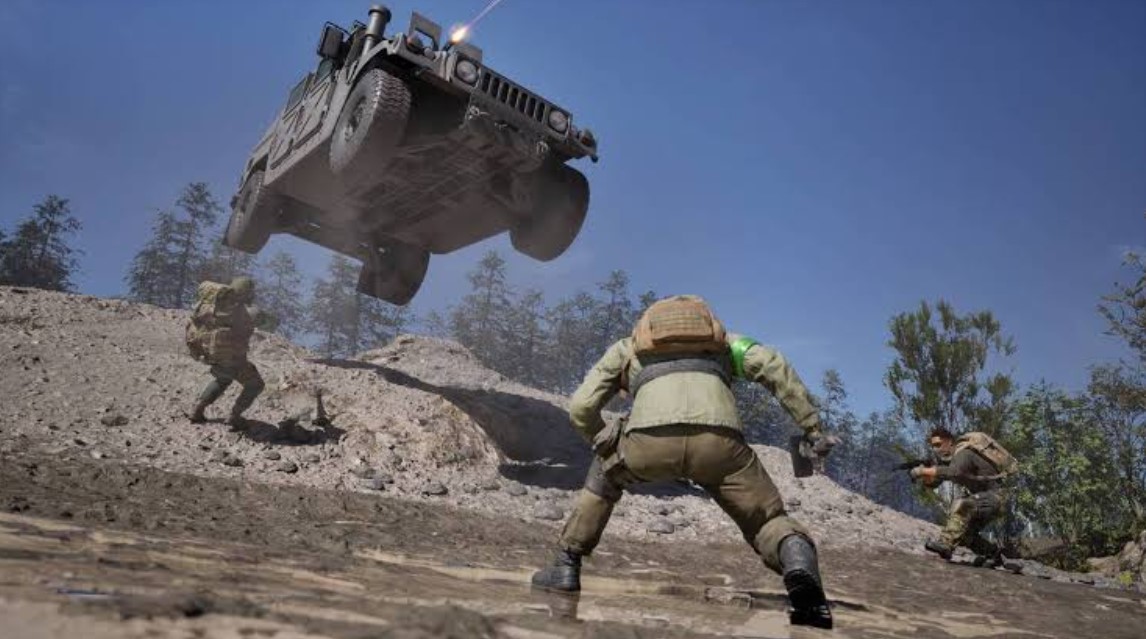
One trap worth naming: the Forward Operating Base vendor price went up to $7,500 in the Season 1 launch changelog, from $2,500 previously. That’s three quarters of a fresh account’s money. Do not drop a solo FOB on your first life because it looked useful in a YouTube video. Coordinate with a squad who’ll actually supply and defend it, or leave it alone entirely.
Reading the Zone: Control, and the Hot Bit Inside It
The mode is King of the Hill scaled up until it’s ridiculous. Three factions – Valkyra, Lonestar and Manticore – up to 100 players total, on a 256 square kilometre map.
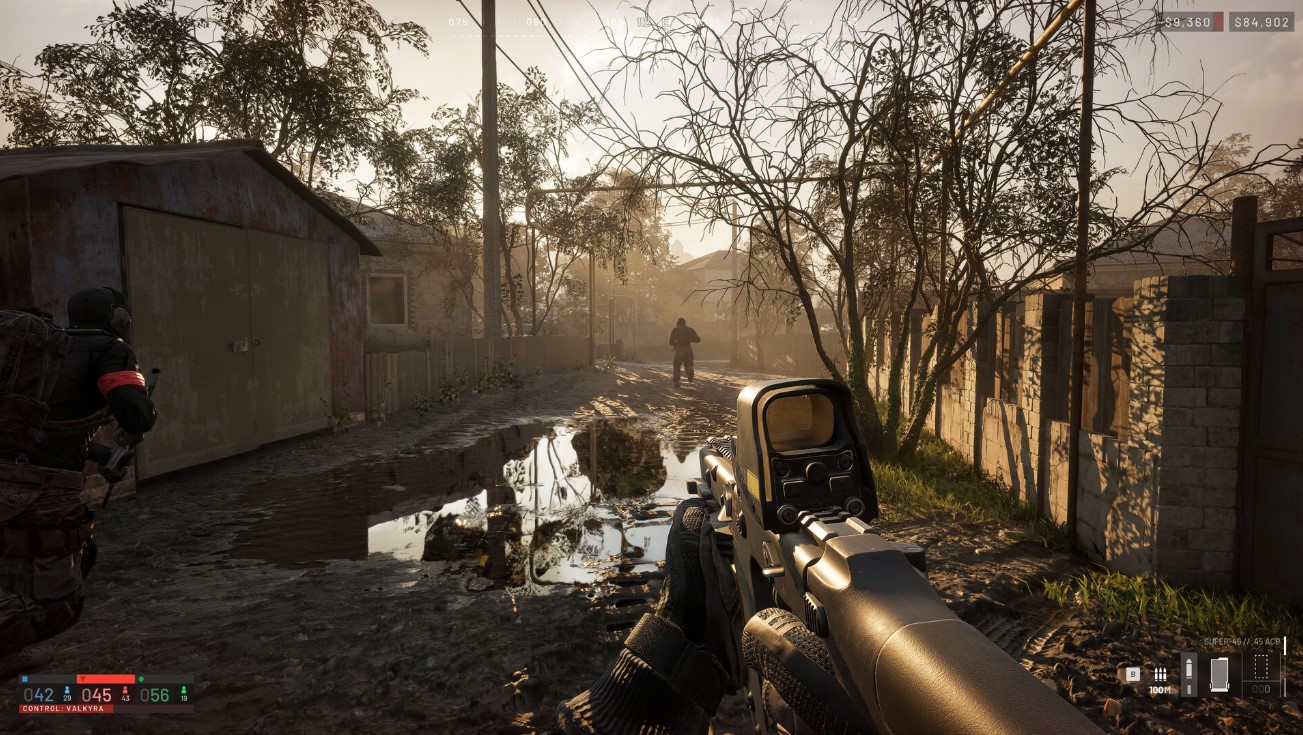
Somewhere inside that map is a randomized 2×2 kilometre Control Zone. Every 30 seconds, whichever team has the most players physically inside it banks a point. First faction to 100 points takes the match.
Read that scoring rule again, because it’s the single most misunderstood thing in the game. Points aren’t awarded for kills. They’re awarded for bodies in the circle. A player camping a ridge two kilometres out with a sniper rifle and a 20-kill streak is contributing nothing to the actual win condition.
Inside the Control Zone sits the Hot Zone – a smaller area that moves around during the match. Players standing in it count double toward team presence, and earn double cash while they’re there.
Double score and double pay. That’s where the game happens. It’s also where you’ll die a lot, because all three factions know the same thing.
Wardogs Tips for Towers and Moving the Hot Zone
This is the mechanic that separates organized teams from mobs, and almost nobody figures it out in their first few hours.
Scattered inside and around the Control Zone are towers. Each has a capture terminal in its interior – not at the perimeter, so you have to actually go in and find it. Interacting with that terminal captures the tower for your faction and pays you cash directly.
Here’s the crucial bit: capturing a tower does not award match points and does not move the Hot Zone. What it gives you is a fragment of a numerical code. Collect enough fragments from enough towers, assemble the full sequence, and your team can enter it at a keypad beside a tower you control. Do that, and the Hot Zone gets pulled toward your position.
Think about what that means. You get to decide where the most valuable real estate on the map lands – and you can decide that it lands on a hill you’ve already fortified.
Practical advice for making it work:
The code is a shared team resource, so call your digits out in voice or text the moment you get one. Three squads independently recapturing the same tower is the most common waste of time in the game. If your team knows all but one digit, somebody can brute-force the last one from a safe terminal rather than dying for it.
Don’t build around every tower you take. Pick the one with the best terrain and sightlines, establish your FOB near that one, get your supplies in before the Hot Zone arrives, and defend it properly. Spreading logistics across four half-finished positions is how teams lose matches they were winning.
There’s also a buildable Drill Site you can place on a faction-owned FOB, which acts as a mini-tower. Fuel it to capacity and it becomes a Hot Zone magnet in its own right. Community testing points to this working alongside the tower codes rather than replacing them – worth experimenting with once you’re comfortable.
Everything about towers is build-sensitive during Early Access, so trust your objective UI over anything you read, including this.
The Six Tracks, and Why “No Classes” Is a Trap
WARDOGS has no locked classes. You mix equipment from anywhere into one kit. Sounds liberating, and it is – but there are six progression tracks that gate gear behind XP earned from related actions, and ignoring them slows your growth badly.
| Track | What Levels It | Why It Pays |
|---|---|---|
| Assault | Direct combat and objective fighting | Weapon access, the obvious path |
| Medic | Revives and healing | Revives save your teammates money, which is huge |
| Support | Supplies, construction, repairs | The backbone of any FOB that survives |
| Recon | Spotting and intel | Spots pay, and information wins zone fights |
| Driver | Ground transport and logistics | Gates vehicle access; runs pay well |
| Pilot | Air transport and support | Same, with a steeper learning curve |
The mistake new players make is grinding Assault exclusively because that’s what shooters have trained them to do. Meanwhile the Medic mains and the supply drivers are quietly out-earning them by a wide margin and opening up vehicle access.
My honest recommendation for your first evening: run a cheap rifle, carry a med kit and a construction tool, and spend most of your time within a few hundred metres of the objective doing unglamorous work. You’ll finish the night richer than the guy who bought an M4 on life one.
Talk to the Enemy. Seriously.
Proximity voice is local and it spans all three teams. Anyone near you can hear you – allies, enemies, and whoever’s crawling through the rubble twenty metres away.
This is the single most underrated system in the game, and it’s already generating the clips that made WARDOGS go viral on YouTube during the beta weekends. Three-way standoffs get negotiated. Temporary truces form against whichever faction is running away with the score. Vehicle hitchhiking happens.
Turn it on. Talk to people. In a three-team mode, the ability to convince a rival squad that the other faction is the real problem is a legitimate tactical weapon.
Wardogs Tips for the Launch-Week Jank
It’s Early Access and it’s four days old. Some of what you’ll hit isn’t your fault.
- If you’re stuck in a queue, confirm your client actually finished updating. Post-hotfix, players had to close the game, download the update, and restart before entry reopened in batches
- Steam Deck and Linux are currently out. BULKHEAD swapped anti-cheat late in development, and the game no longer runs under Proton despite working fine in the betas
- GeForce NOW players hit anti-cheat complications – NVIDIA has been in contact with BULKHEAD about it
- Some early testers caught false permabans tied to a first-look account link error; the studio acknowledged it on Discord and has been working through fixes
- Old beta clients don’t work. Those servers went dark on August 24, so an infinite login screen from that build is expected, not a bug
Worth knowing: the closed beta in late August peaked at 245,118 concurrent players – nearly fifty times the 5,000-player sustainable target Brammer had named for the studio. A game built for a few thousand daily players got hit by hundreds of thousands. Frustrating, sure. But it’s a scaling problem, not a design one.
What BULKHEAD Has Signed Up For?
Early Access is expected to run one to two years, and the studio has been unusually direct that they don’t want to sit in it forever.
There’s no in-game monetization during Early Access at all, with the single exception of a cosmetic Supporter Pack. Cash, gold bars and status camouflage are explicitly not purchasable. For a $39.99 live shooter in 2026, that’s a real position to take.
The stated plan covers more maps, weapons and vehicles – fighter jets are named specifically – plus deeper progression systems, a seasonal meta layer, and more ways to be rewarded for support and logistics work rather than just fragging. Console versions are targeted for 2028.
BULKHEAD, for context, is a Derby studio founded in 2015 by a group of friends, previously responsible for The Turing Test and Battalion 1944. This is a considerable step up in scale for them, and the launch showed exactly where the seams were.
FAQ
How much does WARDOGS cost?
$39.99 on Steam, Windows PC only for now. It’s also available through GeForce NOW.
Does my cash reset between matches?
No. The $10,000 is a one-time seed and your balance is permanently attached to your account.
How do you actually win a match?
Every 30 seconds, the team with the most players inside the Control Zone scores a point. First faction to 100 wins.
What does the Hot Zone do?
It’s a smaller moving area inside the Control Zone. Players in it count double toward presence and earn double cash.
Are there classes?
No locked classes. Six progression tracks – Assault, Medic, Support, Recon, Driver, Pilot – gate gear, but you mix freely.
Can I play on Steam Deck?
Not currently. A late anti-cheat change broke Proton compatibility that worked during the beta tests.
When are console versions coming?
Xbox and PlayStation are targeted for 2028, well after Early Access wraps.
Go Be Useful, Not Impressive
Here’s the thing that took me longest to accept. WARDOGS punishes the exact instincts other large-scale shooters reward. The flashy solo push, the expensive loadout, the hero play at range – all of it costs you money and contributes nothing to a scoring system that only counts warm bodies in a circle.
The players getting rich right now are driving supply trucks, reviving strangers and standing on objectives with a $600 kit. It’s not glamorous. It works.
Four days in, with the queues cleared and the review score recovered, this is one of the more genuinely novel shooters to land in years. Just don’t spend your first ten thousand dollars finding that out.
If these notes saved you a bankruptcy or two, push the post out on X, Reddit or your squad’s Discord – independent gaming writing survives entirely on people passing things sideways, and one share does more than any ad spend we could fake. Bookmark it as well, because Early Access means these numbers will shift and we’ll be revising this page rather than abandoning it. And for creative or commercial collaboration, write to the T-Minus team directly – no queue, no login error, we promise.