
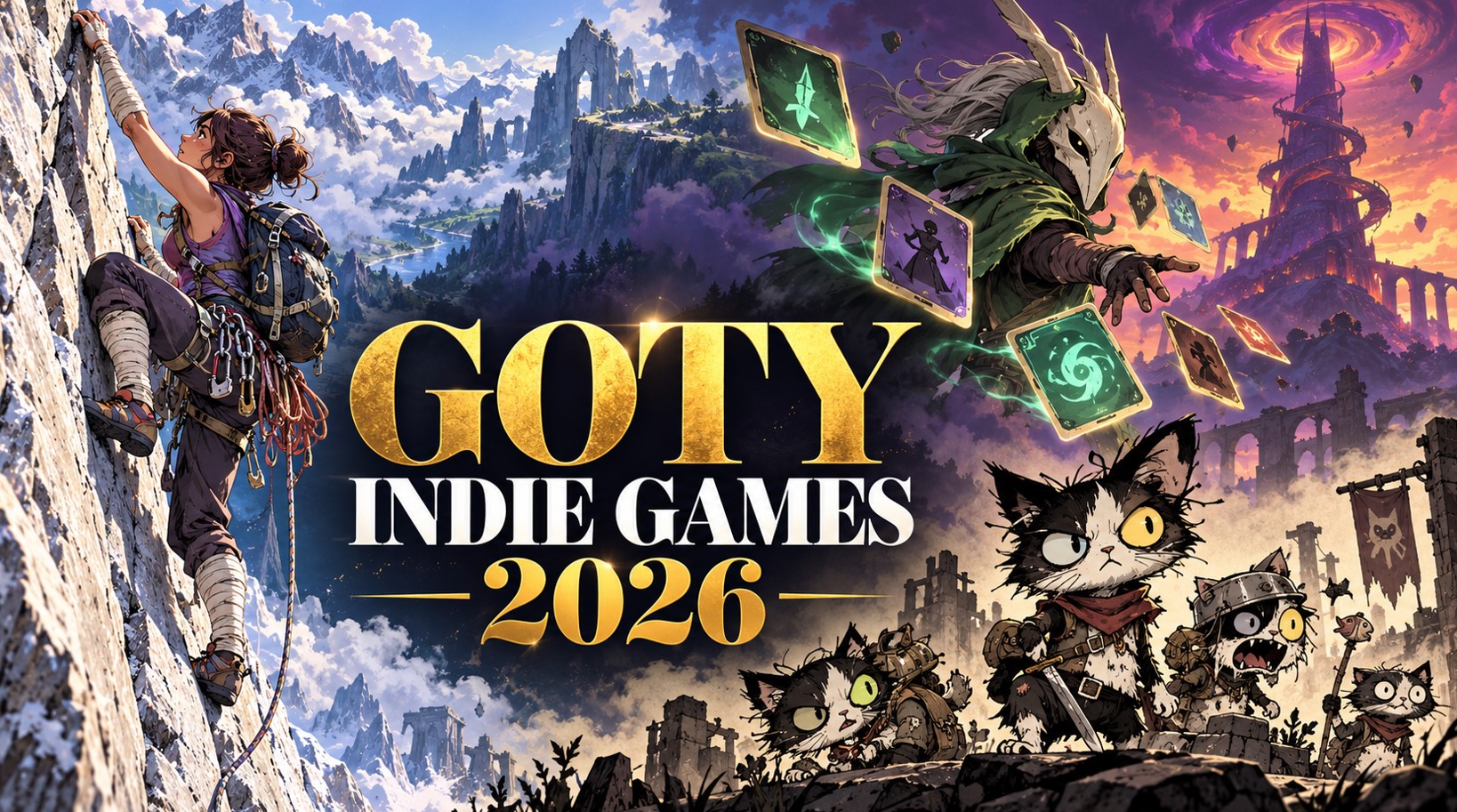
Four Different Juries are judging GOTY Indie Games in 2026
The Game Awards happen on December 10. That is forty days away, nominations have not been announced, and anyone publishing a definitive indie Game of the Year list right now is publishing one constituency’s opinion dressed as a verdict. Because there are at least four separate scoreboards running, and they are not agreeing with each other.
OpenCritic’s indie leaderboard has one game well clear at the top. Metacritic-based rankings put a completely different game first. The editorial contender lists that circulate every autumn name seven games, only two of which appear in OpenCritic’s top ten. And the commercial scoreboard has produced a story where the year’s best-reviewed game’s own co-founder is publicly asking why it is not the fastest-selling.
Four measurements, four answers to define the GOTY indie games of 2026 so far. So rather than adding a fifth list, this walks each scoreboard, shows where they overlap, and is clear about which one actually hands out a trophy in December.
Scoreboard One: The OpenCritic Indie Leaderboard
Start with aggregate critic scores, which is the closest thing to an objective measure the industry has.
| Rank | Game | Score | Released |
|---|---|---|---|
| 1 | Mina the Hollower | 91 | May 29 |
| 2 | Esoteric Ebb | 88 | Mar 3 |
| 3 | TetherGeist | 88 | May 7 |
| 4 | The Mermaid Mask | 87 | Jul 16 |
| 5 | Pieced Together | 86 | Mar 6 |
| 6 | Cairn | 86 | Jan 29 |
| 7 | Tombwater | 86 | Mar 31 |
| 8 | ReStory: Chill Electronics Repairs | 86 | Aug 6 |
| 9 | Elementallis | 86 | Apr 28 |
| 10 | Wax Heads | 85 | May 5 |
Mina the Hollower leads by three points, which in aggregate terms is a comfortable margin rather than a photo finish. It is from Yacht Club Games, the Shovel Knight studio, and it arrived on May 29 across PS5, Xbox Series, Switch, Switch 2 and PC after more than six years in development.
Then look at places four through ten. The Mermaid Mask, Pieced Together, Tombwater, ReStory: Chill Electronics Repairs, Elementallis, Wax Heads. Six games sitting between 85 and 87 that almost nobody is discussing as contenders. That is the first sign of how badly these scoreboards align – a game can be among the ten best-reviewed indies of the year and appear on no shortlist anywhere.
Further down the same leaderboard sit Order of the Sinking Star at 84, Coffee Talk Tokyo and Forbidden Solitaire at 83, and a cluster at 82 including Neva: Prologue, Minos, Lovish, Welcome to Elderfield, Perfect Tides: Station to Station and Find Your Words.
Scoreboard Two: Metacritic Says Something Else
Rankings built on Metacritic rather than OpenCritic produce a different top three entirely: OPUS: Prism Peak at 86, Zero Parades at 84, and MIO: Memories in Orbit at 83. None of those three appear in OpenCritic’s indie top ten at all.
This is not a scandal; it is methodology. The two aggregators draw on different outlet pools, weight scores differently, convert unscored reviews differently, and – critically for this subject – tag “indie” differently. A game one site files as independent, the other may file as a mid-budget release from an established studio, which quietly changes who is even eligible for the leaderboard.
There is drift within a single aggregator, too. Mina the Hollower was reported at a 93% Metacritic average on PC from 40 reviews in late May, and at 91% about a week later. Same game, same site, different week. Review averages move as more reviews land, which means any specific number is a snapshot rather than a fact.
The takeaway for anyone researching this: a score is evidence, not a ranking. Two games three points apart are not meaningfully separable, and two aggregators disagreeing about the leader means the leader is genuinely unsettled.
Scoreboard Three: The GOTY Indie Games Critics Keep Naming
The third scoreboard is editorial, and it behaves nothing like the first two.
Destructoid’s indie Game of the Year contender piece named seven games, with short reasons for each:
- Cairn, January 29 – puzzle-solving and difficult climbing wrapped around a story about perseverance.
- Esoteric Ebb, March 3 – a tabletop-flavoured adventure summarised as Dungeons & Dragons meeting Disco Elysium.
- MIO: Memories in Orbit, January 20 – a Metroidvania scored 9/10, praised for fluid movement and growing combat.
- MOLE, June 15 – psychological horror scored 9/10, about grief and denial, from Off Black Creations.
- MOUSE: P.I For Hire, April 16 – a boomer shooter scored 9.5/10 with inventive boss fights.
- Vampire Crawlers, April 21 – a deck-building dungeon crawler spun off from Vampire Survivors, by poncle and Nosebleed Interactive.
- ZERO PARADES: For Dead Spies, May 21 – a psychology-driven detective game from ZA/UM, scored 9/10.
Under the Island, Hermit and Pig, and Planet of Lana 2 were listed as honourable mentions.
Now compare that against scoreboard one. Only Cairn and Esoteric Ebb appear on both. Five of the seven editorial contenders are absent from OpenCritic’s indie top twenty, and eight of OpenCritic’s top ten are absent from the editorial list.
| Game | OpenCritic Indie Top 10 | Metacritic Top 3 | Editorial Contender |
|---|---|---|---|
| Mina the Hollower | Yes | – | – |
| Esoteric Ebb | Yes | – | Yes |
| Cairn | Yes | – | Yes |
| OPUS: Prism Peak | – | Yes | – |
| Zero Parades | – | Yes | Yes |
| MIO: Memories in Orbit | – | Yes | Yes |
| TetherGeist | Yes | – | – |
| MOLE | – | – | Yes |
| MOUSE: P.I For Hire | – | – | Yes |
| Vampire Crawlers | – | – | Yes |
Three columns, ten games, and not one game appears in all three. That table is the whole article in miniature.
Scoreboard Four: Money, and the Most Interesting Story of the Year
The fourth scoreboard is commercial, and it has produced something genuinely worth reading about rather than just counting.
Mina the Hollower sold 300,000 copies in its first three days and passed 500,000 by June 9, roughly a week and a half after launch. Yacht Club priced it at $19.99 with no launch discount, on the reasoning that a new game gets one chance at a first impression and a discount teaches players to wait.
Co-founder Sean Velasco had called the launch make-or-break, naming 200,000 copies as a positive result and 500,000 as the figure that would leave the studio comfortable. Before release, the studio had reportedly spent much of its capital and paused a separate 3D Shovel Knight project. The launch cleared both bars, and Velasco said it lets the studio keep operating without layoffs or outside investment.
And then he said the thing that makes this the year’s best indie story. Speaking to Bloomberg, he wondered why the best-reviewed game of 2026 is not also the fastest-selling, and said he feels “a big fire lit to close that gap.”
That is the gap between scoreboard one and scoreboard four stated out loud by someone sitting on both sides of it. A 91-rated game that cleared half a million copies in eleven days is an unambiguous success by any historical indie standard – and it is still a long way from the commercial outcome that critical position would suggest.
Which is worth remembering whenever a GOTY list implies the best game and the biggest game are the same object. They have never been the same object.
The Only Scoreboard That Hands Out a Trophy
All of the above is prelude. The Game Awards take place on December 10, 2026, and the awards jury is the constituency that produces the result people will still be quoting in 2030.
There are two indie categories to watch rather than one: Best Independent Game and Best Debut Indie Game. They can be won by the same title – Balatro took both in 2024, which is the clearest recent template for how an indie sweep looks.
Nominations have not been announced as of today. Which means every list circulating right now, this one included, is working from scores, editorial enthusiasm and sales rather than from any ballot.
Which GOTY Indie Games Look Likeliest to Be Nominated
Clearly labelled as reasoning rather than reporting, because nothing here is confirmed.
- Mina the Hollower is the strongest case on paper. It leads the aggregate indie leaderboard; it was described as tied for the highest-rated game of the year on Metacritic; it cleared half a million copies fast, and it comes from a studio with name recognition. Score, sales, and pedigree all pointing the same way is unusual, and juries notice.
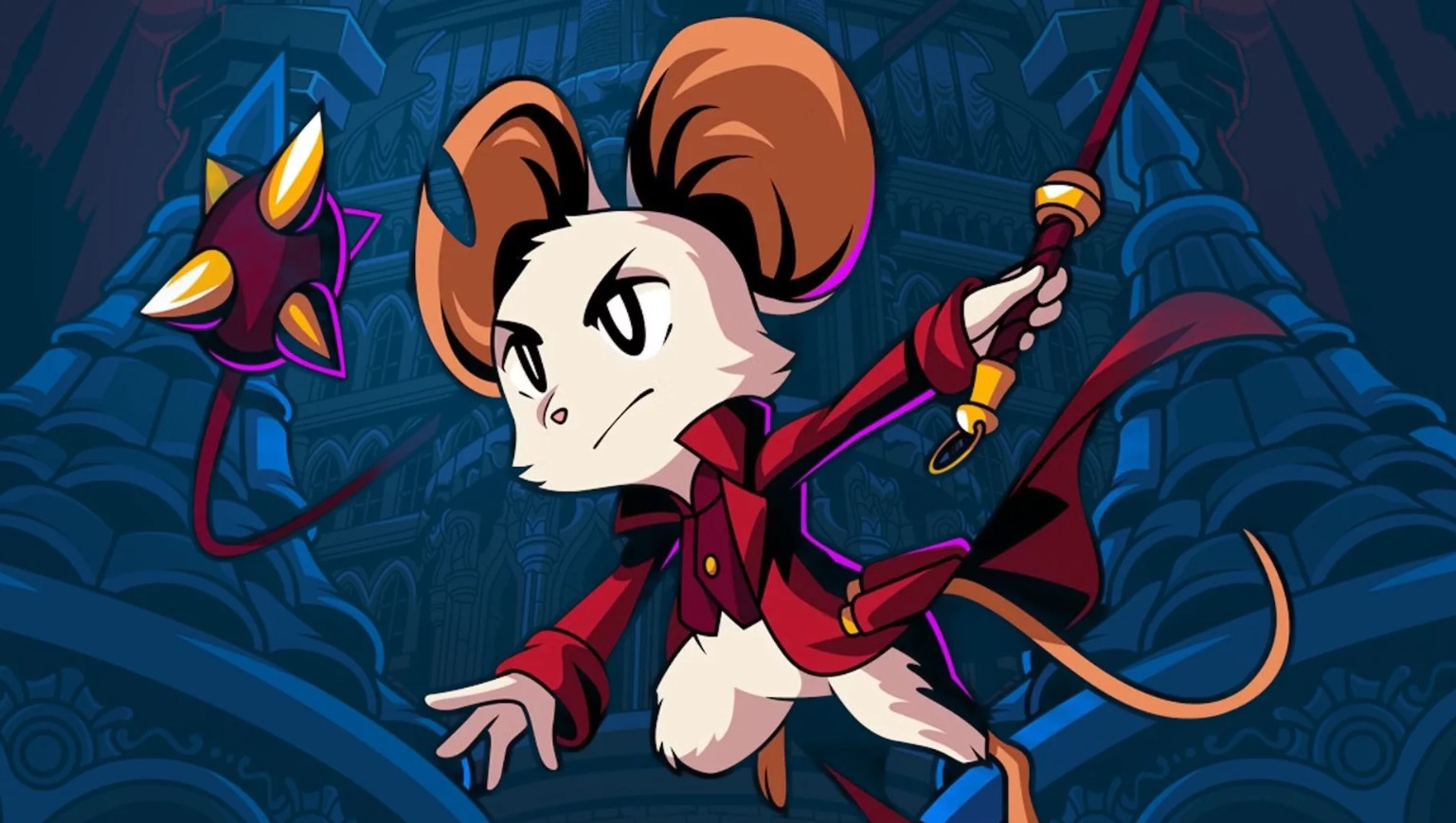
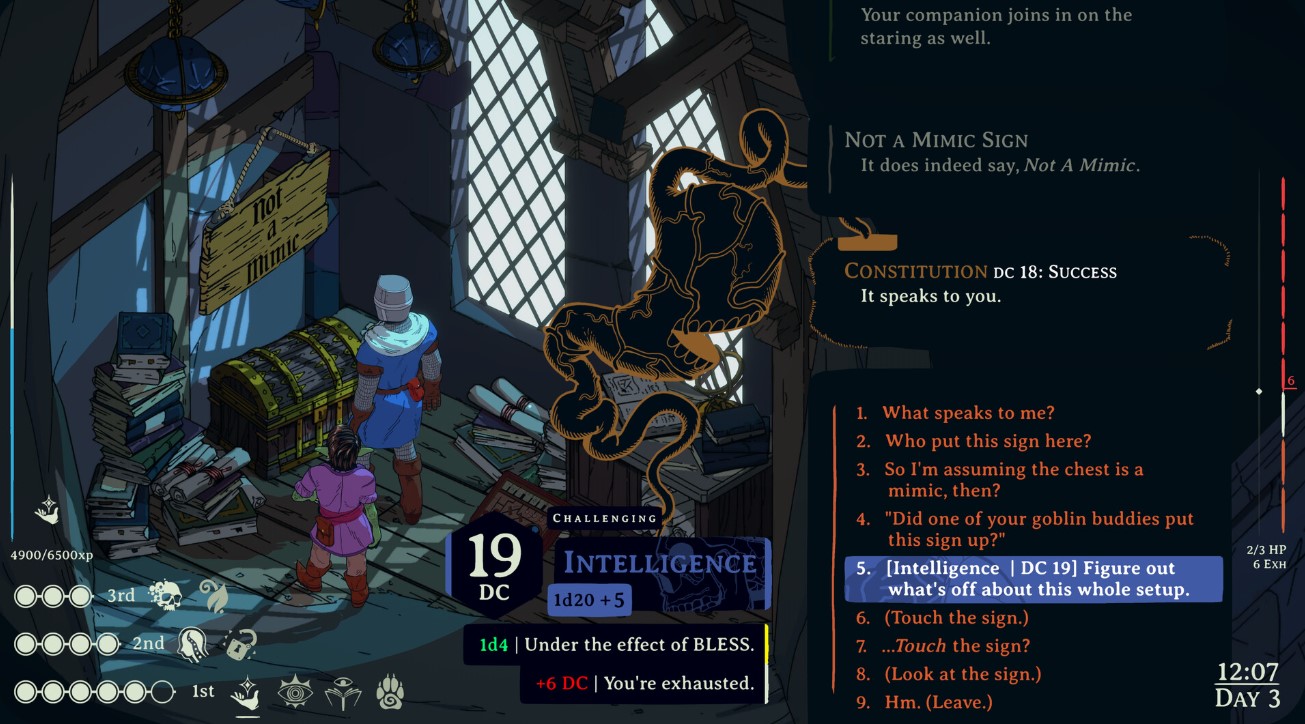
- Esoteric Ebb is the critics’ pick. An 85 on Metacritic, 100% of critics recommending on OpenCritic, a 9/10 from GameSpot and a 90 from PC Gamer, published by Raw Fury. It is also the most structurally interesting game on any of these lists – a role-playing game that replaces combat entirely with dialogue and skill checks against six attribute voices, running on rules derived from D&D fifth edition, in which you play the world’s worst cleric investigating why a tea shop exploded five days before an election.
- ZERO PARADES: For Dead Spies carries the ZA/UM name, which guarantees attention, and sits in the Metacritic top three at 84.
- MIO: Memories in Orbit and Cairn both appear on editorial lists and in aggregate rankings, which is a better position than either measure alone.
- OPUS: Prism Peak leads the Metacritic-based indie ranking at 86 and is the most plausible nominee that almost no English-language contender list has mentioned.
What would surprise me is a shortlist drawn purely from OpenCritic’s top ten. Jury shortlists historically reward games with a conversation attached, and TetherGeist, Pieced Together and ReStory have scores without much noise around them.
The Games Worth Playing Regardless of Trophies
Stripping the awards framing away entirely, here is what the four scoreboards agree is genuinely good.
- Mina the Hollower – Yacht Club’s six-year project, $19.99, on everything, praised for pairing classic Zelda-shaped structure with darker influences, hard combat and an interconnected world.
- Esoteric Ebb – March 3, Windows, a combat-free role-playing game built on tabletop rules with a political mystery underneath.
- Cairn – January 29, puzzle-climbing with a story about persistence, an 86 and on multiple contender lists.
- ZERO PARADES: For Dead Spies – May 21, a dialogue-heavy detective game from the Disco Elysium studio, demanding and occasionally confusing.
- Vampire Crawlers – April 21, a cheap, extremely repeatable deck-builder from the Vampire Survivors team.
- MOLE – June 15, psychological horror about grief, the clearest out-of-nowhere pick of the year.
Six games, five of them under the price of one big release, covering climbing, conversation, card-drafting, detection and horror. That is a healthy year by any measure that is not a leaderboard.
Why 2026 Is Harder to Call Than Usual
The aggregators disagree about the leader, which almost never happens this cleanly. When OpenCritic and Metacritic-derived rankings put different games first, there is no neutral authority to defer to.
Nobody agrees what counts as indie. Yacht Club Games has a decade of history and a recognisable franchise. ZA/UM made one of the most acclaimed games of the previous decade. poncle sold millions of copies of Vampire Survivors. All three are routinely filed as independent, and all three are a long way from a bedroom developer. Every leaderboard in this article is built on a tag that different sites apply differently.
The volume is high and the attention is thin. There are twenty games above 82 on the indie leaderboard alone, most released months apart, most with no marketing budget. Scoreboard three – the editorial one – is less a measure of quality than a measure of which games got reviewed by people with an audience.
None of which makes the exercise pointless. It just means the right question is not which indie game won 2026, but which scoreboard you find most convincing.
FAQ
When is indie Game of the Year announced?
The Game Awards take place on December 10, 2026. Nominations had not been announced as of October 31.
What is the highest-rated indie game of 2026?
It depends on the aggregator. OpenCritic’s indie leaderboard puts Mina the Hollower first at 91, while Metacritic-based rankings put OPUS: Prism Peak first at 86.
How well did Mina the Hollower sell?
300,000 copies in three days and more than 500,000 by June 9, about a week and a half after its May 29 launch, at $19.99 with no launch discount.
Which indie games are critics naming as contenders?
Editorial contender lists have named Cairn, Esoteric Ebb, MIO: Memories in Orbit, MOLE, MOUSE: P.I For Hire, Vampire Crawlers and ZERO PARADES: For Dead Spies, with Under the Island, Hermit and Pig and Planet of Lana 2 as honourable mentions.
How many indie categories does The Game Awards have?
Two – Best Independent Game and Best Debut Indie Game. One title can win both, as Balatro did in 2024.
What makes Esoteric Ebb unusual?
It removes combat entirely, resolving everything through dialogue and skill checks against six attribute voices, on rules derived from D&D fifth edition. You play the world’s worst cleric investigating an exploded tea shop before an election.
Why do the lists disagree so much?
Different aggregators draw on different outlet pools and tag games as indie differently, and editorial lists reward games that got attention rather than games that scored highest. Only two games appear on both the aggregate top ten and the main contender list.
Pick a Scoreboard, Then Pick a Game
The reason GOTY coverage feels so unsatisfying every November is that it presents a contested question as a settled one. Someone publishes ten games in an order, and the order looks authoritative because it is numbered.
What is actually happening in 2026 is four groups measuring four different things. Critics in aggregate rate Mina the Hollower highest. A different aggregate rates OPUS: Prism Peak highest. Writers with column space keep returning to Cairn, Esoteric Ebb and ZERO PARADES. Players spent half a million purchases on one game in eleven days and left several 86-rated releases nearly undiscussed. On December 10, a jury will add a fifth opinion and everyone will treat it as the answer.
The honest position forty days out is that there are roughly six genuine contenders, one clear favourite on points, and no game that every scoreboard agrees on. That is a good year, not a confusing one.
So the useful move is not waiting for December. It is picking whichever scoreboard matches what you actually want from a game – a high average, a strong conversation, or half a million people who could not put it down – and playing from that column.
Got a horse in this race? Share this, bookmark it, and go play the 86-rated game nobody is talking about – somebody has to. If creative or commercial collaboration brought you here, the T-Minus team is one message away.