

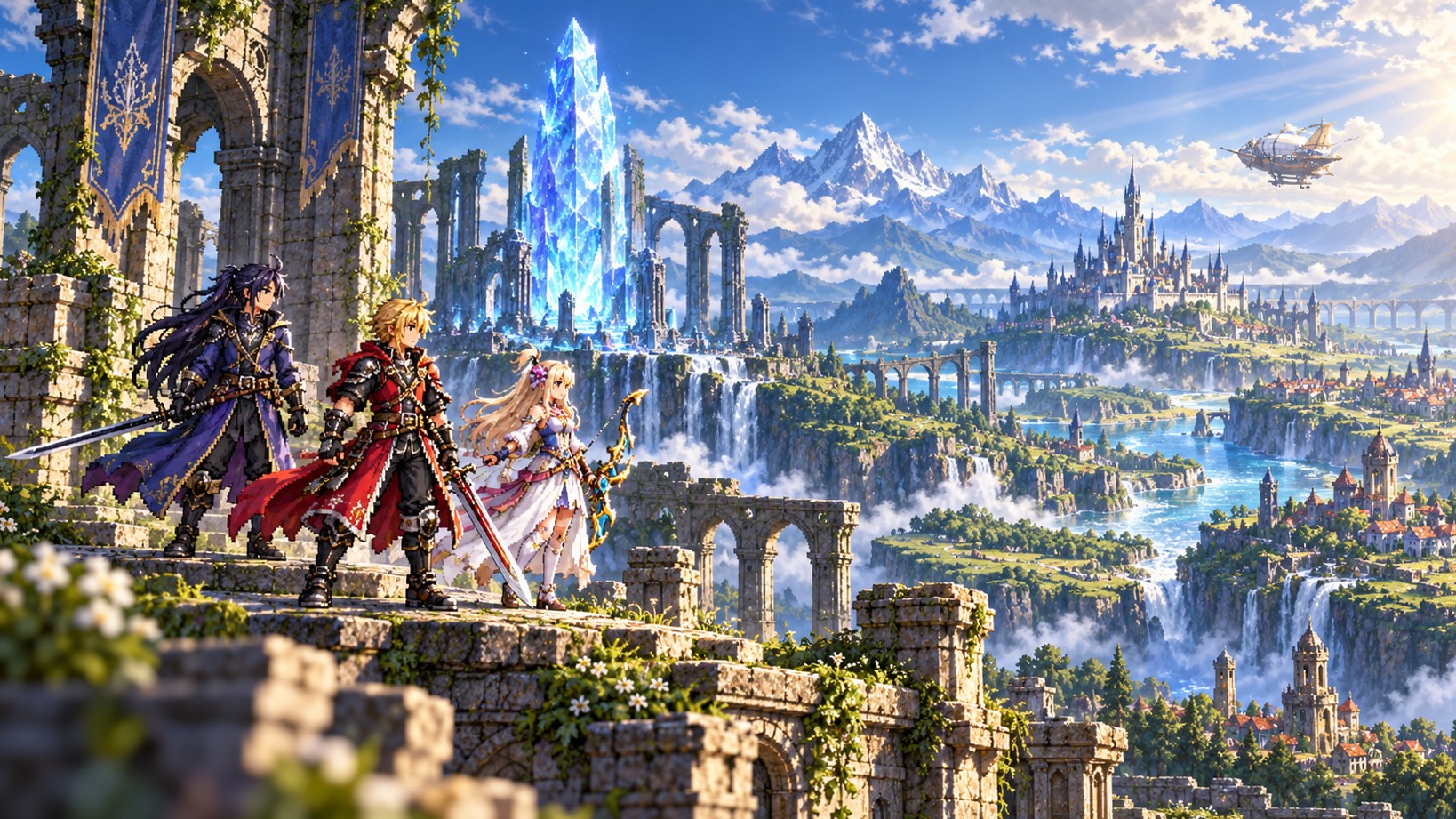
Final Fantasy Resonance Launched Yesterday With Three Different Verdicts
It arrived on October 22 across five platforms, and the critical consensus depends entirely on which one you read about. On PC it sits at 88. On PlayStation 5, where it has the most reviews, it sits at 85. On Switch 2 it sits at 82. And on Steam, where actual buyers vote, it is Overwhelmingly Positive at 97% of 982 reviews.
That is a fifteen-point spread between the harshest platform average and the audience that paid for it, on one game, released on one day. Nothing was patched in between. Nobody changed the story.
So this is organised by version, because the version decides the verdict – and then by the things every review agrees on regardless of where they played it.
| Platform | Metacritic | Notes |
|---|---|---|
| PC | 88 | Highest average; 97% of 982 Steam user reviews positive |
| PlayStation 5 | 85 | The most-reviewed version |
| Nintendo Switch 2 | 82 | Lowest average; the widest range of outlet scores |
| Xbox Series X|S | Not separately reported | A handful of reviews at 9.5, 9 and 8 |
| Nintendo Switch | Not separately reported | Also launched October 22 |
Final Fantasy Resonance on PC Is the Highest-Rated Version
And it is also, by some distance, the cheapest way to find out whether you like it. The base game is $49.99, with a Digital Deluxe Edition at $59.99 and a $14.99 upgrade DLC for anyone who buys standard first. Early purchases up to November 6 get the Squire Kickstart Pack – a Blessed Cuirass and Mist Ether.
The requirements are unusually gentle for a 2026 Unreal Engine 5 release, which is the quiet advantage of the HD-2D style:
- Minimum: Windows 11, a Ryzen 3 2300X or Core i3-8100, 8 GB of RAM, a GTX 1650, and 15 GB of storage, targeting 1080p at 30 frames per second on Low.
- Recommended: barely different hardware, targeting 1080p at 60 frames per second on the Highest preset.
- Storage is 15 GB, which in a year of 150 GB installs is almost quaint.
A game that reaches its highest preset at 60 frames on a GTX 1650 is a game that will run on nearly anything, and that matters for the 88 – PC reviewers were looking at the version with the fewest technical compromises on the widest range of machines.
There is also a demo covering the first chapter with level restrictions, and its save data carries into the full game. If you are undecided, that is the correct first step rather than reading another review.
PlayStation 5 Sits in the Middle, With the Most Opinions
The PS5 average of 85 is the number I would treat as the game’s real score, for a straightforward reason: it has the largest body of reviews behind it, and averages stabilise with volume.
The outlets scoring the game highly across platforms give a sense of the ceiling. COGconnected went to 9.5 and called it their game of the year at the time of writing. Game Informer gave it 9 and framed the achievement precisely – the reviewer valued it for showing them “a whole new canon,” which is a notable thing to say about the thirty-eighth game in a franchise. Push Square’s 8 landed on the simplest version of the pitch: its old-school turn-based gameplay is fantastic.
Windows Central’s 4.5 out of 5 named the combination most reviews settled on – HD-2D graphics, an entertaining story, likeable characters – while flagging pacing problems.
Switch 2 Has the Lowest Average and the Widest Disagreement
The Switch 2 version drew the broadest spread of opinion, and the range is worth seeing laid out:
- Game Informer – 9 out of 10.
- Vooks – 4.5 out of 5.
- Nintendo Life – 8 out of 10.
- IGN – 8 out of 10.
- GamesRadar+ – 4 out of 5.
- GameSpot – 7 out of 10.
- Eurogamer – 3 out of 5.
A 9 and a 3 on the same version of the same game is the clearest evidence that this release divides people along a line that has nothing to do with execution.
Eurogamer’s 3 out of 5 is the most useful dissent because it is specific. The reviewer found the world-building underwhelming, the story forgettable, and the pacing a problem, while acknowledging the climactic battles feel good – and argued the game leans too heavily on the wider Final Fantasy series to its own cost.
GameSpot’s 7 identified something structural: fights rarely change the basic strategy, and the genuinely interesting ones tend to be optional or late-game.
Neither of those is a complaint about the Switch 2 version in particular. They are complaints about the game that happened to land on the lowest-scoring platform page, which is how Metacritic spreads get created.
What Every Final Fantasy Resonance Review Agrees On
Strip out the scores and the consensus is remarkably tight. Reviewers agree on what is excellent and they agree on what is weak. They simply weight them differently.
Universally praised:
- The HD-2D presentation. This is the first HD-2D game in the Final Fantasy series, and GamesRadar+ said the style has never looked better. IGN went further, describing it as setting a new high bar for HD-2D visuals.
- The music. IGN called the soundtrack incredible, and it is the least contested point in any review.
- Turn-based combat. Resonance drops the ATB system earlier Final Fantasy games ran on in favour of straight turns, and reviewers who wanted that said so loudly.
- The job system and exploration. Nintendo Life singled out a flexible job system and thrilling overworld exploration alongside the visuals.
- It builds rather than borrows. Game Informer’s framing – that it builds on the series’ history rather than assembling a greatest-hits collection – is the compliment that separates it from a nostalgia exercise.
Universally criticised:
- The story. Nintendo Life called it a little dry, IGN called it underwhelming, Vooks agreed, and Push Square noted the story and characters struggle to avoid being predictable.
- Pacing, flagged by Windows Central and Eurogamer independently.
- Combat repetition, with GameSpot’s point that the strategy rarely shifts and the best encounters are optional.
- World-building, Eurogamer’s sharpest objection.
So the honest summary is: this is a game whose systems, presentation and music are excellent and whose narrative is its weakest component. If you weight story heavily, you get a 7 or a 3. If you weight combat and craft, you get a 9 or a 9.5.
Which explains the 97% on Steam better than any review does. The people buying a turn-based HD-2D Final Fantasy on day one are overwhelmingly buying it for the systems and the look, and they got exactly those.
The Systems Doing the Heavy Lifting
Worth detailing, since they are the consensus strength.
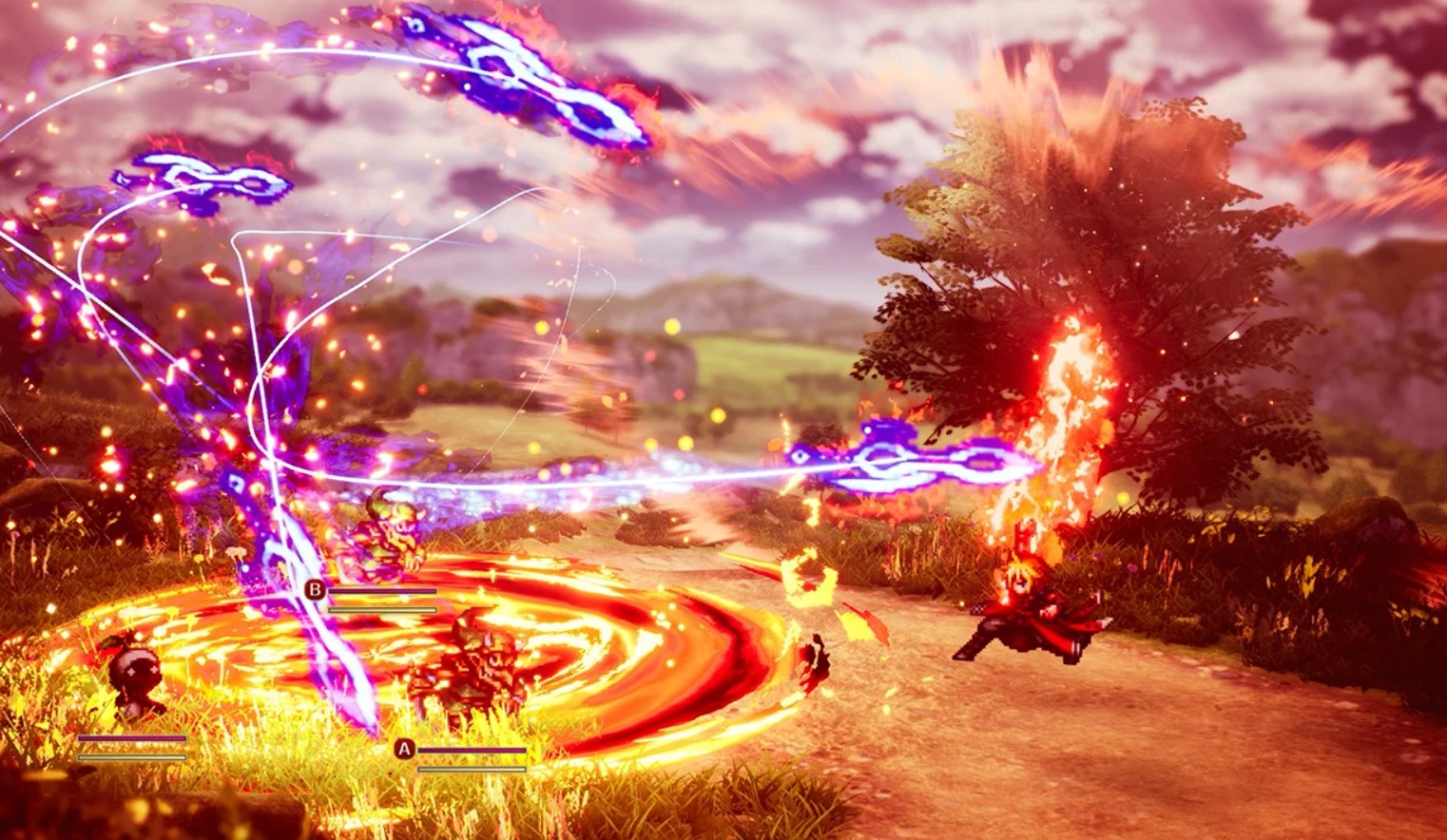
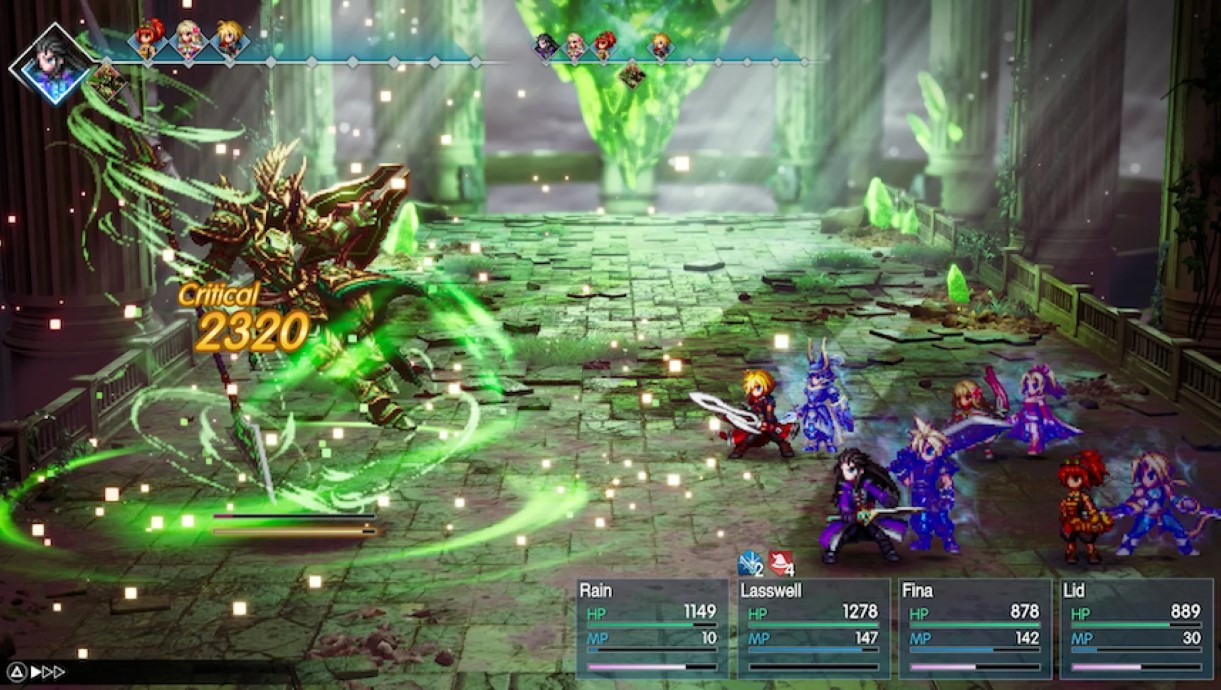
- Combat runs on turns rather than ATB. You exploit enemy weaknesses to stagger them, break their defences to earn extra turns, and spend the opening on powerful Resonance attacks. There is a stun meter to fill, after which special and combination attacks become available. It is a stagger-and-punish loop rather than a resource-management one, and that is the thing GameSpot found repetitive and others found satisfying.
- Visions are the headline idea and the reason the title makes sense. They are echoes of past Final Fantasy characters who join your party with their own skills – Cloud, for example, grants enhanced physical attacks and lightning magic. Sephiroth is planned as a super-boss, which is a sentence that will sell a certain number of copies on its own.
- Side content is where the late-game interest the reviews mention actually lives: the wandering swordmaster Gilgamesh, a Colosseum stocked with dangerous monsters, the Chamber of Arms, and a showdown with Ultima Weapon.
Visually, it is pixel art rendered in 2.5D with dynamic camera angles and pixelised 3D models, running on Unreal Engine 5, developed by Square Enix with Lancarse – directed by Hiroto Furuya, written by Yukinori Kitajima, composed by Noriyasu Agematsu.
The Brave Exvius Question
Here is the context that explains the story criticism better than the reviews do.
Resonance is not an original narrative. It adapts the “Lapis” arc of Final Fantasy Brave Exvius, the 2015 mobile game, following Rain, Lasswell and Fina as they set out to protect the remaining crystals after the Earth Crystal is destroyed by Veritas of the Dark.
That is a mobile gacha storyline, originally delivered in chapters across years of live service, now compressed into a single-player console RPG. Mobile narrative structure is built for short sessions, recurring character introductions and steady escalation rather than three-act shape – and “a little dry,” “forgettable” and “predictable” are exactly the criticisms you would expect from that translation.
The soundtrack makes the lineage explicit. Releasing October 28 with 120 tracks, 87 come from Brave Exvius and War of the Visions, with 33 new compositions. Roughly three-quarters of the music is imported.
None of which makes the story criticism wrong. It does mean the game is doing something more unusual than reviewers crediting it with – rescuing a mobile storyline that was otherwise going to disappear with its servers, which is what Game Informer’s “whole new canon” line is actually about.
| Buy It On | If You Want |
|---|---|
| PC | The highest-rated version, the lowest price, and 60fps on modest hardware |
| PS5 | The most-reviewed version and the steadiest consensus |
| Switch 2 | Portability, accepting the lowest average and the widest disagreement |
| The demo first | A full first chapter with save carryover before paying anything |
Why the Platform Spread Happens at All
A short explanation, because a 6-point Metacritic gap on a simultaneous multiplatform release confuses people every time it happens.
Metacritic calculates a separate weighted average per platform from whichever outlets reviewed that platform. It is not measuring how well the game runs on each one. It is measuring which publications chose which version, and those choices are not random.
Nintendo-focused outlets review the Switch and Switch 2 versions. PlayStation-focused outlets review the PS5 version. PC-focused outlets review the PC version. Each of those groups brings a different house style and a different typical scoring range, and for a game whose reception splits on how much you value narrative, the composition of the reviewing pool does most of the work.
Three consequences worth holding onto:
- The Switch 2 average being lowest does not mean that version is worst. Eurogamer’s 3 and GameSpot’s 7 were both objections to the game’s design, not its handheld performance.
- The PS5 figure is the most reliable simply because it rests on the largest number of reviews.
- The PC figure benefits from a narrower pool, since fewer outlets reviewed it and the ones that did skewed positive.
And the Steam figure is measuring something different again – not critical judgement but purchase satisfaction, from an audience that self-selected by buying a turn-based HD-2D Final Fantasy on day one.
Four numbers, four methodologies, one game. The spread is an artefact of how the numbers are built, and the only way to read it usefully is to look at what reviewers said rather than what they scored.
FAQ
When did Final Fantasy Resonance release?
October 22, 2026, worldwide, on PC, PS5, Xbox Series X|S, Nintendo Switch and Switch 2.
What are its review scores?
Metacritic averages of 88 on PC, 85 on PS5 and 82 on Switch 2, with Steam user reviews at 97% positive from 982 reviews.
How much does it cost?
$49.99 for the base game, $59.99 for the Digital Deluxe Edition, and $14.99 for the Deluxe upgrade DLC.
Is the combat turn-based?
Yes, and deliberately so. It drops the ATB system for straight turns, built around staggering enemies, breaking defences for extra turns and landing Resonance attacks.
What are Visions?
Echoes of past Final Fantasy characters who fight alongside your party with unique abilities – Cloud grants enhanced physical attacks and lightning magic, and Sephiroth is planned as a super-boss.
Is it based on a mobile game?
Yes. It adapts the Lapis arc from 2015’s Final Fantasy Brave Exvius, following Rain, Lasswell, and Fina.
Is there a demo?
Yes, covering the first chapter with level restrictions, and its save data carries into the full game.
One Game, Two Correct Verdicts
What this launch demonstrates is that a 6-point Metacritic spread can exist without anybody being wrong. Final Fantasy Resonance is a beautifully presented, mechanically satisfying, superbly scored turn-based RPG carrying a story adapted from a mobile game that was never written to work in this shape. Every reviewer identified both halves of that sentence. They simply disagreed about which half matters more, and their scores reflect that rather than any disagreement about quality.
The 97% on Steam settles the practical question. Day-one buyers of a turn-based HD-2D Final Fantasy wanted systems, sprites and a Noriyasu Agematsu soundtrack, and that is precisely what shipped. If you want a narrative to rival the games this one keeps summoning the ghosts of, the critics who docked it were telling you something true.
Either way, the demo is free, it covers a full chapter, and the save carries over. There is no reason to decide this one from a score.
Thinking of starting it this weekend? Share this, bookmark it, and go find out what Sephiroth is doing in there – and if creative or commercial collaboration brought you here, the T-Minus team is one message away.